Fast, Reliable Attic Insulation Across South San Jose Hills
Attic insulation in South San Jose Hills isn’t a winter project. It’s a summer survival upgrade. Most homes in this unincorporated pocket east of the 605 were built in the 1950s through 1970s with low-pitch roofs that bake in the inland San Gabriel Valley sun until attic air hits 140°F. That heat doesn’t just sit up there; it radiates down through thin or original insulation and turns your front rooms into ovens by mid-afternoon. Warm House Insulation Co fixes that in one trip. We’re based nearby in Stanton, and we respond to South San Jose Hills calls quickly because we know every route through Valinda, Walnut, and the 91792 ZIP. Call (866) 361-3775 for a free estimate, and we’ll come out and check what’s actually in your attic before touching anything.
Why Warm House Insulation Co Is South San Jose Hills’s Preferred Attic Insulation Company
We are the multi-brand, multi-method insulation contractor that South San Jose Hills homeowners call when they’re done with one-trick installers. Most shops stock one product line and push it no matter what your home actually needs. We carry three distinct installation methods – Attic Insulation, spray foam, and blown-in – plus eight different manufacturers, so the material recommendation comes from your home’s specific roof angle, attic clearance, wiring condition, and heat profile, not from what happens to be sitting in our warehouse.
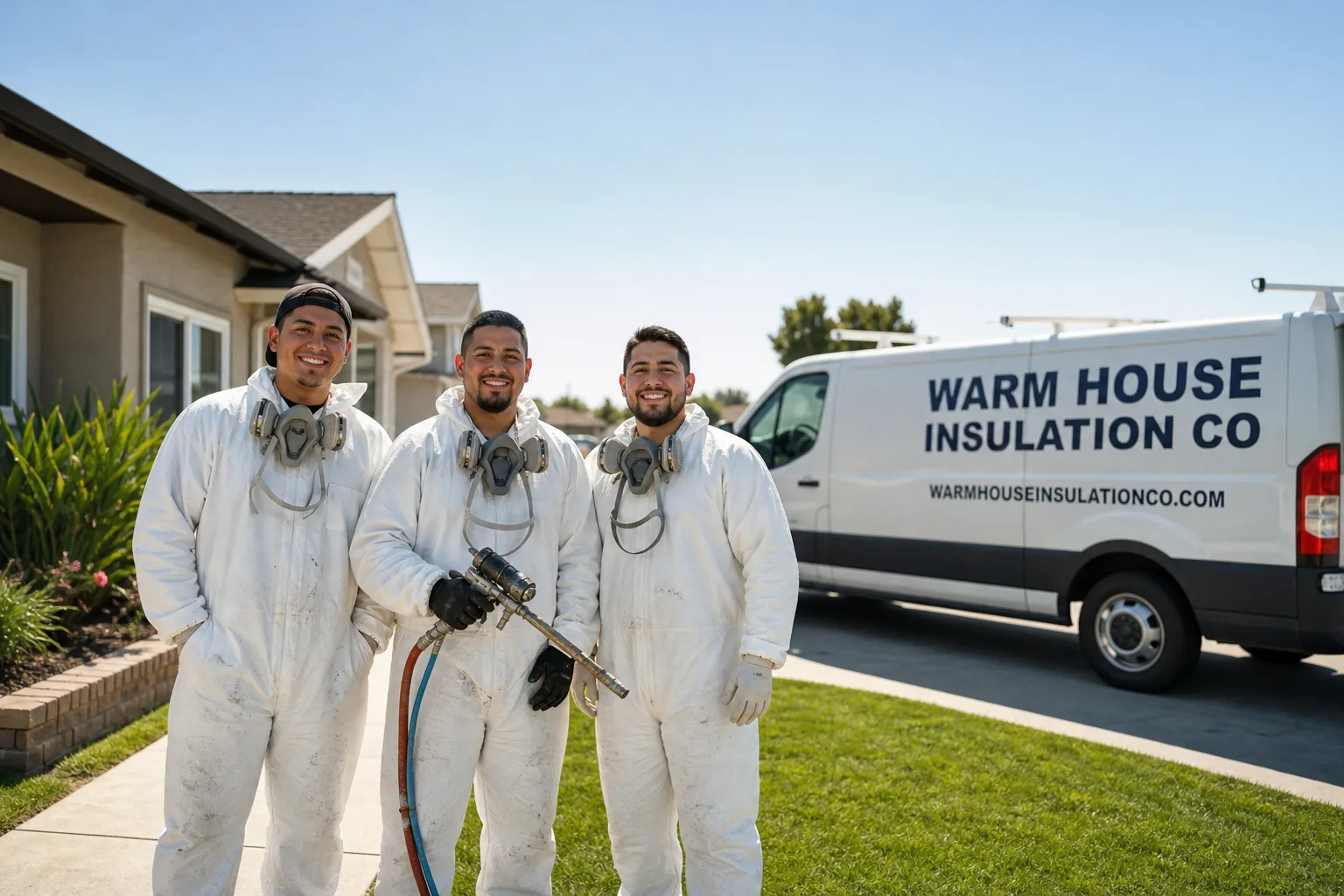
Ruben Castellano has built the crew around one principle: diagnose the house before picking the product. In South San Jose Hills, that has earned us repeat calls from homeowners along the residential streets north of Valley Boulevard and the quiet cul-de-sacs south of Amar Road. We’ve seen enough 91792 attics to know what’s up there before we climb the ladder – but we still look, because the older cloth wiring and shallow clearances in this area can bite a careless installer. Local knowledge matters more here than in newer Orange County tracts, and that’s why homeowners keep calling us back when the next project comes up.
South San Jose Hills sits at the eastern edge of the San Gabriel Valley. It gets hotter here than in Long Beach, hotter than in Cerritos, and the attic heat doesn’t let up until well after sundown. We schedule South San Jose Hills jobs with that in mind – early starts when the attic is still bearable, one-trip completion whenever possible, and no pressure to add services you don’t need.
Attic Cleaning Services in South San Jose Hills
Attic Cleaning Services in South San Jose Hills often start with what the old insulation left behind. Decades of dust, rodent droppings, and the fine silt that blows in from the San Gabriel foothills settle into original 1960s fiberglass and stop it from doing its job. Before we install new insulation, we remove the old stuff, vacuum the floor, sanitize the surfaces, and prep the cavity for whatever material makes sense for your home.
In South San Jose Hills specifically, cleaning matters more than in coastal cities. The summer heat bakes trapped organic material and dust into smells that push through the ceiling, and the low-pitch roof design leaves nowhere for that debris to ventilate out. A typical attic cleaning in South San Jose Hills runs $1.50 to $3.00 per square foot for removal and prep, with sanitization adding roughly 10 to 20 percent on top of that. We give you a hard number before any work begins.
Rodent and Pest Debris
South San Jose Hills homes built in the 1950s and 1960s often have gable vents and eave gaps that are wide open to squirrels and rats. Once we remove nesting material and droppings, we apply a hospital-grade sanitizer that neutralizes odor and bacteria before new insulation goes in. This step keeps the job from becoming a recurring problem every spring.
Pre-Installation Prep for the 140°F Attic
On stucco single-story homes along the 91792 pocket, the attic cavity often measures under 36 inches at the peak. That shallow space means cleaning has to happen carefully and by hand. We use soft-bristle vacuums and hand tools on the older penetrations, and we always check wiring condition before any vacuum head touches the floor.
What happens when you call
- 1
A real person answersNo phone trees — you reach a local pro.
- 2
You get an upfront price rangeHonest numbers before anyone is dispatched.
- 3
A background-checked tech heads outLicensed & insured, dispatched right away.
- 4
You approve before work beginsNothing starts until you say go.
Attic Mold Removal in South San Jose Hills
Attic Mold Removal in South San Jose Hills is usually linked to one thing: trapped heat and trapped moisture meeting a poorly ventilated low-pitch roof plane. Inland summer heat pulls moisture up from the living space and condenses on the underside of a roof that has no ridge vent. That’s how mold starts in a house that has never leaked a drop of rainwater.
When we find mold in a South San Jose Hills attic, we treat it in one visit whenever the extent allows. That means bagging and removing contaminated insulation, scrubbing the affected framing with a registered antimicrobial, and then correcting the airflow problem so the mold doesn’t come back. Most attic mold removal jobs in this area run between $2,500 and $6,500 depending on square footage and how far the growth extends into the roof deck. We won’t quote a number without seeing the actual attic.
Spot Treatment for the Low-Pitch Roof
On low-pitch 1950s-70s roofs, condensation builds at the corners where the roof meets the exterior wall. We treat those bands aggressively, then adjust the soffit and box vent locations. In South San Jose Hills, the heat itself becomes the mold’s ally if we leave ventilation unaddressed, so we always pair removal with an airflow fix.
Mold on the Garage Ceiling
Most garages in this neighborhood were built with an uninsulated drywall ceiling and nothing above it. When the mold investigation leads to a garage ceiling cavity, we remove the affected board, treat the framing, and then add insulation before closing it up. The same crew handles it; no separate trip, no separate subcontractor.
Trusted Brands We Service in South San Jose Hills
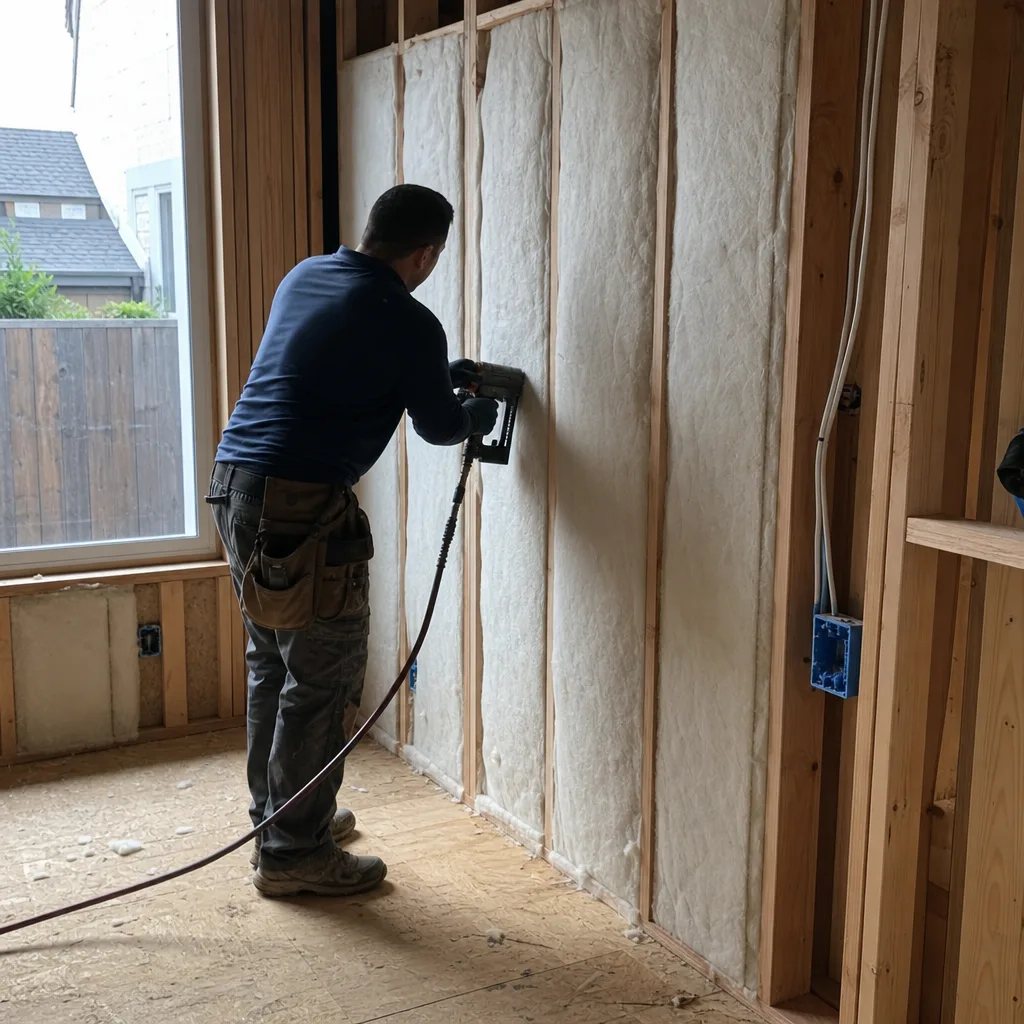
We stock and install products most South San Jose Hills contractors don’t carry. For attic jobs, we regularly recommend Owens Corning fiberglass for its predictable R-value and wide availability, CertainTeed batts for older ceiling joist spacing, and GreenFiber recycled cellulose when a homeowner wants high recycled content without sacrificing thermal performance. The material decision follows the house – flat-pitch roof and tight clearance point toward blown-in coverage; a noise-sensitive bedroom wing or garage conversion points toward Rockwool mineral wool for its density and sound damping. We keep local stock for quick turnaround on South San Jose Hills calls, and same-week installation is usually available.
Common Attic Insulation Problems We See in South San Jose Hills Homes
- Blowing insulation over knob-and-tube or cloth wiring. Many of the 1950s-70s homes above Valley Boulevard still have original cloth-wrapped wire, and covering it with blown-in insulation without a check is both a fire hazard and a code violation. We inspect before we blow anything.
- Topping off fiberglass in a 140°F attic without addressing radiant heat. Adding R-19 on top of old R-11 in a South San Jose Hills attic is like putting a thicker blanket on a hot engine. The heat still radiates down through the ceiling drywall, unless you pair the insulation with proper ventilation or a radiant barrier.
- Leaving the garage ceiling uninsulated. The garage is usually attached to the house and shares a wall with the living space. In this neighborhood, an uninsulated garage ceiling becomes a heat battery that cooks the rooms next to it in July.
- Shallow attic clearance surprising the installer. Attics in this pocket of unincorporated LA County often have less than 36 inches at the peak. A crew that shows up with a full-size blower and a long hose without checking the joist layout will waste two hours and three trips.
Pricing for Attic Insulation in South San Jose Hills, CA
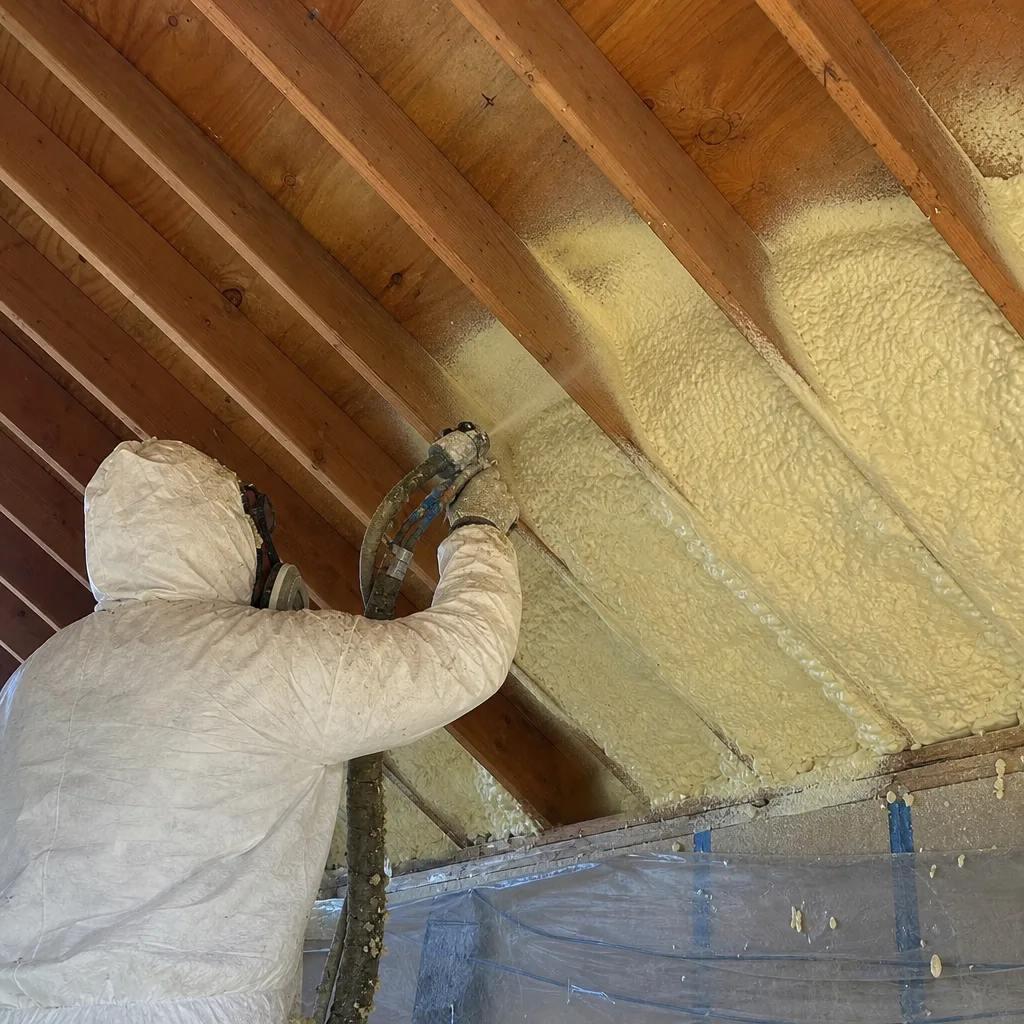
Here’s what South San Jose Hills homeowners can expect to pay in 2026. Blown-in fiberglass or cellulose attic insulation in a typical 1,200 to 1,500 square foot single-story tract home runs $1,800 to $4,200 including removal of the old insulation where needed. A spray foam upgrade for the attic floor or roof deck runs higher, typically $4,500 to $9,000 depending on whether you choose open-cell Icynene or closed-cell Demilec and how much of the roof plane you cover. Adding a thermal barrier and new baffles to a low-pitch roof adds $600 to $1,500. Labor for the shallow-clearance attics common along Amar Road and Valley Boulevard costs a bit more than in newer neighborhoods because the crew works in hot, tight conditions. Call (866) 361-3775 for a free estimate, and we’ll give you a specific number for your house.
We Also Serve Cities Near South San Jose Hills
Our crews cover South San Jose Hills and the surrounding San Gabriel Valley communities, including Valinda, Walnut, West Covina, and Rowland Heights. If you’re two streets over into Valinda or north of the 60 in Walnut, the same one-trip approach and the same multi-brand product access apply. The crew knows the roads between these neighborhoods, which means less time waiting and more time solving your attic heat problem.
Serving South San Jose Hills, CA — Our Local Coverage Area
We’re based in the South San Jose Hills area and know this community well. Use the map below to see our service coverage — if you’re nearby, we can almost certainly help.
FAQs About Attic Insulation in South San Jose Hills
Many homes in this unincorporated pocket were built in the 1950s through 1970s and still have knob-and-tube or cloth-wrapped wiring, which can overheat when buried under blown-in insulation. We inspect every chase and ceiling box before any blow-in work starts. If we find old wiring, we flag it and work with a licensed electrician before proceeding. Call (866) 361-3775 and we’ll explain what’s in your specific attic.
Yes. South San Jose Hills sits on the eastern edge of the San Gabriel Valley where summer days routinely push attic air above 140°F, and the low-pitch 1950s-70s roofs trap that heat against the ceiling plane. Insulation here is primarily about blocking radiant heat from the roof deck and reducing AC load during long hot afternoons, not about winter heat retention. The winter season is mild enough that heat loss barely registers as an energy cost.
A low-pitch roof means less attic volume and less natural convection above the insulation, so heat builds faster and ventilation has to work harder. It also means the install crew has limited headroom, often under three feet, and has to work carefully around rafters and trusses that sit closer together than in modern pitched-roof homes. We factor ceiling height, joist spacing, and vent placement into the material and method we recommend.
Yes, and in South San Jose Hills it’s often the single most effective add-on we do. The attached garage on a 1950s-70s tract home typically has an uninsulated drywall ceiling and shares a wall with the kitchen or hallway. Insulating the garage ceiling stops it from becoming a heat battery that cooks the rest of the house in July. We include it in the same trip whenever the homeowner wants it, and we price it as a line item so you see exactly what it costs.
Yes, we do both in the same visit whenever the growth is contained enough to treat without disrupting the rest of the job. The low-pitch roofs and summer heat in this area create the condensation that mold feeds on, so most cleaning jobs in South San Jose Hills uncover at least some mold at the eaves or around vent penetrations. We take care of cleaning, mold treatment, re-ventilation, and new insulation as one sequence, so you don’t have to juggle three different contractors.
Written by Ruben Castellano, owner at Warm House Insulation Co, serving South San Jose Hills and the eastern San Gabriel Valley.
Ready to fix the heat in your South San Jose Hills home? Call (866) 361-3775 now. We’ll schedule a free estimate, inspect your attic properly, and give you a specific plan with the right material for your roof and your budget.