Fast, Reliable Attic Insulation Across Wildomar
Attic insulation in Wildomar isn’t a winter project. It’s a July-through-September survival upgrade. When attic temperatures push past 150°F, the insulation above your ceiling is the only thing standing between you and an air conditioner that runs nonstop while your upstairs rooms still feel like ovens. We work throughout the 92595 zip code, and our crews know Wildomar’s tract-home attics better than anyone: we know where the original 1990s blown fiberglass has settled to half its depth, we know which low-pitch roofs trap the most heat, and we know the fix that actually works here. Call (866) 361-3775 and we’ll come out, climb into your attic, and show you exactly what’s going on up there.
Why Warm House Insulation Co Is Wildomar’s Preferred Attic Insulation Company
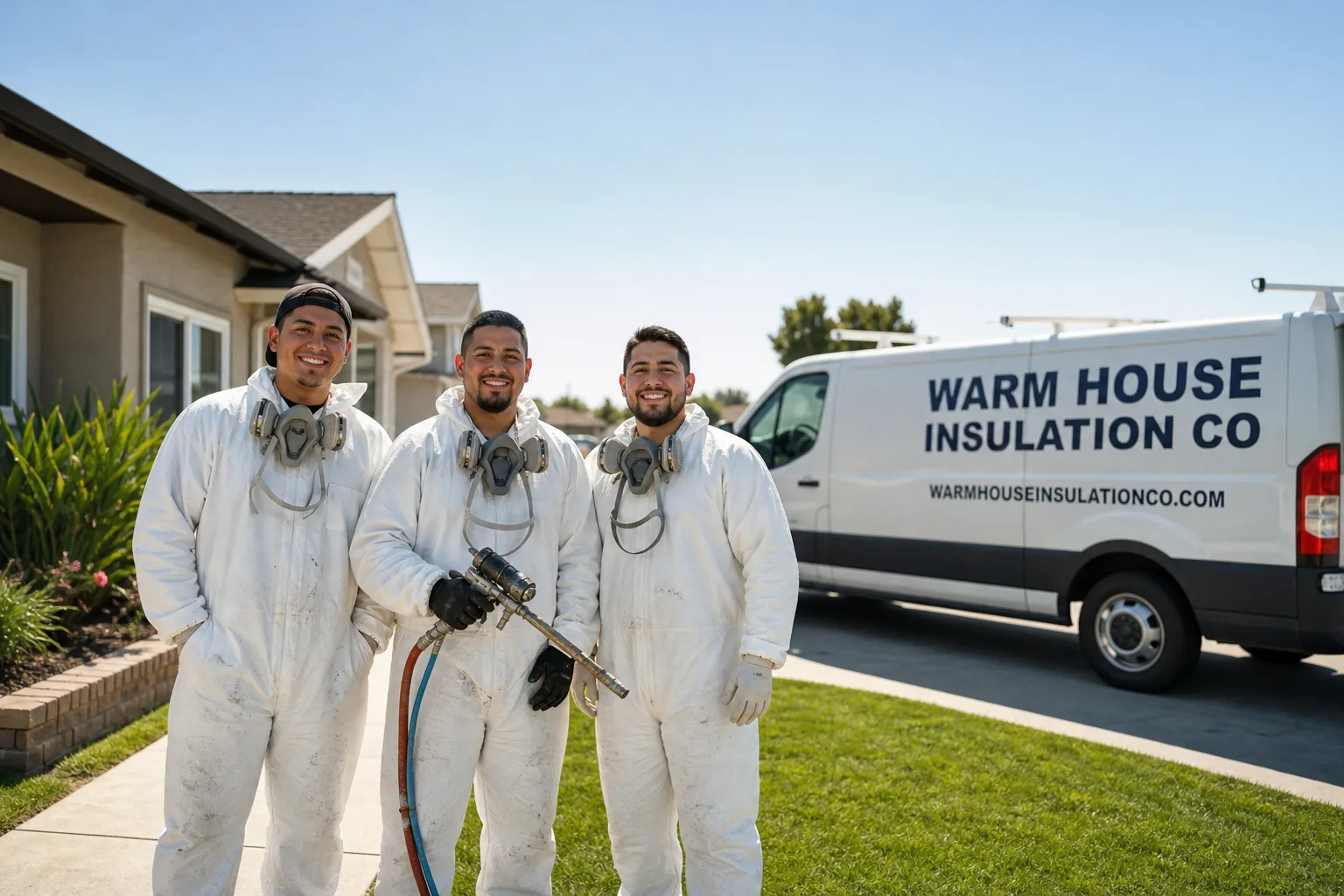
Warm House Insulation Co has built its reputation in Wildomar on a simple principle: we diagnose before we quote. Ruben Castellano leads our crews with the same approach on every job, whether that’s a 2,000-square-foot tract home off Clinton Keith Road or a 1970s ranch-style build out near Bundy Canyon. Homeowners in Wildomar call us because we don’t show up with one product and try to make it fit. We carry eight manufacturer lines and all three installation methods, which means the recommendation you get is the one your attic actually needs.
Wildomar’s heat is not like coastal heat. It’s dry, relentless, and it radiates down through your ceiling for ten hours a day in summer. Our response time to most Wildomar neighborhoods is same-day or next-day for inspections, and we know the local housing stock: stucco exteriors, low-pitch tile or asphalt-shingle roofs, vented attics that become convection ovens by noon. That’s not generic knowledge. That’s what it means to actually work here.
Insulation Contractors in Wildomar
Insulation Contractors in Wildomar need to understand one thing before anything else: the attic is a heat sink, not a cold barrier. Homes here were built for a climate that no longer matches how hot Wildomar summers have become. Most of the attics we enter have original R-13 or R-19 fiberglass that was marginal on day one and has since settled, compressed, and lost half its thermal resistance. A typical Attic Insulation replacement in Wildomar runs $1,800 to $3,600 for a standard 1,500 to 2,200-square-foot home, depending on depth, access, and whether we’re removing the old material or topping up.
Attic Insulation Top-Up
When existing insulation is intact but nowhere near current California Title 24 recommendations, topping up is the most cost-effective move. In Wildomar, expect to pay $900 to $1,700 to blow an additional 8 to 10 inches of fiberglass over settled material. We use blown fiberglass from Johns Manville or Knauf for most Wildomar top-ups because it fills the uneven cavities common in older tract attics without disturbing what’s already working.
Attic Insulation Replacement
If your Wildomar attic has original 1990s insulation that’s been cooked and flattened by years of 150°F+ heat, replacement is the better call. We remove the old material, air-seal the ceiling plane, and blow in fresh insulation to R-49 or better. Full replacement in Wildomar typically ranges from $2,200 to $4,100, and it’s the option we recommend most often in homes built before 2005.
Attic Ventilation in Wildomar
Attic Ventilation in Wildomar is not an upgrade. It’s the difference between an attic that stays under 120°F on a July afternoon and one that hits 160°F and radiates heat through your ceiling for hours after sunset. Most Wildomar tract homes came with the builder minimum: a few static vents and maybe a soffit run that’s since been clogged by dust and Santa Ana wind debris. A typical attic ventilation improvement, including baffles and additional soffit or ridge venting, runs $600 to $1,400 depending on roof pitch and attic size.
Attic Baffles and Ventilation Prep
Before we blow insulation, we need to make sure air can move. In Wildomar, that means clearing soffit vents, installing baffles so insulation doesn’t block airflow, and checking that the ridge or gable vents are actually doing their job. Skipping ventilation prep is the most common mistake we see from other contractors: adding R-49 insulation to an attic with no airflow just heats the insulation itself.
Radiant Barrier with Attic Ventilation
In Wildomar’s heat, we recommend pairing ventilation work with radiant-barrier foil stapled to the roof rafters. It reflects a significant portion of radiant heat before it reaches your insulation. The cost typically adds $1,200 to $2,000 to a standard attic project, and it’s the single most effective upgrade a Wildomar homeowner can make for summer comfort.
Trusted Brands We Service in Wildomar
Warm House Insulation Co. doesn’t push a single product line. We’re authorized to install from eight manufacturers, including Johns Manville, Knauf, Rockwool, and CertainTeed. For Wildomar’s heat-dominated climate, we lean on Johns Manville and Knauf blown fiberglass for most attic replacements. When homeowners want fire resistance and superior sound dampening on top of thermal performance, we spec Rockwool mineral wool. CertainTeed batts are a solid mid-range option for accessible attic floors. Because we stock material locally and schedule Wildomar jobs every week, turnaround on parts and product is fast.
Common Attic Insulation Problems We See in Wildomar Homes
- Settled 1990s blown fiberglass. In tract homes built between 1990 and 2005, the original insulation often measures 4 to 6 inches instead of the 13 to 16 inches needed for R-38 or better. Years of dry heat and attic traffic compress it until it’s doing half its original job.
- Low-pitch tile roofs becoming heat traps. Wildomar’s signature low-pitch tile and asphalt-shingle roofs absorb solar energy all day and release it into the attic for hours after sunset. Without radiant barrier or proper ventilation, the attic becomes a 160°F oven that overwhelms even newer R-19 batts.
- Santa Ana dust clogging soffit vents. The dry, dusty wind events that sweep through the Inland Empire coat soffit vents and attic surfaces with a layer of fine grime. That clogs airflow, reduces ventilation efficiency, and masks settled insulation areas that need attention.
- Uneven attic temperature zones. We routinely find one side of a Wildomar attic baking at 150°F while the opposite side reads 120°F, usually because vent distribution is lopsided. That translates to rooms that never cool evenly no matter how long the AC runs.
Pricing for Attic Insulation in Wildomar, CA
Here’s what Wildomar homeowners can expect to pay. Attic insulation top-up typically runs $900 to $1,700. Full attic insulation replacement ranges from $2,200 to $4,100 depending on attic size, access difficulty, and how much old material needs removal. Adding radiant-barrier foil runs $1,200 to $2,000. Ventilation improvements, including baffles and new or expanded soffit or ridge vents, add $600 to $1,400. What moves the price: attic square footage, ceiling access, whether we’re removing old insulation or layering over it, and whether air sealing is included. We give free estimates on every Wildomar insulation job, and the price we quote is the price you approve before work starts. Call (866) 361-3775 to schedule an inspection.
We Also Serve Cities Near Wildomar
Warm House Insulation Co. serves the whole Inland Empire corridor around Wildomar, including Murrieta, Murrieta Hot Springs, Sedco Hills, and Lakeland Village. If you’re near the Wildomar city limits or just over the line, give us a call. We schedule attic insulation work throughout the Attic Insulation in Wildomar area every week, and if your home is within a few miles of the city, we can usually add you to an existing route with no extra travel charge.
Serving Wildomar, CA — Our Local Coverage Area
We’re based in the Wildomar area and know this community well. Use the map below to see our service coverage — if you’re nearby, we can almost certainly help.
FAQs About Attic Insulation in Wildomar
Wildomar’s summer heat doesn’t just make your attic hot. It degrades insulation over time. Fiberglass batts and blown insulation trap heat, and after enough 150°F+ cycles, they settle, compress, and lose R-value. You may have started with R-19 and be living with something closer to R-8 after 20 years. The fix is fresh insulation to current Title 24 levels, plus radiant barrier where heat gain is severe. Call (866) 361-3775 and we’ll measure what’s actually left in your attic before recommending anything.
In most Wildomar tract homes, more insulation alone is not enough to make a summer difference. Radiant barrier foil stapled to the rafters reflects radiant heat before it ever reaches your insulation, which matters when roof decks hit 155°F. It’s a near-essential add-on here that coastal or mountain homeowners rarely need. Expect to pay $1,200 to $2,000 for radiant barrier in a typical Wildomar attic, and it pairs best with fresh blown insulation beneath it.
Almost certainly not. Homes built in Wildomar during the 1980s to 2000s tract boom typically got builder-grade R-13 to R-19 insulation, which was below today’s standard on day one. After two or three decades of dry heat, attic traffic, and Santa Ana dust, it’s usually settled to half its original depth or less. We regularly find 4 inches of flattened fiberglass where there should be 13-plus. A free attic inspection will tell you exactly what you’re working with.
Santa Ana winds drive dry, fine dust into standard vented attics, clogging soffit vents and coating insulation with a layer of grime that reduces its effectiveness. Over years, that dust accumulation compounds settling and makes it harder to spot areas where insulation has thinned. We recommend an attic ventilation check before or during insulation work so airflow is restored before new material goes in. Call (866) 361-3775 for a free estimate that includes a ventilation assessment.
For most Wildomar homes, blown fiberglass at R-49 from Johns Manville or Knauf, paired with radiant-barrier foil and proper attic ventilation, delivers the best summer performance per dollar. Rockwool mineral wool is a premium option for fire resistance and sound dampening if those matter to you. The right answer depends on your attic’s current condition, your roof pitch, and your budget, which is why we inspect first and recommend second. Call (866) 361-3775 for a free attic assessment.
Written by Ruben Castellano, Owner at Warm House Insulation Co, serving Wildomar and the surrounding Inland Empire.