Fast, Reliable Attic Insulation Across Compton
Attic insulation in Compton typically costs $1,400 to $3,200 for a standard single-story home, with blown-in cellulose or fiberglass running $1.15 to $2.10 per square foot installed. Most jobs take one day from setup to cleanup, and we respond to Compton service calls Monday through Saturday. If your 1950s tract home off Alameda or Rosecrans is bleeding cool air into a 140°F attic, call (866) 361-3775 for a free estimate.
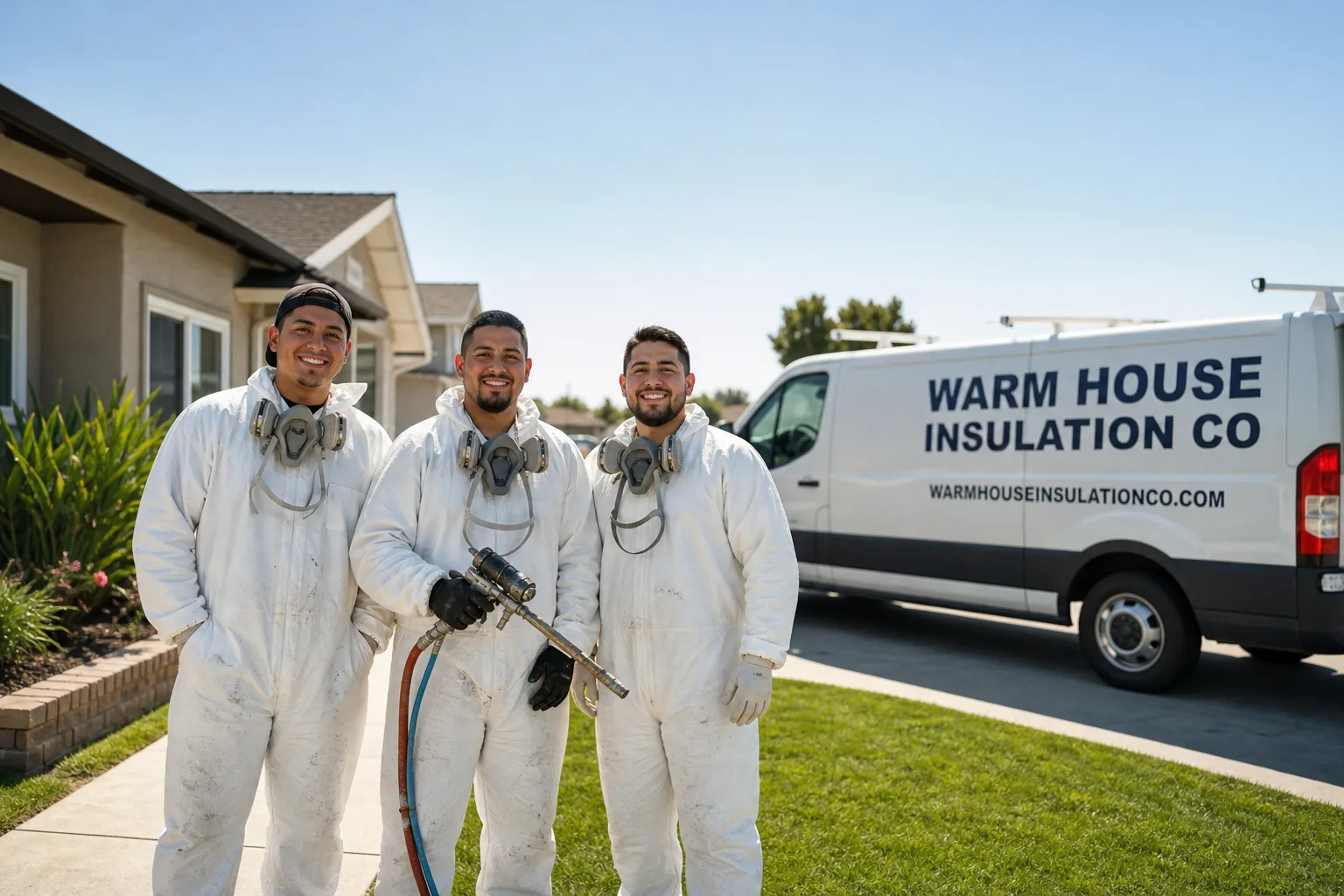
We know Compton’s housing stock. We know that the post-WWII stucco tracts from 90221 to 90223 share the same bones: low-pitch roofs, 2×4 wall cavities, raised foundations, and attic spaces that were never designed for the cooling loads Southern California now demands. Ruben Castellano and the Warm House Insulation Co crew have walked dozens of Compton attics and know exactly what to look for before recommending a single product.
Why Warm House Insulation Co Is Compton’s Preferred Attic Insulation Company
Compton homeowners call us because we carry eight insulation brands and install three distinct methods: blown-in, spray foam, and attic batt. That means the material recommendation you get is driven by your home’s actual condition, not by whatever one product happens to be on our truck that day. On a 1954 single-story stucco house off the east side of Compton, our crew found the original wood-framed attic hatch with no gasket and batt insulation collapsed to about an inch over the living room, so the back bedroom ran 8°F hotter than the front on a 95°F afternoon. We air-sealed the top plates and hatch, baffled the eave vents, and blew in GreenFiber to a uniform depth with a radiant-barrier run under the hot roof deck. That afternoon swing evened out and the AC stopped short-cycling.
That’s the kind of diagnosis-first work we do in Compton. Ruben Castellano built this company around the idea that the right insulation for your home’s specific situation is rarely the one-size-fits-all answer. In Compton’s aging tract homes, that means assessing attic air-sealing, ventilation, and moisture risk before we ever quote a material.
Attic Ventilation in Compton
Attic Ventilation in Compton is about managing the extreme roof-deck heat that builds up in low-pitch stucco homes on 95°F+ afternoons. Without proper eave and ridge airflow, attic temperatures climb past 140°F, and that heat transfers directly through the ceiling plane into living space no matter how much insulation sits on the floor of the attic. We install and repair attic baffles, verify eave-vent clearance, and correct ventilation shortfalls before adding insulation so the material performs at its rated R-value.
Eave Baffle Repair and Installation
Original Compton homes rarely have baffles at the eaves. When insulation is blown to full depth, it settles against the roof sheathing and blocks the eave vents entirely. We install foam or cardboard baffles at every rafter bay to keep airflow moving from soffit to ridge. Cost in Compton for baffle work runs $120 to $400 depending on attic size and access.
Attic Hatch Sealing
The old wood-framed attic hatch on so many 1940s and 1950s Compton homes is an uninsulated leak. We fit it with an insulated cover and gasket so that 140°F attic air doesn’t pull straight into the hallway. This is one of the highest-impact, lowest-cost air-sealing fixes we do.
Radiant Barrier in Compton
Radiant Barrier in Compton is not a substitute for insulation, but it directly addresses the roof-deck heat load that dominates cooling season. A radiant barrier stapled under the roof sheathing reflects a significant share of radiant heat before it ever reaches the attic floor. In a Compton summer with weeks of 90°F+ days and Santa Ana wind events, that’s the difference between an attic that holds at 115°F and one that spikes past 140°F. We typically specify radiant barrier on east- and west-facing roof slopes where solar gain is highest.
Radiant Barrier Under Roof Decking
This is the standard retrofit for Compton’s low-pitch roofs. We install a perforated foil barrier under the sheathing with a staple pattern that maintains ventilation. Cost for a standard Compton single-story runs $0.35 to $0.80 per square foot of roof area. It works alongside blown-in insulation and typical attic ventilation.
Santa Ana Wind Performance
Santa Ana winds don’t just dry out the air; they spike roof-deck temperatures and overload marginal attic ventilation. A radiant barrier combined with correct baffle installation holds attic temperatures steadier during wind-driven heat events. We see this play out on homes near the Dominguez Channel and along the eastern edge of 90221.
Trusted Brands We Service in Compton
Warm House Insulation Co is authorized to install products from Owens Corning, Johns Manville, Knauf, Rockwool, CertainTeed, Icynene, Demilec, and GreenFiber. For Compton homeowners, that means meaningful choice. We stock Rockwool mineral wool for noise-sensitive or fire-code-conscious projects, Icynene and Demilec spray foam systems for air-sealing retrofits, and GreenFiber recycled cellulose for homeowners who want a high recycled-content option. We carry options most contractors don’t, and we match them to the home, not the other way around.
Common Attic Insulation Problems We See in Compton Homes
- Compressed original batts in 1950s low-pitch attics. The R-value degrades as fiberglass batts sag and flatten over decades. In many Compton attics we see batts that measured 6 inches installed and sit at an inch or less today, leaving the ceiling plane nearly bare over the hottest rooms.
- Unsealed top plates, can lights, and attic hatches. 140°F+ attic air and dust pull straight into living space through these gaps. Rooms stay uneven even after new insulation if the air-sealing step gets skipped, which is why we air-seal on nearly every Compton retrofit.
- Missing or blocked eave vents. Original Compton attic ventilation was marginal when built and has often been blocked by poor prior insulation work. Without airflow, the attic becomes a heat trap that bakes the rooms below all afternoon.
- Moisture risk when adding wall insulation to original stucco. Compton’s post-WWII stucco often lacks a continuous weather-resistive barrier. Adding wall insulation without careful detailing can trap moisture against 2×4 framing. We flag this on every 1950s east-side home before recommending wall work.
Pricing for Attic Insulation in Compton, CA
We Also Serve Cities Near Compton
Warm House Insulation Co serves Compton and the surrounding South Los Angeles County area. We regularly work in East Rancho Dominguez, West Rancho Dominguez, Carson, and Gardena, and we understand how the housing stock changes block by block across the region. If you’re a homeowner searching for Attic Insulation expertise that treats your file with local context, start with our team. For a closer look at how we serve Compton specifically, keep reading or call us directly.
Serving Compton, CA — Our Local Coverage Area
We’re based in the Compton area and know this community well. Use the map below to see our service coverage — if you’re nearby, we can almost certainly help.
FAQs About Attic Insulation in Compton
You can, and in many Compton attics it’s the right call, but only after we inspect the existing batt condition. If the original batts are dry and largely intact, we blow GreenFiber fiberglass or mineral wool directly over them, which raises the total R-value quickly and typically costs $800 to $1,500 for a standard single-story. If the batts are compressed, rodent-damaged, or contaminated, or if the attic has moisture issues we can see, we recommend removal and replacement before adding new material. Adding blown-in over degraded batts locks in the problem under new insulation. Call (866) 361-3775 for one of our Compton attic inspections and we’ll tell you which path applies to your home.
Yes, radiant barrier makes strong sense in Compton because the cooling season dominates energy use and roof-deck temperatures spike past 140°F on 90°F+ afternoons. A foil radiant barrier under the roof sheathing reflects radiant heat before it reaches the attic floor, holding the attic closer to 110°F to 115°F and reducing the heat that loads onto your ceiling insulation. It pairs well with blown-in fiberglass or cellulose on low-pitch roofs like those across 90221 and 90223. We’d install radiant barrier on homes where east- and west-facing roof slopes get direct afternoon sun. Call (866) 361-3775 and we’ll check your roof orientation and attic depth for free.
The usual cause in Compton homes is air leakage through the attic plane: unsealed top plates, can lights, or the old wood attic hatch, plus degraded batts over just that room. When the roof deck heats up, hot attic air pulls down through those gaps and creates an uneven temperature spread across the house. We’ve measured 8°F differences in Compton homes before air-sealing work. The fix is attic air-sealing first, then leveled insulation depth across the entire attic floor. Call (866) 361-3775 and we’ll find the specific leak points in your attic.
It can, and this is a genuine risk in Compton’s post-WWII stucco tracts because the original stucco often lacks a continuous weather-resistive barrier. In a 2×4 wall cavity with no drainage plane, adding insulation without careful detailing can hold moisture against the framing and cause rot or mold over time. We assess the exterior condition and interior vapor profile before recommending wall insulation, and in many older Compton homes we recommend focusing on the attic and air-sealing first, where the ROI and safety are highest. If you’re considering wall insulation, call (866) 361-3775 first for an honest read on whether your home is a good candidate.
Santa Ana winds affect attic ventilation and roof-deck heat loads, not the insulation material itself. When hot, dry air pushes across the roof deck, it spikes attic temperatures and can overwhelm marginal eave and ridge ventilation, which makes your ceiling insulation work harder. In Compton’s 1940s to 1960s housing stock, older eave vents often become clogged or blocked, so a Santa Ana event exposes the weakness. We verify baffle clearance and vent area, and often pair a radiant barrier with blown-in insulation to stabilize attic temperature swings. Call (866) 361-3775 and we’ll check your ventilation before the next wind event.
Written by Ruben Castellano, Owner at Warm House Insulation Co, serving Compton and surrounding cities with attic insulation, spray foam, and blown-in methods.