Fast, Reliable Attic Insulation Across Good Hope
If your Good Hope home runs a $300-plus cooling bill through July and August, the culprit is almost always hiding above your ceiling. Attic insulation in Good Hope is a summer heat-gain problem first, not the winter heat-loss fix most national advice assumes. We routinely find attics on older rural parcels sitting under R-11 when the custom infill next door is fully sealed, which means the fix depends entirely on what’s actually up there. Call (866) 361-3775 and we’ll measure it before we recommend a dollar of work.
Why Warm House Insulation Co Is Good Hope’s Preferred Attic Insulation Company
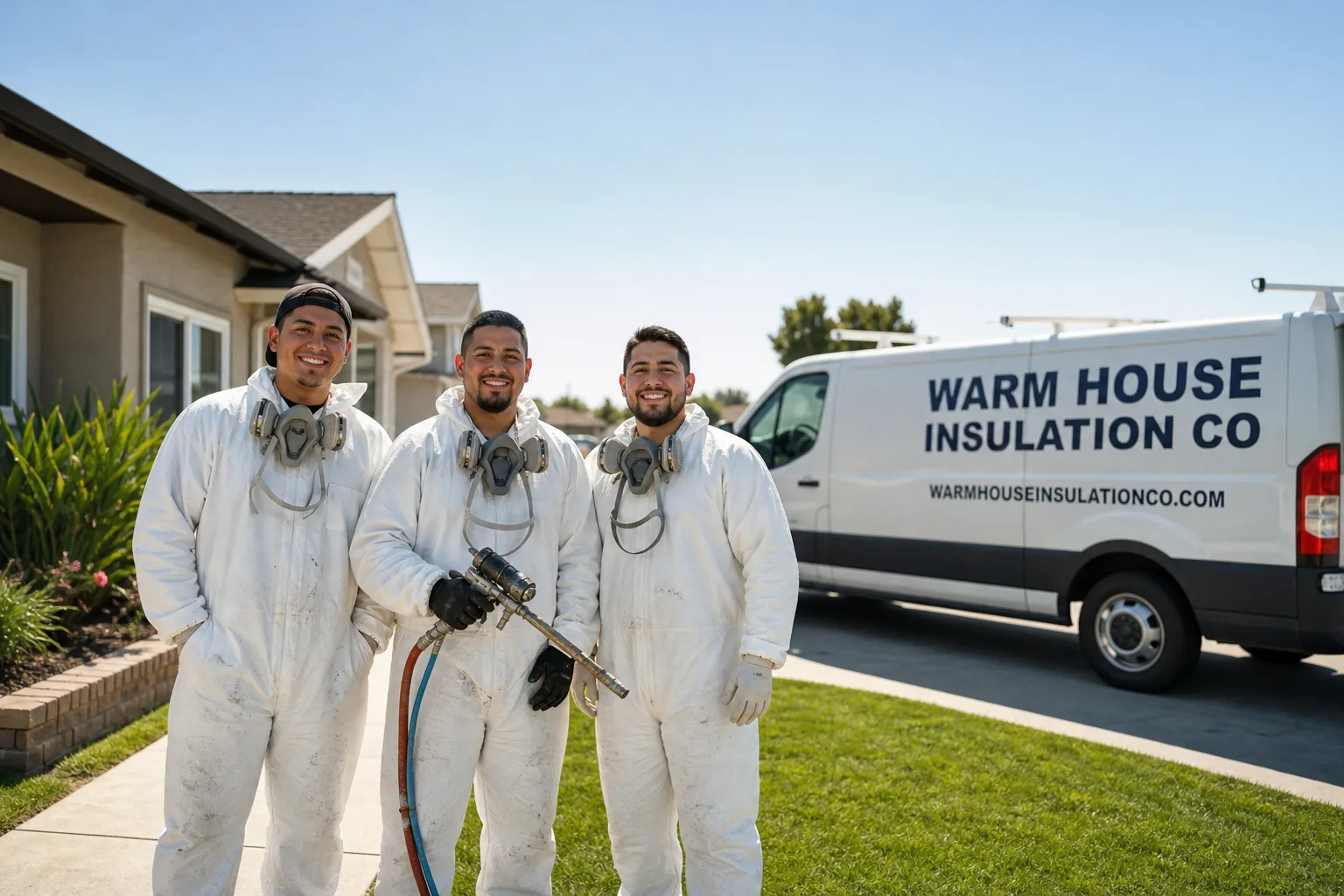
Our crew works the 92572 corridor constantly, so we don’t need a GPS to know that one side of a Good Hope street can have a 1970s ranch with original compressed batts while the other side has a sealed custom build that never got its venting right. That side-by-side swing changes the diagnosis every time, and it’s why we lead with measurement, not material. Ruben Castellano built Warm House around the idea that an eight-brand portfolio means we recommend the insulation your attic actually needs, not whatever one product a single-line contractor happens to stock. In Good Hope, that’s mattered most on older parcels where a quick depth check has saved people from paying for a full replacement they didn’t need.
We carry Owens Corning, Johns Manville, Knauf, Rockwool, CertainTeed, Icynene, Demilec, and GreenFiber. That range isn’t shelf-filler; it’s how we match compressed-batt top-ups, radiant-barrier corrections, and full removals to the actual condition of your attic rather than a default spec. Our response time to Good Hope is same-day for diagnostics and next-day for most insulation work, because an attic baking past 130°F in July doesn’t reward patience.
Attic Mold Removal in Good Hope
Attic mold removal in Good Hope typically runs $700 to $2,500 depending on square footage and how far the growth has spread into the decking. The first sentence of any mold conversation here is the same: Riverside County’s dry heat hides moisture because it burns off fast, so homeowners don’t realize a poorly vented attic has been trapping humidity all winter until a musty smell or a pre-purchase inspection reveals the damage. On older wood-frame ranch homes with original soffit-and-ridge venting, we see mold take hold when someone added a radiant barrier or blew in new insulation without first confirming airflow, which chokes the attic and feeds exactly the growth no insulation product can fix.
We remove the affected insulation, treat the wood deck and framing, correct the venting that caused the problem, and then install the right replacement material at the right depth. The whole job usually completes in one to two days for a standard 1,200 to 1,600 square foot attic, and we handle the disposal. A mold job is never just a cleanup: if the ventilation math stays wrong, the mold comes back with the first humid winter, which is why we won’t quote removal without also checking soffit intake and ridge or gable exhaust.
Post-Removal Insulation Replacement
After mold removal, the existing insulation is gone and the attic is empty, so the question becomes what goes back in. For most Good Hope homes, we recommend either blown-in fiberglass or GreenFiber recycled cellulose at R-38 to R-49 depending on the structure. The decision hinges on whether the home has a functioning radiant barrier: a corrected radiant barrier reduces the cooling load so much that mid-range insulation depth is often the more cost-effective spec.
Ventilation Correction Before Reinsulation
An attic that didn’t ventilate well before mold will not ventilate better after mold simply because new insulation went in. We measure intake and exhaust square footage, clear blocked soffit chutes, and add baffles where needed before any replacement insulation is installed. On Good Hope’s mixed-age housing stock, this step is non-negotiable, because ranch homes from the 60s and 70s often have soffit vents painted shut or never installed to begin with.
Attic Insulation Removal in Good Hope
Attic insulation removal in Good Hope typically runs $1.50 to $2.75 per square foot, which puts a standard 1,500 square foot attic between $2,250 and $4,100. People ask for removal for three reasons in this community: the original batts have compressed to half their rated R-value and topping up would trap the old problem under new fiber, they’ve had a rodent or roof leak that contaminated the existing material, or a mold inspection flagged the attic as the moisture source. On older rural parcels around 92572, we commonly find original builder batts that have settled to under 4 inches, well below R-11, and removal is the only path to a clean, properly sealed attic.
We bring a high-volume vacuum system, bag everything on-site for disposal, and leave the attic bare and ready for the next step: either corrected venting plus fresh blown-in fiberglass, or a spray foam application if the home calls for a sealed assembly. The work itself is straightforward; the value is in not spreading old insulation dust through a lived-in house, which is why containment discipline separates a clean removal from a messy one. For Good Hope attics that bake through summer, removal is also the only time we can address deck-level issues like failed radiant barriers and missing air gaps.
When Removal Beats Top-Up
We don’t automatically recommend removal. If the existing insulation is dry, uncompressed, and deep enough, a Attic Insulation top-up is a fraction of the cost and solves the comfort problem on its own. But when old batts are compressed, contaminated, or hiding a deck-level failure, adding more insulation on top just buries the real issue. The quickest way to know is a measured depth check and a visual inspection of the deck and venting, which takes us about 20 minutes and gives you a clear answer.
Radiant Barrier Air-Gap Correction
We see radiant barriers stapled flat to roof decks in Good Hope more than anywhere else we work. Without a 3/4-inch air gap between the deck and the radiant surface, the barrier conducts heat straight into the attic instead of reflecting it, which turns a supposed energy upgrade into a heat source. Removal is when we correct this: pulling the old barrier, re-stapling with the correct spacing, and confirming surface temperatures drop on a follow-up probe before any new insulation fills the floor.
Trusted Brands We Service in Good Hope
We’re authorized to install insulation from industry-recognized manufacturers including Owens Corning, Johns Manville, Knauf, Rockwool, CertainTeed, Icynene, Demilec, and GreenFiber. For Good Hope homeowners, that means a genuine material choice: Rockwool mineral wool when noise and fire rating matter, GreenFiber cellulose when recycled content is the priority, or Icynene and Demilec spray foam when a sealed attic assembly is the right play. We carry the common parts and materials local Good Hope jobs require, so turnaround is days, not weeks. Ruben Castellano’s decision to stock eight brands is the direct opposite of a one-trick installer who pushes whatever single product fills their warehouse.
Common Attic Insulation Problems We See in Good Hope Homes
- Radiant barriers stapled flat against the roof deck. This defeats the reflected-heat mechanism entirely. Without the air gap, the barrier becomes a conductor, dumping absorbed heat into the attic during every 100°F-plus afternoon.
- Original builder batts compressed to half their rated depth. Older ranch parcels around 92572 commonly still have their 1970s or 80s insulation, settled and flattened to under 4 inches. The R-value has collapsed, and the homeowner often doesn’t know because the attic floor hides the failure.
- Retrofits done without ventilation correction. A previous insulation add or radiant-barrier install can trap moisture in mixed-age wood-frame attics that were never vented properly. The result is mold, deck rot, and an insulation job that fails within a few seasons.
- Unsealed attic floor penetrations. Recessed lights, plumbing chases, and hatches leak conditioned air straight into a superheated attic space. In Good Hope’s long cooling season, sealing these before insulating is the difference between a comfortable home and a $400 August bill.
Pricing for Attic Insulation in Good Hope, CA
Blown-in attic insulation to bring a Good Hope home up to R-38 typically runs $1.60 to $2.80 per square foot installed. Attic batt insulation lands between $1.40 and $2.50 per square foot. A top-up on an already partially insulated attic is the cheapest meaningful work at $0.90 to $1.50 per square foot, while a full attic insulation replacement with removal runs $1.50 to $2.75 per square foot for the removal plus $2.60 to $4.25 per square foot for the replacement material and install. Attic baffles and ventilation prep adds $250 to $600 depending on how many chutes and how much intake correction is needed. Attic mold removal runs $700 to $2,500, as covered above. Estimates are free and in writing. Call (866) 361-3775 to schedule a depth check and a measured quote.
We Also Serve Cities Near Good Hope
Our Good Hope service area runs the full San Jacinto-Temecula corridor. We’re in Perris, Romoland, Sun City, and Mead Valley on a regular rotation, and our crews know these attics well: the same mix of older rural parcels and newer infill, the same summer heat-gain priority, the same need for diagnostic honesty. If you’re in any of these communities, the process is identical: measure first, quote second, install only what the attic needs.
Serving Good Hope, CA — Our Local Coverage Area
We’re based in the Good Hope area and know this community well. Use the map below to see our service coverage — if you’re nearby, we can almost certainly help.
FAQs About Attic Insulation in Good Hope
Good Hope sits in the inland valley where summer temperatures routinely push past 100°F and attic spaces can exceed 130°F, so the attic is the single largest heat load on your cooling system. Insulation here is about slowing heat gain from above, not retaining warmth in winter. A properly insulated and air-sealed attic in this climate is worth more on your energy bill than any other single retrofit in the home.
Yes, we do free depth checks and visual inspections across Good Hope’s 92572 area every week. The check takes about 20 minutes: we measure existing depth, identify the material, check for compression and moisture, and verify venting and air gaps. You get a written summary and a quote only after we know what’s up there, not a blanket one-size spec. Call (866) 361-3775 to schedule one; the visit is free.
In nearly every case we see around 92572, the barrier was stapled flat against the roof deck with no 3/4-inch air gap. Without that gap, radiant barriers conduct heat into the attic rather than reflect it away, which makes the attic hotter, not cooler. The fix is a removal and re-staple at the correct spacing, sometimes with new decking if the old deck has warped. We can probe-test the barrier during a depth check and tell you within minutes whether it’s helping or hurting.
We do both. If existing insulation is dry, uncompressed, and deep enough, we recommend a top-up and save you the removal cost. If it’s compressed, contaminated, or sitting over a mold problem or a failed radiant barrier, we remove it first, correct the underlying issue, and install fresh material at the right depth. The diagnostic is free, so you never pay for removal you didn’t actually need.
We install Owens Corning, Johns Manville, Knauf, Rockwool, CertainTeed, Icynene, Demilec, and GreenFiber. The brand we recommend for your Good Hope attic depends on your structure, venting condition, moisture history, and noise or sustainability priorities, not on what we happen to have in stock. That’s the advantage of working with an installer authorized across all three major methods: attic insulation, spray foam, and blown-in. Call (866) 361-3775 for a free estimate and a material recommendation based on what’s above your ceiling, not on what someone else’s truck carries.
Written by Ruben Castellano, Owner at Warm House Insulation Co, serving Good Hope and the greater Riverside County area.