Fast, Reliable Attic Insulation Across Hawthorne
Attic insulation in Hawthorne typically costs $1,800 – $4,200 for a full retrofit of a standard postwar bungalow, with most jobs completed same day or next day. If your home sits in one of the dense 1940s-1950s blocks near Hawthorne Boulevard or off the 405, you’re probably already feeling the problem: rooms that bake in summer, spike in winter, and never seem to hold temperature right. We’re Warm House Insulation Co, and we’ve spent years working in Hawthorne’s tight lot lines, shallow attics, and stucco-over-wood-frame construction. Call (866) 361-3775 and we’ll schedule a straight answer, not a sales pitch.
Why Warm House Insulation Co Is Hawthorne’s Preferred Attic Insulation Company
Hawthorne’s housing stock isn’t like the rest of Los Angeles. The city was built fast, for aerospace workers at Douglas and Northrop, and that means specific things: small attics, minimal original insulation, and decades of DIY “fixes” that made things worse. We know what to look for before we ever climb a ladder here. When a homeowner in the Ramona neighborhood near the 405 tells us their bedroom on the west side is ten degrees hotter than the living room, we know to check for compressed batts and missing air sealing at the top plate. When someone off Rosecrans mentions an aircraft rumble every few minutes, we start talking about Rockwool mineral wool and its sound-dampening properties. That kind of block-by-block familiarity can’t be learned from a call center.
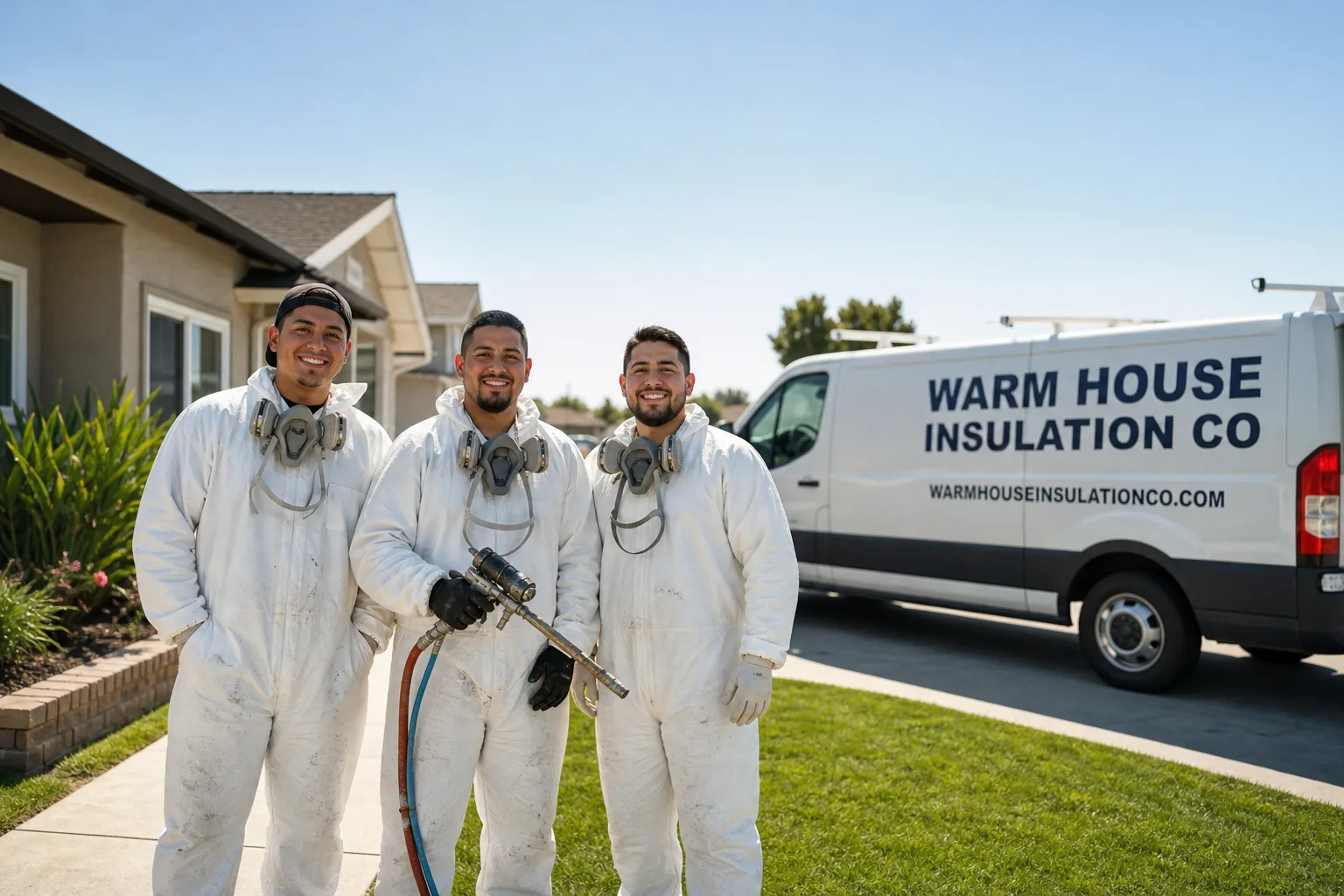
Our crews have worked hundreds of Hawthorne attics, and the consistency matters. We show up when we say, we don’t leave insulation dust in your hallway, and we walk through the scope with you before cutting anything open. Ruben Castellano runs every job to that standard. When a Hawthorne homeowner calls us a year later to say their July electric bill dropped by a third, that’s the review we care about.
Attic Ventilation in Hawthorne
Attic Ventilation in Hawthorne is the difference between an insulation job that lasts and one that quietly fails. The marine layer that rolls in off the coast every morning pushes moisture into attic spaces, and without proper airflow, that moisture condenses on the underside of the roof deck and saturates insulation. Low-slope roofs, which are common on the 1950s tract homes around the old Douglas plant, are especially vulnerable because there’s less attic air volume to work with.
Marine-Layer Moisture Control
Hawthorne’s coastal fog isn’t just a nuisance; it’s a mechanical problem for your attic. When warm interior air leaks into a cold attic through unsealed penetrations, the fog outside and the temperature differential inside create condensation. Over time, that moisture degrades batts, encourages mold on roof sheathing, and drops effective R-value. Ventilation work here means balancing intake and exhaust so moist air leaves instead of settling.
Low-Slope Roof Venting Challenges
Many Hawthorne homes have roof pitches too shallow for standard ridge venting, which means we retrofit soffit-to-gable or powered vent solutions sized for the actual attic volume. A typical attic ventilation package in Hawthorne, including new baffles and venting, runs $400 – $900 depending on attic size and access. Doing this work alongside insulation ensures the material performs at its rated value instead of slowly rotting from trapped moisture.
Radiant Barrier in Hawthorne
Radiant Barrier in Hawthorne attacks a problem most insulation can’t: the sun baking your roof every afternoon and radiating heat straight down through the attic floor into your living space. Given Hawthorne’s mild winters and hot, dry summers, the dominant load here is cooling, and a radiant barrier under the roof deck can drop attic temperatures by 20-30 degrees on a summer afternoon. That means less work for your insulation and a genuinely cooler house.
Solar Heat Gain Reduction
Attic temperature in a Hawthorne summer regularly climbs past 140°F, and standard insulation simply slows that heat from moving through the ceiling. Radiant barrier reflects it before it ever enters the attic. We install it as an aluminum-laminated sheet under the roof deck, typically paired with blown-in insulation on the attic floor. On single-story bungalows near Century Boulevard with poor tree cover, the difference in upstairs-room comfort is measurable within days.
Aircraft Noise Dampening
For homes under the LAX approach paths, radiant barrier has a secondary benefit most people don’t expect. The reflective surface combined with denser insulation materials like Rockwool can reduce noise transmission from above. We won’t promise a recording studio, but combined with proper attic insulation, the constant low-level rumble of departures becomes noticeably less present inside the house. Prepare to spend $700 – $1,500 for a radiant barrier retrofit in a typical Hawthorne attic, depending on square footage and roof geometry.
Trusted Brands We Service in Hawthorne
We stock and install products from eight manufacturers, but for Hawthorne’s specific conditions, three get specified most often. Rockwool mineral wool goes into homes under flight paths because it’s fire-rated and remarkably effective at sound attenuation. CertainTeed fiberglass batts work well in tight attic cavities where access is limited. Icynene open-cell spray foam handles air sealing in the shallow, irregular bays left behind by decades of additions and garage conversions. That breadth means we’re matching material to your home’s actual conditions, not clearing out whatever happens to be in the warehouse. Hawthorne homeowners regularly tell us they called three other companies and never heard any of these brand names mentioned once.
Common Attic Insulation Problems We See in Hawthorne Homes
- Compressed batts stuffed around ductwork. On a 1948 tract home near the old Northrop plant, we found the original attic had batt insulation jammed around HVAC ducts, causing condensation and mold on the roof deck. The prior owner thought more insulation meant better insulation; it actually sealed in moisture and dropped R-value to near zero in those bays.
- Zero air sealing at top plates and penetrations. In Hawthorne’s marine layer, every unsealed crack in the ceiling plane is a moisture pathway. Warm interior air leaks up, meets fog-cooled sheathing, and condenses. We routinely find insulation that looks fine from below but is wet and degraded at the top plate.
- Inadequate ventilation in low-slope attics. The flat-to-shallow roof profiles on many 1940s-1950s Hawthorne homes trap moist air. Without proper baffles and exhaust, attic moisture has nowhere to go, and insulation sags, settles, and loses R-value within a few years.
- Original uninsulated wall cavities. Many Hawthorne bungalows were built with no insulation in the walls at all. The attic is where you have to start, but we can also blow dense-pack cellulose into wall cavities from the attic side, a retrofit most homeowners don’t know is possible until they ask.
Pricing for Attic Insulation in Hawthorne, CA
A complete attic insulation project in Hawthorne runs $1,800 – $4,200 for most postwar homes. Blown-in attic insulation alone typically lands at $1,500 – $2,800 depending on square footage and target R-value. Attic batt insulation is comparable, while an attic insulation top-up over existing material runs $800 – $1,500. Full attic insulation replacement with removal of old, contaminated material starts around $2,500 and climbs with attic size. Attic baffles and ventilation prep add $400 – $900. Every job gets a written scope and a fixed price before we start.
We Also Serve Cities Near Hawthorne
Our crews run to Hawthorne daily, and we handle the same postwar housing stock in Del Aire, Inglewood, Lennox, and Lawndale. If you’re in one of those neighboring communities with a 1950s bungalow and an attic that’s never been properly insulated, call (866) 361-3775 and ask for the same inspection we’d give a house on Rosecrans. The Attic Insulation team covers the whole South Bay corridor.
Serving Hawthorne, CA — Our Local Coverage Area
We’re based in the Hawthorne area and know this community well. Use the map below to see our service coverage — if you’re nearby, we can almost certainly help.
FAQs About Attic Insulation in Hawthorne
Hawthorne’s morning fog and onshore moisture mean insulation here must be moisture-tolerant. We’ll prioritize air sealing and ventilation alongside any insulation upgrade so condensation doesn’t degrade the material within a few seasons. Call (866) 361-3775 and we’ll tell you exactly what’s happening in your attic before recommending anything.
Yes, mineral wool like Rockwool makes a real difference. Its density dampens sound transmission far better than fiberglass. Adding a radiant barrier adds another layer of noise reflection. We can’t eliminate jet noise entirely, but we’d be glad to show you how much quieter your ceilings get with the right assembly.
Any insulation near live knob-and-tube must be handled carefully, and in many cases the wiring should be addressed first. Blown-in cellulose or fiberglass around active knob-and-tube creates a real fire hazard. We’ll inspect what’s actually in your attic and tell you straight if the wiring needs a licensed electrician’s attention before we touch it.
Low-slope roofs trap moisture because there’s less air volume. Without proper intake and exhaust, the fog-cooled attic air condenses on the sheathing and soaks your insulation. Ventilation work before or alongside insulation is the single best way to extend the life of the material.
If your attic faces afternoon sun and your upstairs rooms get uncomfortably hot by 3 p.m., yes. Radiant barrier blocks heat before it enters the attic, which means your insulation works less and your house cools faster. For homes under approach paths, it adds a small noise-reduction benefit too.
Written by Ruben Castellano, Owner at Warm House Insulation Co, serving Hawthorne and the South Bay since our first attic inspection on a 1949 tract home off Prairie Avenue.