Fast, Reliable Attic Insulation Across Highgrove
Attic insulation upgrades in Highgrove typically run $1,800 to $6,500 depending on square footage, existing insulation condition, and R-value target, with most homes landing between $2,200 and $3,800 for full-removal-and-reinsulate work. Highgrove’s mid-century ranch and wood-frame homes run hot in summer, often hitting attic temperatures above 130°F, which makes insulation the single highest-ROI upgrade we see. We’ve worked on Center Street, Barton Road, and throughout the 92313 zip code, and we know exactly what these attics look like: compressed R-11 batts, uninsulated metal ductwork, and heat seeping into living space all afternoon. If you’re tired of cooling a house that won’t hold temperature, call Warm House Insulation Co at (866) 361-3775 for a free estimate. We look at what’s actually up there before recommending anything.
Why Warm House Insulation Co Is Highgrove’s Preferred Attic Insulation Company
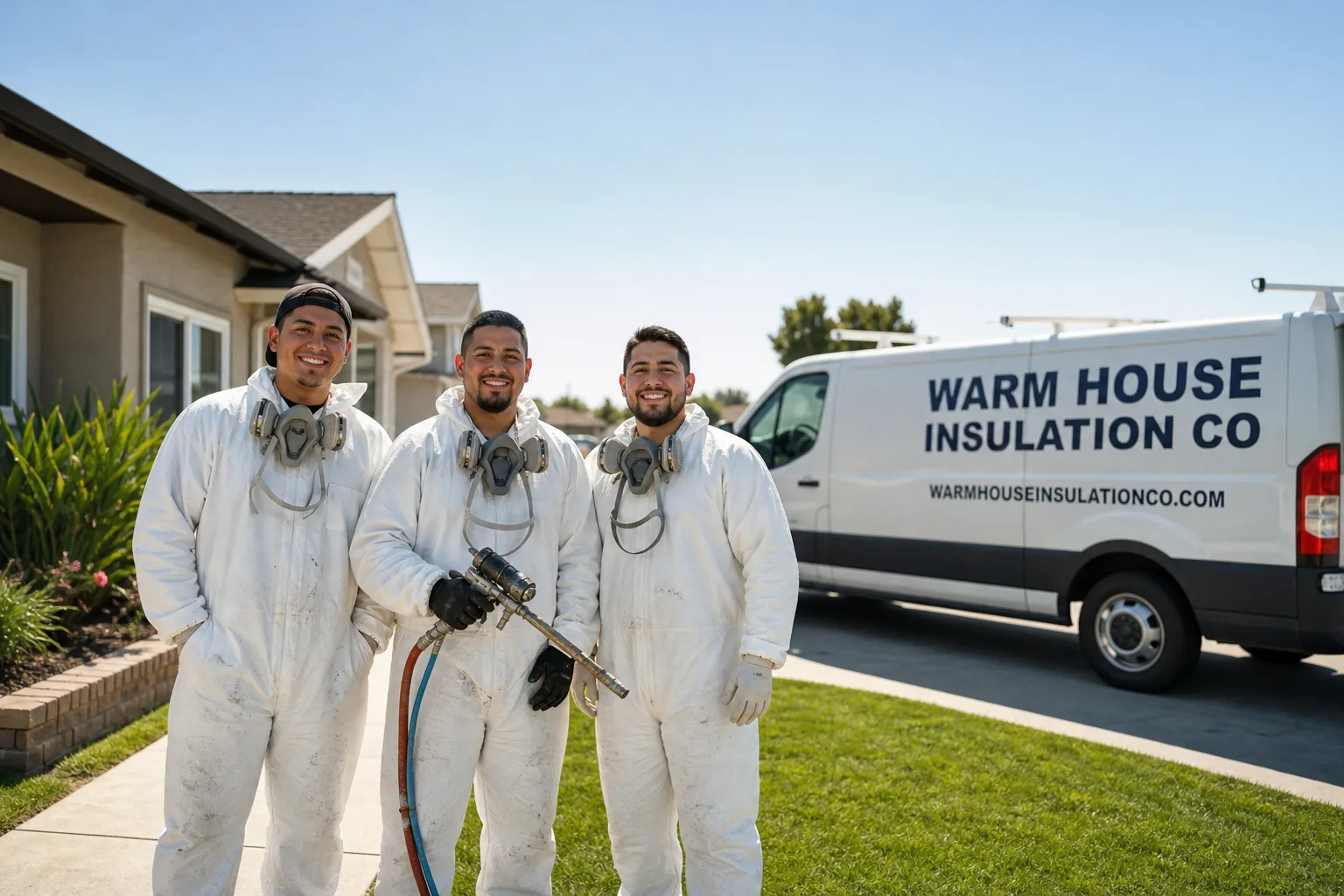
Highgrove homeowners bring us into attics that haven’t been touched since the Eisenhower and Nixon administrations. That’s our specialty, not an exception. We’re the multi-method, multi-brand insulation contractor for Attic Insulation in Highgrove that local residents call when a one-trick shop wants to sell them whatever’s on the truck. Our installers know the specific failure pattern of 1950s-through-1970s Highgrove construction: settled batts, gaps at eaves, and duct runs that turn the attic into a convection oven. Ruben Castellano leads our crew with a diagnosis-first approach – we inspect, identify, and then recommend material based on what the house needs, whether that’s Icynene open-cell spray foam, Rockwool mineral wool, or a blown-in blanket over existing insulation.
We stock and service all three of the major Attic Insulation methods: blown-in, batt, and spray foam. That range matters in Highgrove specifically because these older attics often need removal and air-sealing before any new insulation goes in. Not every contractor wants to deal with that. We do. And because we carry products from eight major manufacturers – including Knauf, Rockwool, CertainTeed, and Icynene – we don’t force a single material choice on a homeowner just to keep inventory simple. The right material is the one that matches your attic’s framing, venting, and duct layout.
Attic Mold Removal in Highgrove
Attic Mold Removal in Highgrove is a service we handle regularly because this city’s rooflines and older venting systems create the exact conditions where condensation and past leaks breed mold. When a 1960s ranch has soffit vents blocked by old insulation or a bathroom fan venting into the attic instead of outside, moisture builds up on the rafters and sheathing. That mold must be removed before any new insulation goes in – otherwise the problem gets sealed in and the warranty on the new material is void. Cost for attic mold removal in Highgrove typically runs $800 to $2,500 depending on square footage, surface type, and whether the infestation is surface-level or penetrates the wood.
Signs Your Highgrove Attic Needs Mold Treatment
Dark staining on the underside of roof sheathing is the most common signal we see on Highgrove homes with original venting. A musty smell that gets stronger in the afternoon heat, visible mold on framing, or peeling paint on ceilings below the attic all point to a moisture problem that has already taken hold. In high-heat periods, the attic acts like an incubator – mold that started small spreads fast through warm, still air.
Removal Before Reinsulation
Treating the mold means physically removing affected insulation, cleaning and treating the wood, correcting the venting or leak that caused it, and then reinsulating. Skipping any step means the mold comes back. In Highgrove specifically, where attics bake in summer, we also check that existing gable or ridge venting is actually functioning – because a hot, sealed attic makes moisture problems worse, not better.
Attic Insulation Removal in Highgrove
Attic Insulation Removal in Highgrove is often the unglamorous first step that makes every other improvement possible. Most of these mid-century homes still have their original R-11 fiberglass batts, and after 50 to 70 years of Highgrove’s hot summers and cool, damp winters, those batts have compressed, torn, or been chewed through by rodents. Homeowners call us expecting a simple top-up, and we find insulation that has settled to R-5 or less while leaving bare gaps along the eaves and knee walls. Full removal for an average Highgrove ranch runs $1,200 to $3,000, including disposal and a basic attic cleaning.
When Removal Beats Adding Over Top
Some contractors will blow new insulation right over degraded batts. That’s a mistake in Highgrove’s older homes. If the existing material holds moisture, harbors mold, or has lost its thermal integrity, burying it under a new layer doesn’t solve the problem – it hides it. Removal is also required when old insulation is contaminated by rodent nests or when a past roof leak saturated the material. In those cases, the old insulation has to come out before any new material can perform or be warrantied.
What Comes Out of a Highgrove Attic
We regularly pull out compressed fiberglass, vermiculite, and in a few cases old cellulose that has settled into a dense mat. Each one has a different removal protocol. Vermiculite, found in some Highgrove homes built before the 1970s, gets special handling because it may contain asbestos. We assess before we touch, and we never mix removal debris with new material.
Trusted Brands We Service in Highgrove
Highgrove homeowners get access to a material lineup that most insulation contractors in the Inland Empire can’t match. We install Icynene open- and closed-cell spray foam for maximum air-sealing and R-value per inch, Rockwool mineral wool when fire resistance and sound attenuation matter, Knauf and CertainTeed fiberglass for proven value in standard attics, and GreenFiber recycled cellulose for sustainability-focused retrofits. Having eight brands in our portfolio means your insulation recommendation is driven by your home’s actual needs – ceiling joist spacing, duct layout, venting – not by whatever single product line a contractor happened to stock. Ruben Castellano built Warm House around that principle, and it’s the reason we can handle Highgrove’s older attics without forcing a square product into a round situation.
Common Attic Insulation Problems We See in Highgrove Homes
- Settled R-11 batts from 1950s – 1970s builds: Original batt insulation in Highgrove ranch homes compresses over decades and leaves large gaps at the eaves where outside heat pours in. We routinely measure R-4 to R-5 where the label said R-11.
- Uninsulated ducts running through 130°F+ attics: Metal ductwork with no wrap or degraded wrap loses cooling energy before air reaches the register. In Highgrove’s 100°F+ summer weeks, that can mean your AC runs 30 – 40% more than it should.
- Mold from condensation and past roof leaks: Highgrove’s hot attics and cool winter nights create condensation on the underside of roof sheathing, especially where bath fans vent into the attic. That moisture feeds mold, which must be removed before reinsulation.
- Blocked or missing attic baffles: Older homes often lack proper baffles at the eaves, so insulation blocks soffit vents and the attic can’t breathe. That raises attic temperature and pushes heat down through the ceiling.
Pricing for Attic Insulation in Highgrove, CA
Here’s what Highgrove homeowners can expect to pay for major attic insulation services in the 92313 area. Attic Insulation Top-Up over reasonably intact existing insulation runs $800 to $1,800 for a typical 1,200 sq ft attic. Full Attic Insulation Removal and Replacement runs $2,500 to $5,000. Adding Attic Baffles & Ventilation Prep runs $300 to $700 as part of a larger job. Blown-in insulation installed from scratch runs $1,500 to $3,500 depending on R-value target, with R-38 to R-49 being the range we recommend for Highgrove’s climate. Insulated duct wrap for attic ductwork adds $500 to $1,500 depending on linear footage. These are honest ranges – your exact number depends on your attic’s square footage, access, and current condition. Estimates are free, and we’ll show you what’s actually up there before quoting. Call (866) 361-3775 and we’ll schedule a look.
We Also Serve Cities Near Highgrove
Our service area extends beyond Highgrove into the surrounding Inland Empire communities. We provide attic insulation services in Grand Terrace, Colton, Loma Linda, and Rubidoux on a regular basis. If you’re in one of those cities and need the same multi-brand, diagnosis-first approach we bring to Highgrove, call (866) 361-3775 and we’ll take care of it.
Serving Highgrove, CA — Our Local Coverage Area
We’re based in the Highgrove area and know this community well. Use the map below to see our service coverage — if you’re nearby, we can almost certainly help.
FAQs About Attic Insulation in Highgrove
In most Highgrove homes of that era, the original batts have compressed and settled enough that adding on top is a short-term patch, not a fix. If the old material is dry, mold-free, and reasonably intact, a blown-in blanket over it can work. But we find that many 1960s ranches here need removal and air-sealing first – the original batts are degraded and there are gaps at the eaves and knee walls that new insulation won’t reach. The only way to know is an inspection. Call (866) 361-3775 and we’ll look for free.
Highgrove’s hot summers and cool winters make attic condensation common, and mold follows moisture. Dark staining on roof sheathing, a musty odor that gets stronger in heat, and visible growth on framing are the three signals we look for. Sometimes the insulation itself looks dusty or clumped where moisture wicked through it. If any of that matches what you’re seeing, get it inspected before reinsulating.
For Highgrove’s hot-summer Mediterranean climate, we recommend R-38 as the minimum and R-49 as the target for optimum cooling-cost reduction. Current California code calls for R-38 in most attics, but we’ve found that R-49 delivers noticeably better summer performance in these older ranches, especially when paired with insulated ductwork. Upgrading from compressed R-5 to R-49 has cut some Highgrove homeowners’ cooling bills by 30%.
Yes, and in Highgrove this is one of the most impactful upgrades you can make. Uninsulated or poorly wrapped ducts running through a 130°F attic lose a huge share of cooling energy before air reaches your rooms. We wrap ducts with R-8 foil-backed insulation as part of attic insulation work, and the combined improvement typically delivers the fastest payback we see in Highgrove homes.
For most Highgrove homes built before the 1980s, blown-in fiberglass or cellulose works better than batts because it fills the irregular joist bays and gaps these older attics always have. Batts still have a place in accessible, rectangular attics and around vent chutes, but blown-in is our default recommendation for retrofit work here. Your quote includes the recommendation and the reasoning behind it.
Written by Ruben Castellano, Owner at Warm House Insulation Co, serving Highgrove and the Inland Empire with multi-brand attic insulation since day one.