Fast, Reliable Attic Insulation Across Highland
Attic insulation in Highland is rarely a simple comfort upgrade. Most homes here were built between the 1970s and early 2000s, and the bulk of 1980s – 90s stucco tract houses originally got R-11 to R-19 in the attic. That may have met code when installed, but it’s nowhere near what Title 24 demands today. Now those same attics bake at 140°F to 150°F through the long Inland Empire summer, and older blown-in cellulose and fiberglass have settled, compacted, or degraded. The result is a house that can’t hold conditioned air. If your summer electric bill is climbing even though your HVAC is in good shape, the attic is usually where the heat is winning. Warm House Insulation Co serves Highland homeowners directly, and we’ll diagnose what’s actually happening above your ceiling before recommending anything. Call (866) 361-3775 for a free estimate.
Why Warm House Insulation Co Is Highland’s Preferred Attic Insulation Company
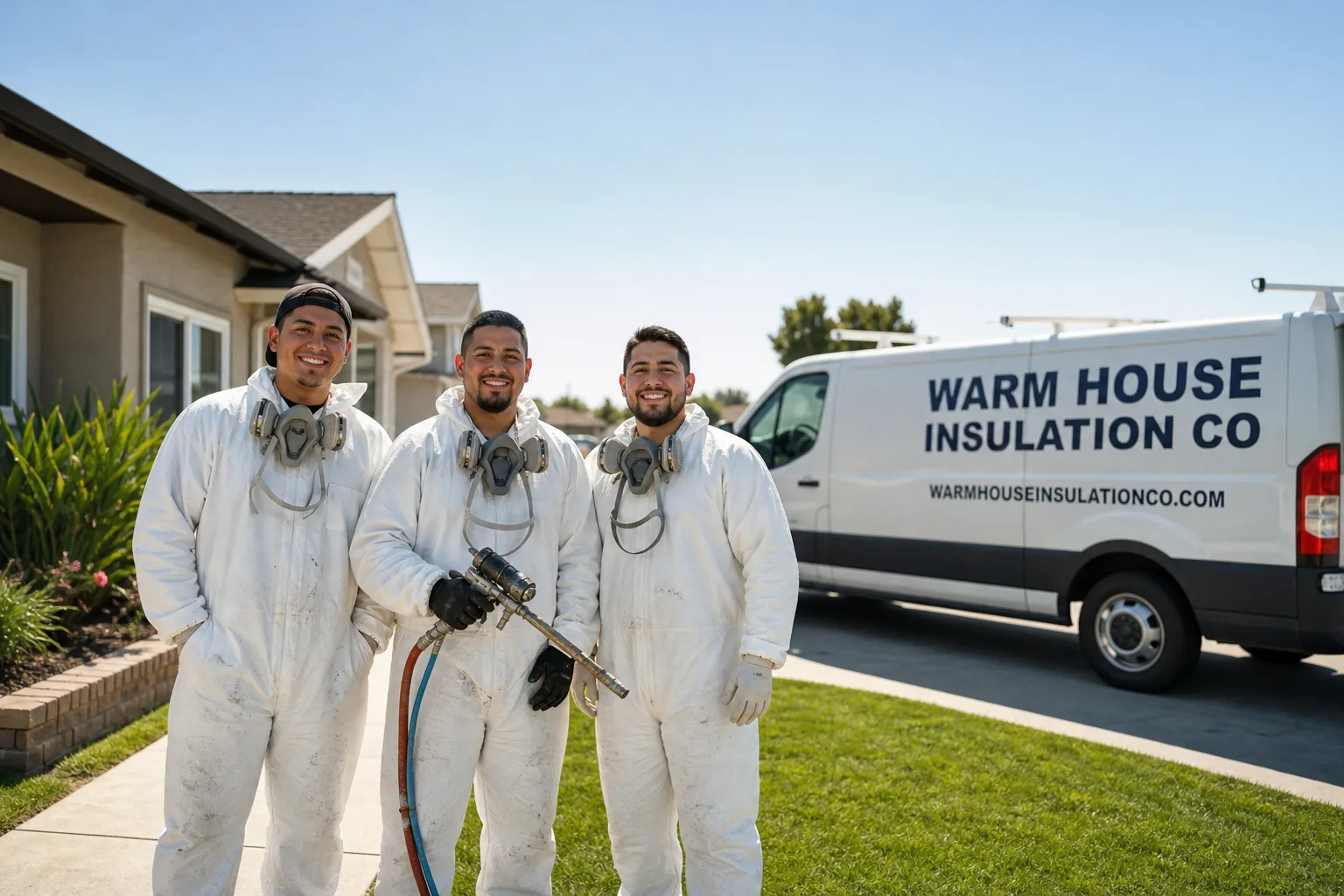
Warm House Insulation Co isn’t a franchise or a general contractor that happens to blow a little insulation on the side. We specialize exclusively in residential and light-commercial insulation, and we’re led by Ruben Castellano, who has spent his career focused on this one trade. That changes how we approach a Highland attic. We don’t show up with one product and try to make it fit. We carry eight manufacturer lines, including fiberglass from Owens Corning, Johns Manville, CertainTeed, and Knauf, mineral wool from Rockwool, spray foam from Icynene and Demilec, and recycled cellulose from GreenFiber. The right material for a 1989 tract house off Base Line Road is not automatically the right material for a newer home near East Highlands Ranch.
Our Attic Insulation team knows the failure patterns in this specific housing stock. We know which neighborhoods tend to have pest-damaged corners, where original blown-in material has settled below the joists, and which attics need air sealing before any new insulation goes in. We serve all of Highland’s 92346 ZIP code, and we respond quickly because we understand that when your upstairs rooms hit 90°F at midnight, waiting two weeks for an estimate isn’t acceptable.
Warm House carries options most contractors don’t. That matters in Highland, where homes built in the 1980s and 1990s often need a specific fix rather than a blanket upgrade. We’re insured and bonded, we work clean, and we treat your access hatch, your stored boxes, and your time with respect.
Radiant Barrier in Highland
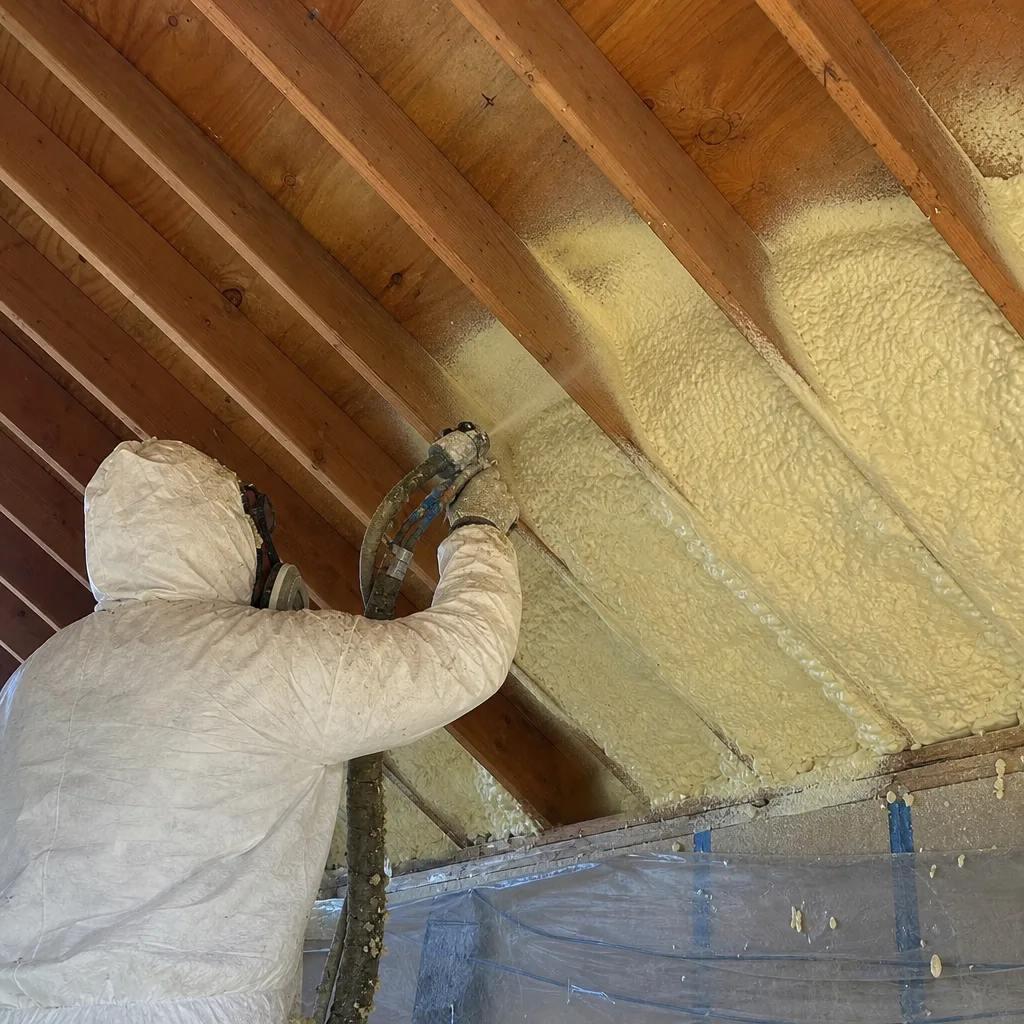
Radiant Barrier is one of the most effective additions for a Highland attic, because this city sits in a semi-arid climate where summer days routinely cross 100°F and attic cavities climb to 150°F by early afternoon. A radiant barrier is a reflective material installed on the underside of the roof deck. It reduces radiant heat transfer, which is the dominant way heat enters your attic in Highland. It doesn’t replace insulation, but it reduces how hard your insulation has to work. Highland homes with radiant barriers alongside adequate blown-in insulation typically see a noticeable drop in upstairs temperature during peak summer days. A typical radiant barrier installation in Highland runs $1.50 to $3.50 per square foot depending on attic accessibility and whether we’re working around existing framing or ductwork.
How a Radiant Barrier Helps in Highland’s Heat
In a Highland summer, the roof deck absorbs solar energy all day. That heat radiates downward into the attic, heating everything it touches: the insulation, the ductwork, the ceiling framing. A radiant barrier reflects most of that energy back toward the roof. When paired with proper attic insulation, the two systems handle different kinds of heat transfer. Radiant barrier addresses radiant heat; insulation handles conductive and convective heat. One without the other leaves a gap.
Signs Your Highland Home Needs a Radiant Barrier
If your upstairs rooms are consistently 10 to 15 degrees warmer than downstairs even with the AC running, your attic is likely the culprit. Homes off Greenspot Road and along Victoria Avenue with west-facing roof slopes get hit hardest. Another tell: your AC runs constantly on summer afternoons but can’t hold a setpoint. That’s radiant heat overwhelming your insulation. A radiant barrier reduces that load before it ever reaches your living space.
Attic Cleaning Services in Highland
Attic Cleaning Services in Highland matter more than in milder climates, and here’s why: dry, hot air accelerates the breakdown of old insulation, and Highland attics collect dust, rodent droppings, pest debris, and settled insulation fragments. If your home was built before 2000 and still has original insulation, what’s up there now is likely compacted, contaminated, and well below its original R-value. We remove the old material, sanitize and seal access points where rodents or pests got in, and prep the space for fresh insulation. A full attic cleaning and insulation replacement in Highland typically runs $2,000 to $4,500 depending on attic size and condition. The cleaning alone, without replacement, typically runs $900 to $1,800. This is not a once-a-decade maintenance task for most homes. It’s the first step before any meaningful insulation upgrade.
Safely Removing Old Insulation
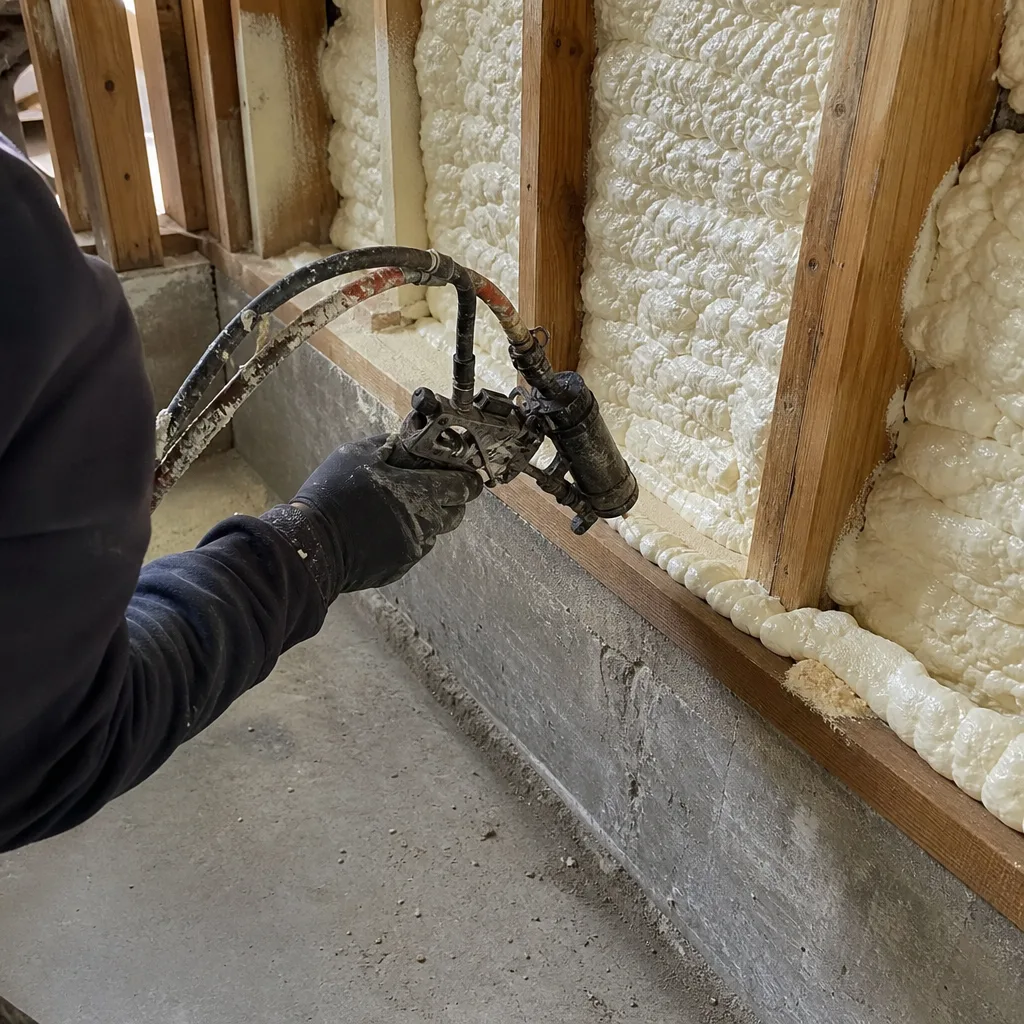
Older fiberglass and cellulose hold dust, allergens, and sometimes pest waste. Removing it properly requires containment and protective equipment. Our crew vacuums out the old material using commercial HEPA filtration, then we inspect the decking and wiring. Homeowners are sometimes surprised by what we find: degraded duct connections, missing baffles, or top plates that were never sealed. It all matters before new material goes in.
Clearing Vents and Baffles
Ventilation and insulation work together. In Highland, soffit and ridge vents are often buried by old blown-in material, which blocks airflow and traps heat. During a cleaning, we clear these vents and install or replace baffles to keep airflow moving. Good ventilation extends the life of your insulation and your roof deck. Skipping this step leaves even the best new insulation fighting an overheated attic with no way to release heat.
What happens when you call
- 1
A real person answersNo phone trees — you reach a local pro.
- 2
You get an upfront price rangeHonest numbers before anyone is dispatched.
- 3
A background-checked tech heads outLicensed & insured, dispatched right away.
- 4
You approve before work beginsNothing starts until you say go.
Trusted Brands We Service in Highland
Warm House Insulation Co is authorized to install products from Owens Corning, Johns Manville, Knauf, CertainTeed, Rockwool, Icynene, Demilec, and GreenFiber. That range means we don’t have to push a single product on every Highland homeowner. If you need fire-resistant mineral wool for a garage-adjacent attic or an Icynene open-cell spray foam for a cathedral ceiling, we stock it. If a CertainTeed batt or GreenFiber blown-in product fits your budget and performance needs, we’ll quote that. We keep materials ready for common Highland attic projects, so turnaround is fast. Your home’s situation determines the material, not the other way around.
Common Attic Insulation Problems We See in Highland Homes
- Original blown-in cellulose settled to the level of the joists. Most 1980s – 90s tract homes in Highland started with about 6 to 8 inches of cellulose, now compressed to 3 inches or less. That’s roughly R-11 of effective insulation, even though the original label said R-19. The material degrades under 150°F attic heat until it barely insulates at all.
- Missing insulation around top plates and recessed fixtures. Openings around interior top plates and recessed lights let attic air pour down into walls and ceilings. We find this regularly in Highland homes built before air sealing was standard practice. Sealing these gaps cuts heat gain more than most homeowners expect.
- Pest-damaged and contaminated insulation. Rodents move into attics through gaps in fascia boards and around plumbing vents. Their droppings contaminate insulation and their nesting breaks down the material. In dry Highland weather, the contaminated material stays dry and dusty, circulating fine particles into your living space whenever the HVAC cycles.
- Bathroom and kitchen exhaust fans venting directly into the attic. Many 1980s and 1990s Highland homes have exhaust fans that terminate in the attic instead of through the roof. That pushes warm, moist air into the attic and into the insulation. In Highland’s dry climate, moisture from these fans doesn’t always show visible damage right away, but it still encourages dust adhesion and pest activity.
Pricing for Attic Insulation in Highland, CA
Highland attic insulation costs are driven mostly by attic square footage, the condition of what’s already up there, and whether we’re topping up, cleaning, or doing a full replacement. A straightforward blown-in cellulose top-up for a typical 1,200 to 1,500 square foot Highland attic runs $1,200 to $2,200. Attic batt insulation replacement in the same size home runs $2,000 to $3,800, depending on whether we’re pulling out old material and air sealing. A full removal, cleaning, air sealing, and fresh blown-in install runs $3,500 to $6,000 for most Highland homes. If you add a radiant barrier on top of that, expect $1,500 to $3,500 more depending on roof geometry and access. The free estimate we provide gives you an exact line-item quote for your attic, not a ballpark pulled from a website calculator. Call (866) 361-3775 and we’ll schedule a walkthrough.
We Also Serve Cities Near Highland
Warm House Insulation Co regularly works in the communities around Highland, including Highland, San Bernardino, Muscoy, Redlands, and Loma Linda. If you’re just over the city line, we can typically schedule a visit on the same route as other local appointments. Call us and we’ll let you know when we’re in your area next.
Serving Highland, CA — Our Local Coverage Area
We’re based in the Highland area and know this community well. Use the map below to see our service coverage — if you’re nearby, we can almost certainly help.
FAQs About Attic Insulation in Highland
Yes, almost certainly. Homes built in Highland during the 1980s and 1990s were typically insulated to R-11 or R-19 in the attic. Current Title 24 requirements call for R-30 to R-49 in this climate zone depending on the material. Add 25 to 35 years of settling, pest activity, and degradation from 150°F attic heat, and the effective R-value is often far below the original label. We can measure what’s up there and tell you exactly where you stand. Call (866) 361-3775 for a free assessment.
Insulation doesn’t stop radiant heat from entering the attic; it only slows heat transfer into the living space below. On a 100°F Highland day, the roof deck absorbs solar energy and radiates it into the attic cavity. The air itself heats up, and your insulation’s job is to block that heat from moving downward. If your insulation is old or settled, it can look present in a quick visual check while being functionally depleted. A radiant barrier is the most effective way to reduce that 150°F attic temperature at the source.
No, in most Highland homes a vapor barrier is not necessary. Highland has a semi-arid climate with low humidity. Vapor barriers matter in cold climates and coastal zones where moisture drives into attics from the living space. Here, the priority is blocking heat gain and sealing air leaks. We’ll assess your attic and install only what your home actually needs.
Yes, if your attic regularly hits 140°F or higher in summer, a radiant barrier will reduce how much heat reaches your insulation and your ceiling. Insulation and radiant barriers do different jobs. In Highland’s high-heat summers, pairing them delivers the biggest cooling benefit. The combination is especially effective in older tract homes where the roof deck has little to no shading.
Yes, and this is one of the most common calls we get in Highland. A newer HVAC system can only cool the air you have. If your attic insulation is settled to 3 inches or missing around top plates and recessed lights, 150°F attic air seeps into the house continuously. Your AC runs longer just to hold temperature. In many Highland tract homes, the original blown-in cellulose has settled below the joists and is effectively R-11. Fixing the attic is usually the highest-impact step. Call (866) 361-3775 and we’ll confirm what’s happening in your attic.
Written by Ruben Castellano, Owner at Warm House Insulation Co, serving Highland since day one.