Fast, Reliable Attic Insulation Across La Habra Heights
Attic insulation in La Habra Heights is a different animal than what you’ll find down the hill in La Habra or Fullerton. These are custom homes on acreage, not tract houses, and most were built between the 1950s and 1990s with irregular framing, vaulted ceilings, and additions that sit on different cavity depths than the original structure. We run our crews up the winding drives off Hacienda Road and into the canyon parcels every week, so we know what those attics look like inside. If your upstairs rooms bake by mid-afternoon or your energy bills climb every summer, call Ruben and the team at (866) 361-3775. We’ll come out, look at what’s actually above your ceiling, and tell you straight what the fix is.
Key takeaways:
- Most La Habra Heights homes need an access-and-cavity survey first, not a blind blow-in job.
- Vaulted-beam ceilings and 1950s-1990s additions create irregular cavities that single-method contractors struggle with.
- Free estimates, and we reach homes on unpaved private drives without issue.
- Fire-aware material choices matter here, and we carry Rockwool for exactly that reason.
Why Warm House Insulation Co Is La Habra Heights’s Preferred Attic Insulation Company
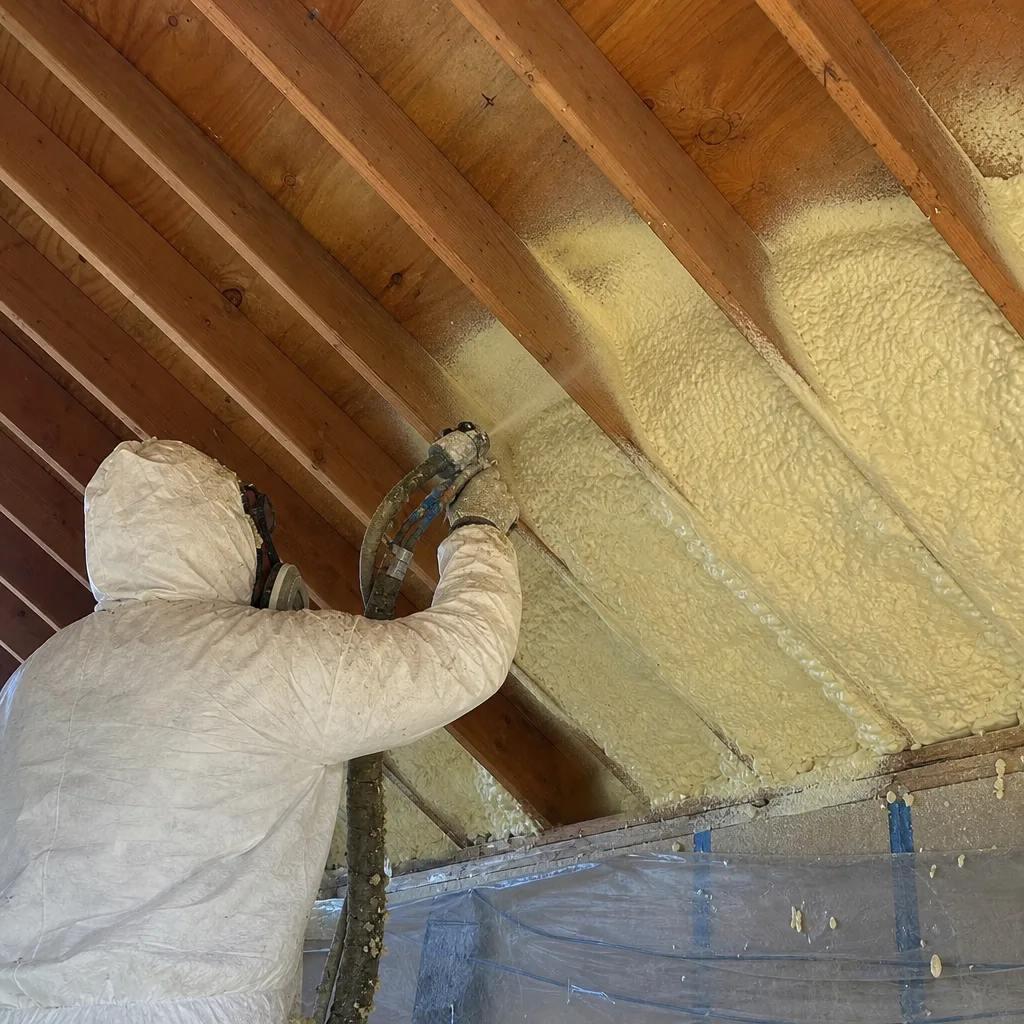
La Habra Heights homeowners tend to do their homework. They ask about R-values, fire ratings, and whether the contractor actually understands the difference between a sloped vaulted cavity and a flat attic floor. That’s how we’ve earned repeat work across the hill, from the citrus groves off Skyline Drive to the ridgeline parcels near 90633. Ruben Castellano built Warm House Insulation Co around a simple idea: recommend the material that fits the home, not the material sitting in the warehouse. That’s why we install eight brands, including Knauf fiberglass for standard attics, Rockwool mineral wool where fire resistance or sound isolation matters, CertainTeed insulation for performance retrofits, and Icynene spray foam for vaulted and exposed-beam cavities.
What does that mean for a La Habra Heights homeowner? It means we won’t shove fiberglass batts into a 1960s exposed-beam ceiling because that’s all we stock. We’ll suggest a hybrid approach: blown-in over the flat sections, Rockwool against the rakes, air-sealing at the top plates and can lights. Homeowners recognize when a contractor is actually solving the problem instead of selling a product. That’s the reputation we’ve built here.
We answer our own phone at (866) 361-3775, and our crews know the drive times up Hacienda Boulevard, through the switchbacks, and onto those long gravel approaches most contractors won’t touch. We’re equipped for it, from high-clearance vehicles to hand-carry equipment when a gate is too tight for a truck.
Radiant Barrier in La Habra Heights
Radiant barrier work in La Habra Heights is one of the most effective upgrades we install on hillside homes with full western or southern sun exposure. These are unshaded ridgeline parcels where the attic can hit 140°F by mid-afternoon in July and August, driving radiant heat straight through the ceiling and into living spaces below. A radiant barrier, installed as a foil laminate against the underside of the roof deck or rafters, reflects that heat before it ever reaches your insulation. It’s not a substitute for insulation depth, but it works hand-in-hand with it. Expect to pay between $1,500 and $3,200 for a typical La Habra Heights attic, depending on square footage and rafter configuration.
How We Install It on Vaulted-Beam Ceilings
Most radiant barrier installations assume a standard truss attic with open rafter bays. La Habra Heights attics rarely look like that. We work around exposed beams, irregular rafter spacing, and sloped sections where the roof deck sits close to the ceiling. The key is maintaining an air gap between the foil and the roof sheathing, which is what actually makes the material perform. Our crew marks out ventilation paths first and staples the barrier cleanly, even in tight canyons behind chimneys and dormers.
When Radiant Barrier Alone Isn’t Enough
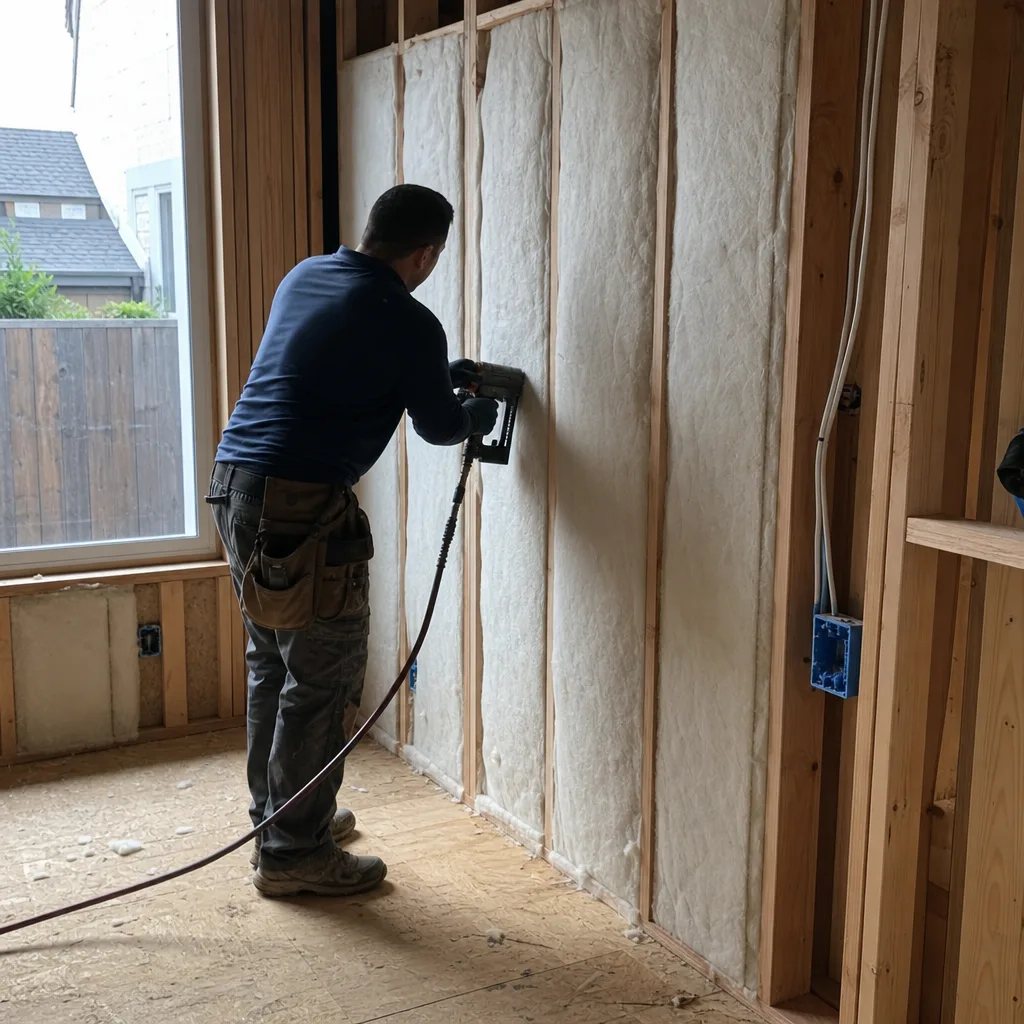
If your home has original 1950s or 1960s insulation that’s slumped or barely present, radiant barrier will help but won’t solve the problem. Radiant heat is only one part of the equation. Conductive and convective heat still move through under-insulated ceilings. In those cases, we pair the radiant barrier with blown-in or batt insulation in the same visit. You get the reflective benefit of foil plus the thermal resistance of insulation depth, and you only pay for one mobilization.
Attic Cleaning Services in La Habra Heights
Attic Cleaning Services in La Habra Heights are a specialty here because the local environment works against attic ventilation. Avocado trees, citrus trees, and mature oaks shed massive amounts of leaf litter every year. That litter finds its way into soffit vents, gable vents, and along the attic floor. On a recent job off a long private drive in the canyon-and-ridge area, we opened a 1960s vaulted-beam attic where the original mineral wool had slumped off the slope between the ceiling joists and the soffit vents were packed solid with avocado leaves. The whole upper floor baked by mid-afternoon, and no amount of added insulation would have fixed it without cleaning the intake air path first. Expect to pay between $600 and $1,400 for a standard attic cleaning in La Habra Heights, which includes debris removal, vent clearing, and an inspection report with photos of what we found.
Why Ventilation Comes Before Insulation Here
An attic with clogged soffit vents can’t purge heat, no matter how many inches of insulation you pile on the floor. The heat just sits there and radiates down into the living space. Worse, trapped moisture from bathrooms and kitchens condenses on the underside of the roof deck, leading to mold and sheathing rot over time. We always clear and verify ventilation before adding insulation, especially on older La Habra Heights homes where the original venting may have been undersized to begin with. Clearing tree litter and adding ember-resistant vent screens is standard practice for us on these hillside parcels.
What We Remove and What We Don’t
We remove leaf litter, rodent nesting material, old loose debris, and any junk left by previous owners or contractors. We don’t remove hazardous materials like vermiculite or asbestos-containing insulation without a specialized abatement referral. If we find evidence of rodents or bats, we’ll tell you and recommend a pest-control follow-up before we install new insulation. The goal is a clean, dry, ventilated attic cavity that insulation can actually perform in.
What happens when you call
- 1
A real person answersNo phone trees — you reach a local pro.
- 2
You get an upfront price rangeHonest numbers before anyone is dispatched.
- 3
A background-checked tech heads outLicensed & insured, dispatched right away.
- 4
You approve before work beginsNothing starts until you say go.
Trusted Brands We Service in La Habra Heights
We carry and install insulation from Knauf, Rockwool, CertainTeed, and Icynene, which means the material recommendation you get from us is driven by your home’s actual needs, not by what we happen to have in the truck. For a standard flat-ceiling La Habra Heights ranch, Knauf blown-in fiberglass in the attic is a cost-effective thermal win. For a hillside home in the wildland-urban interface, Rockwool mineral wool offers fire resistance and sound isolation that fiberglass can’t match. For vaulted-beam ceilings and older additions with irregular cavities, Icynene spray foam seals and insulates in one step. If you call us on a Tuesday, we can typically have most materials staged by Thursday and installed the following week. For urgent jobs during heat waves, call (866) 361-3775 and Ruben will talk through your options directly.
Common Attic Insulation Problems We See in La Habra Heights Homes
- Slumped mineral wool on vaulted and exposed-beam ceilings. The original insulation in many 1950s-1990s custom homes on the hill was wool batt stapled between rafters. Over decades, gravity pulls it down, leaving the slope bare and letting hilltop afternoon sun turn your ceiling into a radiant panel. The fix is removal, air-sealing, and replacement with material that holds its position in sloped cavities.
- Avocado and citrus leaf litter packing soffit and gable vents. This is the most common failure we see that has nothing to do with the insulation itself. Homeowners add insulation because upstairs rooms are hot, but the real culprit is zero intake airflow. The vents are choked with tree debris. We clear them, install ember-resistant screens, and only then add insulation.
- Unlined, irregular attic cavities in additions. La Habra Heights homes grow over time: a guest house here, an office wing there, a workshop above the garage. The new addition rarely matches the original roof pitch or joist depth. Can lights, top plates, and chase gaps were never air-sealed in most of these custom additions. Conditioned air leaks into a hot, fire-exposed attic year-round. Sealing these before insulating makes the insulation you pay for actually work.
- Detached outbuildings with zero attic treatment. Barns, workshops, guest houses, and pool cabanas on multi-acre lots are often built as uninsulated shells. Owners assume these spaces can’t be made comfortable, but we insulate them regularly, often with spray foam or blown-in depending on the structure.
Pricing for Attic Insulation in La Habra Heights, CA
Attic insulation pricing in La Habra Heights depends primarily on what’s already up there and what the cavity looks like. A standard blown-in attic insulation top-up on a 1,500-square-foot home with easy attic access runs between $1,800 and $2,600 using Knauf fiberglass. A full attic insulation replacement, including removal of old slumping material and disposal, runs $3,200 to $4,800 on average. Radiant barrier installation adds $1,500 to $3,200 depending on rafter configuration and square footage. Air-sealing work, which we strongly recommend on older La Habra Heights homes, typically adds $400 to $900. Detached structures like guest houses and barns are quoted separately based on access and cavity depth. Every estimate we give is free, and we’ll walk the attic with you before you spend anything. Call (866) 361-3775 and ask for Ruben.
For more detail on what full attic insulation involves, see our Attic Insulation service page.
We Also Serve Cities Near La Habra Heights
Our crews are based nearby and work regularly in La Habra Heights as well as La Habra, East La Mirada, Fullerton, and La Mirada. If you’re in a neighboring community and dealing with the same hillside or older-home insulation challenges, reach out. We know the local housing stock across this whole corridor, and we’re happy to schedule a free attic assessment for you at (866) 361-3775.
Serving La Habra Heights, CA — Our Local Coverage Area
We’re based in the La Habra Heights area and know this community well. Use the map below to see our service coverage — if you’re nearby, we can almost certainly help.
FAQs About Attic Insulation in La Habra Heights
Yes. Exposed-beam vaulted ceilings are common in La Habra Heights custom homes, and they require a hybrid approach. We typically seal the ceiling plane, fit Rockwool mineral wool batts tight against the exposed-beam rakes where a blower can’t reach, and use Icynene spray foam or blown-in insulation across the flat sections. The key is correct material selection for each cavity type, which is exactly what our multi-brand approach enables. Call (866) 361-3775 and we’ll look at your specific beams and slopes.
Because mature avocado and citrus trees on La Habra Heights hillside lots shed continuously, and the prevailing canyon breezes push that litter directly toward the roofline and into your vent openings. The standard fix is clearing the vents, then installing ember-resistant screening with a finer mesh that blocks leaf litter while still allowing intake airflow. We do this as part of our attic cleaning and prep work, and it’s the single most important step in restoring proper attic ventilation on a hillside property.
For most hilltop La Habra Heights homes with full afternoon sun exposure, yes. A radiant barrier can reduce attic temperatures by 20 to 30 degrees in mid-summer, which directly lowers the heat load on your living spaces and your cooling system. It’s most cost-effective when installed during an attic insulation upgrade, since we’re already in the space and the incremental labor is modest. Expect to pay between $1,500 and $3,200 for a typical installation. For an exact number, call (866) 361-3775 for a free assessment.
Yes. Long private drives and unpaved access are standard for La Habra Heights properties. Our trucks have the clearance and our crews are prepared to hand-carry materials through tight gates or up steep paths when a vehicle can’t make it. We regularly insulate detached barns, workshops, and guest houses that are set far back from the road. Mention your access situation when you call (866) 361-3775 and we’ll plan the job accordingly.
In the La Habra Heights wildland-urban interface, fire-resistant material choices are a smart move. Rockwool mineral wool is non-combustible and won’t contribute fuel in an attic fire, which is one reason we stock it and recommend it for many hillside homes here. It also delivers sound isolation and moisture resistance that fiberglass doesn’t offer. We can walk you through the trade-offs between Rockwool, fiberglass, and spray foam for your specific roofline and exposure.
Written by Ruben Castellano, Owner at Warm House Insulation Co, serving La Habra Heights and surrounding communities.