Fast, Reliable Attic Insulation Across Piñon Hills
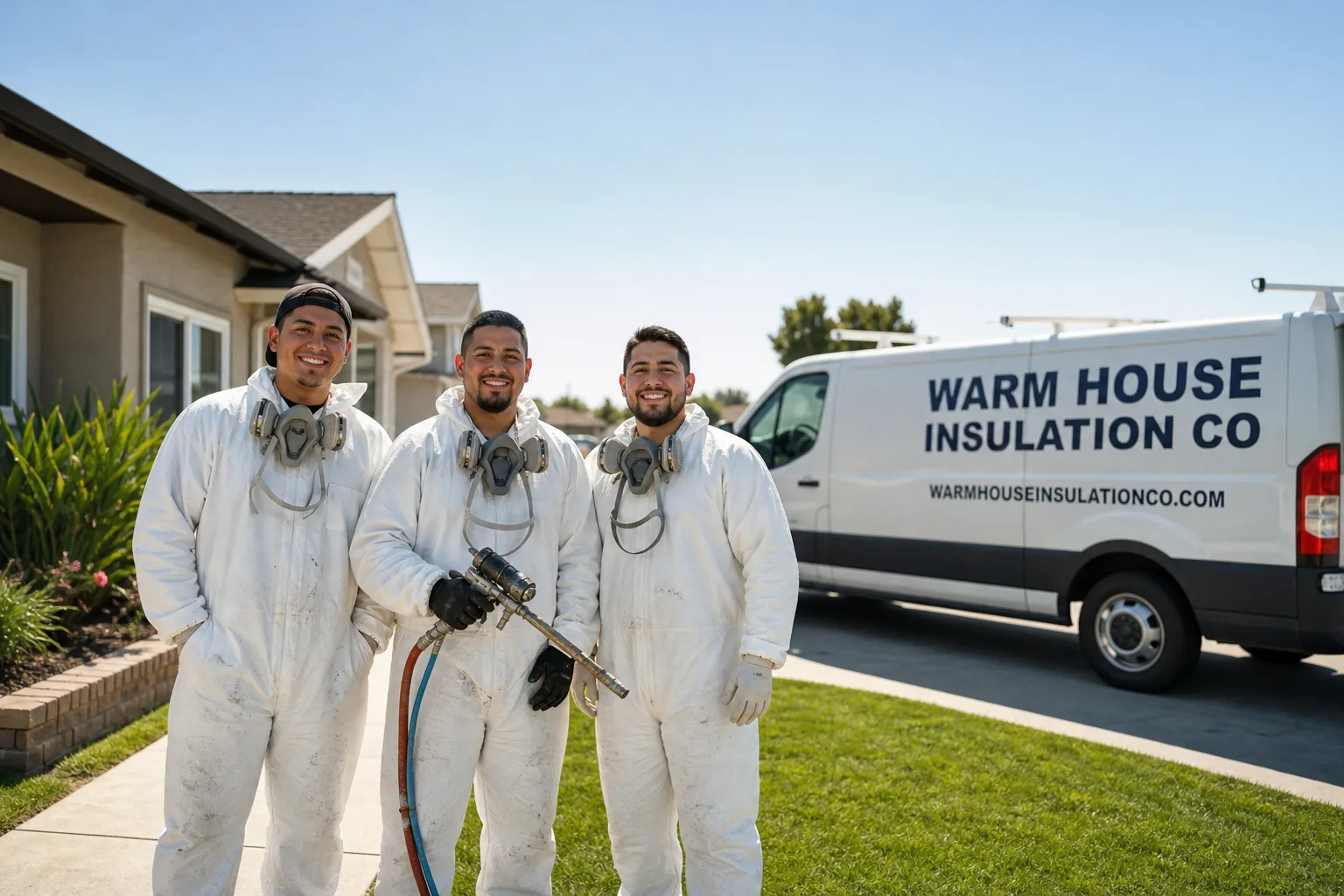
At 4,000 feet in the Tri-Community, your attic insulation has to do what most Antelope Valley attics never face: carry the same house through triple-digit summer rooftop heat and sub-freezing January nights. That dual load changes how insulation should be chosen, how thick it needs to be, and how carefully the attic gets air-sealed. Warm House Insulation Co has been working Piñon Hills attics long enough to know what holds up and what fails out here. We carry eight manufacturer lines including Johns Manville, Knauf, Rockwool, CertainTeed, Icynene, Demilec, and GreenFiber, so the material matches the house, not our warehouse. Call Ruben and the crew at (866) 361-3775 for a free estimate. We do the full job in one trip, because nobody in Piñon Hills wants a contractor who needs three visits to finish an attic.
Why Warm House Insulation Co Is Piñon Hills’s Preferred Attic Insulation Company
Homeowners across Piñon Hills call us because we actually understand high-desert construction. Most of the homes here aren’t tract houses on postage-stamp lots. They’re older cabins, manufactured homes, and site-built houses with converted garages, enclosed porches, and add-on rooms that never got proper insulation in the first place. Ruben Castellano built this company around diagnosing each home’s specific problem before recommending a product. That’s why we stock and install eight brands instead of pushing one. When a Piñon Hills customer calls, we ask about cold January rooms and summer upstairs heat, then we spec the right fix. Our team covers all of 92372 and responds quickly to the Phelan Road corridor, the areas off Sheep Creek, and the acreage lots toward Wrightwood. We’re familiar with the building quirks out here because we’ve worked on them for years.
Attic Mold Removal in Piñon Hills
Attic Mold Removal in Piñon Hills is different from the same job down in the flatlands because of the freeze-thaw cycle and the wind. Cold winter nights out here cause condensation when warm interior air leaks into a cold attic. That moisture soaks into the wood and insulation, and once the high-desert wind starts pushing more air through open gable and soffit gaps, the attic never really dries out. Mold takes hold. Homeowners find it when they climb up to look for a draft and find dark staining on the roof decking.
How the condensation forms in high-desert attics
Piñon Hills homes with older cabins or manufactured construction often have bath fans, range hoods, and unsealed top plates venting directly into the attic. In summer that moisture bakes off. But in December and January, the attic sheathing stays cold enough that the vapor condenses and freezes onto the framing. The repeated cycle is what feeds mold. Air-sealing the ceiling plane and the gable penetrations is the only real fix.
What full mold remediation involves
We don’t just spray a coat of paint over the problem. The attic gets sealed off, the contaminated insulation comes out, the sheathing is treated, and then ventilation gets corrected before anything new goes in. For a typical Piñon Hills attic, mold removal plus reinsulation usually runs $1,800 – $4,200 depending on square footage and how far the growth has spread. We always recommend checking ventilation first; without that fix, the mold returns.
Attic Insulation Removal in Piñon Hills
Attic Insulation Removal in Piñon Hills is frequently a bigger priority than people expect, especially on south- and west-facing exposures. The high-desert sun beats on those roof slopes for hours every day. Over years, batt insulation on those sides turns brittle, compresses, and loses its R-value exactly where the heat load is worst. When we inspect attics in 92372, we regularly find fiberglass that started as an R-30 batt and now measures under R-15. In those cases, adding new insulation on top doesn’t solve anything. The old, degraded material has to come out.
Signs the existing insulation has failed
If the rooms under a south- or west-facing roof slope are 10 degrees hotter than the rest of the house in July, the insulation up there has likely cooked. Same thing in winter if those rooms run noticeably colder and you feel a cold draft along the ceiling. In converted garages and enclosed porches, we often find gaps where the original ceiling is uninsulated or the top plates were never sealed. The only way to address that is to open the cavities, remove the old material, seal, and re-insulate.
Removal in older cabins and manufactured homes
Older Piñon Hills cabins and manufactured homes pose their own challenge. Soffit and gable sealing in these homes is often thin or missing completely, which lets the open-lot wind push straight through the thermal envelope. When we remove insulation from these attics, we always inspect and air-seal the soffit and gable edges before anything gets reinstalled. Attic insulation removal and disposal for a typical 1,200 – 1,800 square foot home here runs $1,100 – $2,400. Replacement insulation is priced separately based on material and target depth.
Trusted Brands We Service in Piñon Hills
Warm House Insulation Co is authorized to install products from eight manufacturers, including Johns Manville, Knauf, and Rockwool. That gives Piñon Hills homeowners something most contractors around the Tri-Community can’t offer: genuine material choice. If a cabin off Phelan Road wants Rockwool mineral wool for fire resistance and sound dampening, we can spec it. If a converted garage attic needs blown-in fiberglass, we carry Johns Manville and Knauf lines. Because we’re not tied to one brand, our recommendations start with what the attic actually needs, not what we happen to stock. For Piñon Hills customers, that means the right fix in one trip, with parts and material on the truck when we show up.
Common Attic Insulation Problems We See in Piñon Hills Homes
- Sun-baked batt failure on south and west slopes. The high-desert sun degrades fiberglass batts over time, especially where roof angles face afternoon heat. R-value collapses and rooms under those slopes get hot even with the AC running.
- Wind-driven drafts from unsealed gable and soffit gaps. Open lots in Piñon Hills get real wind. Gaps in the gable ends and soffit edges let that wind push through the attic and into wall cavities, which shows up as cold rooms in January.
- Uninsulated converted garages and enclosed porches. A lot of homes out here started as cabins and grew in pieces. The added rooms were framed and closed up without sealing top plates or insulating the roof, so they roast in summer and freeze in winter.
- Mold from freeze-thaw condensation. Winter condensation inside under-ventilated attics is common at this elevation. Once moisture soaks the sheathing and insulation, mold follows. Ventilation and air-sealing fixes have to happen before new insulation is worthwhile.
Pricing for Attic Insulation in Piñon Hills, CA
We Also Serve Cities Near Piñon Hills
Warm House Insulation Co serves all of 92372 and the surrounding high-desert communities. We make regular runs to Phelan, Wrightwood, Oak Hills, and Adelanto. If you’re located outside Piñon Hills proper, call us to confirm coverage. Since we work throughout the Piñon Hills area and beyond, our crews are already on local roads daily. If your property sits off Phelan Road or up toward the Wrightwood turnoff, we can usually be there the same week. One trip, full job, no callback.
Serving Piñon Hills, CA — Our Local Coverage Area
We’re based in the Piñon Hills area and know this community well. Use the map below to see our service coverage — if you’re nearby, we can almost certainly help.
FAQs About Attic Insulation in Piñon Hills
At 4,000 feet in the Tri-Community, Piñon Hills attics face summer roof temperatures well past 130°F and winter nights below freezing. Insulation that’s only sized for cooling loses its grip when January cold drives frost into the wall cavities. The right attic system out here handles both loads, which means full-depth coverage, sealed top plates, and ventilation that can manage the freeze-thaw cycle. Call (866) 361-3775 and we’ll assess what your attic was actually designed for.
Not always, but often. If the old insulation is dry, intact, and still holding its R-value, a top-up is fine. If it’s sun-baked, crumbled, moldy, or compressed, it has to come out first. In older Piñon Hills cabins and manufactured homes, we frequently find insulation that has already failed on the south and west exposures. Call us and we’ll inspect before recommending anything.
Yes, and in those spaces it’s usually the single most important step. Converted garages and enclosed porches were rarely sealed when they were added. The top plates, gable ends, and soffit edges leak air continuously, which means whatever insulation you add is undermined by wind-driven infiltration. We air-seal first, then insulate. It’s the only way to stop the January drafts for good.
The wind matters more than most people realize. Open lots mean nothing blocks the wind from hitting your gable and soffit edges. Small gaps there become forced-air leaks through the attic and into the wall cavities. You can add R-60 and still feel drafts if the air-sealing isn’t done. On Piñon Hills acreage, air-sealing has to be planned and completed before batts or blown-in goes down.
We install fiberglass batts from Johns Manville and Knauf, Rockwool mineral wool batts, Icynene and Demilec spray foam, and GreenFiber recycled cellulose. The right material depends on your roof pitch, the condition of the existing insulation, whether the space has moisture issues, and how much wind-driven air leaks we find. Call Ruben and the team at (866) 361-3775 for a material recommendation based on your actual attic, not a default.
Written by Ruben Castellano, Owner at Warm House Insulation Co, serving Piñon Hills and the surrounding high-desert communities.