Fast, Reliable Attic Insulation Across San Joaquin Hills
Attic insulation in San Joaquin Hills usually costs between $1,800 and $5,400 depending on attic size, access difficulty, and whether old material needs removal first. Most homes in this hillside enclave need more than an R-value bump: they need a moisture-control and fire-hardening strategy built around the marine layer and canyon winds. Our crews work throughout the 92657 ZIP, from cul-de-sac Mediterranean builds to the larger custom contemporaries along ridge lines. Call (866) 361-3775 for a straight answer and a free estimate.
Why Warm House Insulation Co Is San Joaquin Hills’s Preferred Attic Insulation Company
We’ve worked inside enough San Joaquin Hills attics to know the exact failure pattern: fiberglass batts saturated by coastal condensation, compressed under roof tiles, and vent screens rusted through by salt air and Santa Ana embers. That’s not a generic insulation problem, and a generic insulation contractor will miss it. We don’t.
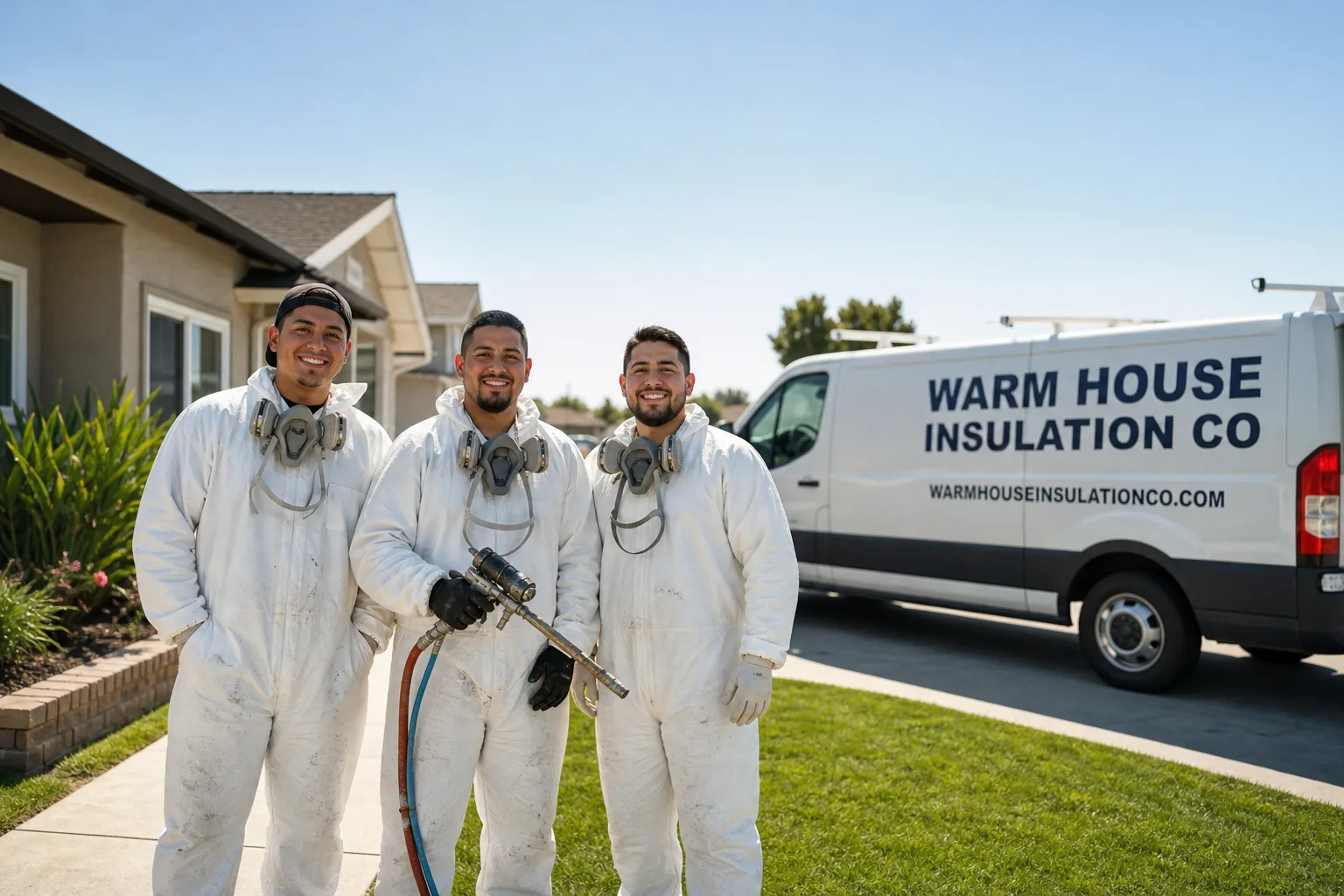
Ruben Castellano leads our crews. He built Warm House Insulation Co around a diagnosis-first approach: we inspect the attic, identify where moisture enters and heat escapes, then match the material to the specific situation. That’s why we carry Rockwool mineral wool, CertainTeed fiberglass, and both Icynene and Demilec spray foam systems. Most installers stock one product. We carry options, because a 1991 hillside custom home with a vaulted ceiling and a canyon-facing attic needs something very different from a standard tract house in Irvine.
San Joaquin Hills homeowners call us because we show up when we say we will and we explain the “why” before we ever quote a price. That’s the whole job.
Attic Mold Removal in San Joaquin Hills
Attic Mold Removal in San Joaquin Hills is different from mold work elsewhere in Orange County because the moisture source is usually condensation, not a leak. The marine layer rolls in overnight, sits on the underside of roof sheathing, and when the afternoon sun hits those tiles at 30 – 40°F hotter than the shaded side, the attic sweats. Over years, that sweat feeds mold on sheathing and saturates insulation batts.
In a typical San Joaquin Hills home, mold removal starts with identifying where the moist air is entering. Most of the time it’s poorly sealed top plates, recessed light housings, or vent screens that have corroded into gaps. We remove the affected insulation, treat the sheathing, air-seal the bypass points, and replace the material with something that resists moisture. A full attic mold removal and insulation replacement in this area runs $2,500 to $6,000 depending on square footage and how much sheathing needs treatment.
Moisture-Driven Mold vs. Leak-Driven Mold
Leak-driven mold follows a roof failure; you’ll see water staining directly below a penetration. Moisture-driven mold appears across the wide underside of the sheathing, especially on the canyon-facing slope that gets hit by the marine layer every night. San Joaquin Hills sees far more of the second type.
When Mold Is a Sign of a Bigger Problem
If we find mold in an attic here, it almost always means air-sealing failed somewhere. Fixing the mold without sealing the air leaks means the same problem returns within two years. We treat the root cause, not just the visible symptom.
Attic Insulation Removal in San Joaquin Hills
Attic Insulation Removal in San Joaquin Hills usually costs $1.50 to $3.00 per square foot when the material is dry and accessible, and higher when it’s saturated, moldy, or packed into cathedral-ceiling cavities. Most homes built in the 1980s through early 2000s here have original fiberglass batts that are now compressed, darkened, and doing very little thermal work.
We remove old insulation because it’s often contaminated with mold, rodent droppings, or decades of accumulated dust that reduces thermal performance and compromises indoor air quality. In canyon-edge homes, we routinely find corroded fasteners and degraded vent screens alongside the failing insulation. Removal is the first step toward a real fix: a clean, sealed, properly vented attic with new material that fits the structure.
Full Vacuum Extraction for Tight Attics
Many San Joaquin Hills attics have complex rooflines with vaulted ceilings and tight knee-wall spaces. We use high-powered vacuum extraction with long-reach hoses to clear material from spots where you can’t stand up or even kneel comfortably. The job gets done thoroughly, not just in the middle of the attic.
What Happens After Removal
Once the old insulation is out, that’s the moment to fix everything that caused it to fail: air-seal the top plates, install or repair baffles, replace corroded vent screens, and address any wiring or fixture penetrations. Then we blow in or batt new material that fits the attic’s actual job. Skipping the sealing step wastes the removal.
Trusted Brands We Service in San Joaquin Hills
We’re not locked into one manufacturer, which matters when your home demands something specific. For attic insulation in San Joaquin Hills, we regularly install Rockwool mineral wool for its fire resistance and sound control on canyon-edge properties, CertainTeed fiberglass for standard batts and blown-in coverage, and Icynene spray foam when a custom roofline needs an air-sealing upgrade. Because we carry these systems, we don’t force a square peg into a round hole. You get the material that fits your home’s thermal and fire-code requirements, not whatever’s on the truck.
Common Attic Insulation Problems We See in San Joaquin Hills Homes
- Marine-layer condensation saturating fiberglass batts. Overnight fog settles on the underside of roof sheathing, and when the sun hits, the attic heats fast. Wet insulation loses R-value and compresses. We see this in nearly every untouched attic from the 1990s era.
- Corroded vent screens on canyon-edge homes. Salt air and Santa Ana winds eat through standard vent mesh. Once the screen fails, embers and moist air get in. This is both a fire risk and a moisture problem, and it’s specific to the 92657 canyon-facing streets.
- Complex rooflines with skipped baffles and missed air-sealing. Custom Mediterranean and contemporary homes from the 1980s – 2000s often have three or four separate attic zones. Contractors who rush miss the soffit-to-attic baffles on one side, and that zone runs 20°F hotter all summer.
- Thermal bridging through recessed light housings. Large custom homes here have dozens of recessed cans in vaulted ceilings. Each one is a hole in the thermal envelope unless it’s properly sealed and covered. We find unsealed cans in almost every original-condition attic we enter.
Pricing for Attic Insulation in San Joaquin Hills, CA
Attic insulation in San Joaquin Hills runs $1.00 to $2.50 per square foot for blown-in fiberglass or cellulose, and $2.50 to $4.50 per square foot for spray foam, depending on depth and cavity configuration. Removal adds $1.50 to $3.00 per square foot when the existing material is wet or moldy. A typical 2,000-square-foot attic with full removal, air-sealing, and new blown-in coverage lands between $5,500 and $9,000. A complex custom home with vaulted ceilings and multiple zones can push past $12,000. Call (866) 361-3775 and we’ll give you an exact number after a walk-through. Estimates are free.
We Also Serve Cities Near San Joaquin Hills
Our crews work regularly in Aliso Viejo, Newport Beach, Laguna Beach, and Irvine. If you’re in one of those areas, the same diagnosis-first approach applies: we look at the attic, find the real problem, and match the material to the job. For more on our full Attic Insulation service range, or to see how we work across San Joaquin Hills specifically, we’re one call away.
Serving San Joaquin Hills, CA — Our Local Coverage Area
We’re based in the San Joaquin Hills area and know this community well. Use the map below to see our service coverage — if you’re nearby, we can almost certainly help.
FAQs About Attic Insulation in San Joaquin Hills
Because the moisture comes from condensation, not rain. The marine layer rolls in nearly every night, settles on the underside of roof sheathing, and the afternoon sun heats the tiles fast enough to create a daily dew cycle inside the attic. Over months and years, that condensation soaks fiberglass batts and feeds mold on the wood. Inland cities don’t get this daily swing, which is why the problem is so concentrated here in the 92657 ZIP. If you’ve got a musty smell or blackened sheathing, call (866) 361-3775 and we’ll diagnose it.
Yes. That’s actually the most common full-service job we do in San Joaquin Hills. We remove the saturated or moldy material, air-seal the bypass points, repair or replace vent screens with corrosion-resistant versions, and install Rockwool mineral wool or another fire-rated material that fits the attic configuration. Rockwool holds its R-value even if it gets damp, and it’s non-combustible, which matters under the local wildfire code. Removal and replacement on a typical hillside home runs $5,500 to $9,000. Call (866) 361-3775 for a precise quote.
It means there are multiple attic zones instead of one big space. Vaulted ceilings, knee walls, and dormer intersections create separate cavities that each need their own baffles, air-sealing, and insulation depth. A contractor who treats it as one open attic leaves half the thermal envelope unprotected. We treat each zone individually. That’s why our crews spend more time in the attic and why the final bill on a complex roofline is higher than on a simple one.
Yes. Homes on canyon-facing streets sit directly in the path of Santa Ana winds that can carry embers for miles. Standard vent mesh corrodes and develops gaps; embers get through. We install corrosion-resistant vent screens with fine mesh rated for ember resistance, and we check the fasteners because salt air destroys the cheap ones. If your vent screens are rusted through, call us at (866) 361-3775 before the next wind event.
If your energy bills climb every summer, rooms on the upper floor stay stubbornly hot, or you catch a musty smell near the attic access, the insulation has likely failed. Visible signs include compressed or darkened batts, moisture staining on sheathing, and rust around vent openings. In San Joaquin Hills specifically, we also see unexplained temperature spikes in specific rooms, which usually means one attic zone lost its insulation while another didn’t.
Written by Ruben Castellano, Owner at Warm House Insulation Co, serving San Joaquin Hills since the company’s founding.