Fast, Reliable Attic Insulation Across Trabuco Canyon
Attic insulation in Trabuco Canyon isn’t a tract-home afterthought. It’s the difference between a canyon house that holds its cool through a 100-degree August afternoon and one that bleeds conditioned air through ember-permeable vents, unsealed hatches, and compressed 1970s batts. Our Attic Insulation team works along Trabuco Creek Road, Live Oak Canyon Road, and the custom lots off O’Neill Regional Park every week, and we spec every job for the canyon’s actual conditions: extreme diurnal temperature swings, Santa Ana wind events, and Very High Fire Hazard Severity Zone requirements that flatland Orange County contractors never have to think about. If your attic hasn’t been touched since the house went up, you’re paying for it every month. Call Ruben Castellano at (866) 361-3775 and we’ll tell you exactly what’s going on up there.
Why Warm House Insulation Co Is Trabuco Canyon’s Preferred Attic Insulation Company
We’re the shop that shows up with eight manufacturers on the truck, not one. That matters in Trabuco Canyon, where attics are irregular, owner-built, and rarely match the dimensions that standard insulation packages assume. A fiberglass-only contractor brings one answer. We bring Owens Corning, Johns Manville, Knauf, CertainTeed, Rockwool, Icynene, Demilec, and GreenFiber, and we match the material to the house, not the other way around.
Ruben Castellano has walked more Trabuco Canyon attics than most contractors walk in a year. We know the 1978 ranch off Live Oak Canyon with the collapsed R-19 batts. We know the two-story custom build with the unsealed duct boots that pours heat into the second floor by 3pm. We know the older cabin-era structures where a standard tract-package install would leave air channels big enough to see daylight through. That’s the local knowledge that keeps our work holding up through canyon heat waves and cold winter nights.
When you call, we answer from Stanton and we quote a real response window for Trabuco Canyon, not a vague “we’ll get there eventually.” Most attic assessments in the canyon happen within a day or two of your call, and we show up with a thermal camera, a ladder, and the willingness to actually get into the attic instead of quoting from the driveway.
Attic Cleaning Services in Trabuco Canyon
Attic Cleaning Services in Trabuco Canyon typically means rodent waste removal, blown-in debris clearing, and the kind of deep cleaning that only matters when you’ve got canyon critters moving through your soffit gaps at night. Rats and mice are a fact of life in the canyon’s oak-dense lots, and they turn attics into biohazard zones faster than coastal homeowners would believe. With Santa Ana winds dropping dry debris into every gap and ember-permeable vents offering easy entry, a dirty attic here is a health issue and a fire-safety issue at the same time.
When a Trabuco Canyon Attic Needs a Full Clean
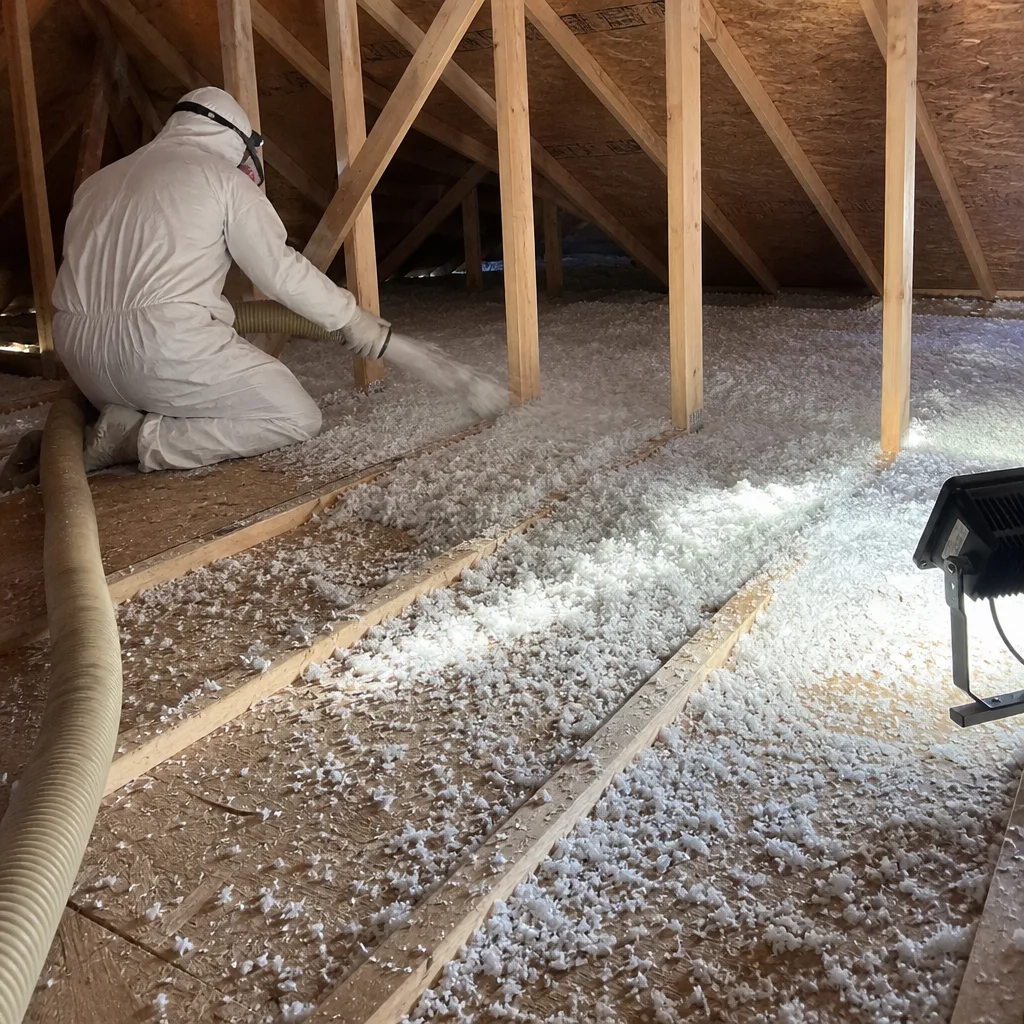
If you can smell rodent activity from the hallway, see droppings near the attic hatch, or find chewed wiring or insulation tunnels, it’s time. We remove the contaminated material, sanitize the decking, and prepare the cavity for fresh insulation, all before we talk about R-value. In the canyon, this is often the step before any re-insulation work makes sense, especially after a rodent season leaves compressed, soiled batts across the attic floor.
Cost and Timeline in the Canyon
A full attic cleaning in Trabuco Canyon runs from $600 to $1,400 depending on square footage and contamination level. Small attic spaces over a ranch-style layout take half a day; larger two-story with detached garage or guest-house attics run a full day or more. We always inspect for the entry points while we’re up there, because cleaning an attic without sealing the gaps is just inviting the next generation in.
What happens when you call
- 1
A real person answersNo phone trees — you reach a local pro.
- 2
You get an upfront price rangeHonest numbers before anyone is dispatched.
- 3
A background-checked tech heads outLicensed & insured, dispatched right away.
- 4
You approve before work beginsNothing starts until you say go.
Attic Mold Removal in Trabuco Canyon
Attic Mold Removal in Trabuco Canyon gets more calls in January than in any other month. That’s the canyon’s winter condensation cycle at work: cold nights drop attic temperatures, warm days push moisture up from the living space, and unsealed attic hatches and duct boots let that moisture settle on the underside of roof decking. Wood-frame canyon homes built in the 1970s and 1980s never had the ventilation or air-sealing modern builds get, so mold finds a home here fast.
Identifying a Canyon Condensation Mold Problem
Look for dark staining on plywood sheathing, musty air when you open the hatch, or elevated indoor allergy symptoms without an obvious source. In Trabuco Canyon’s irregular owner-built attics, the mold usually concentrates near the soffit vents and the hatch opening. If your attic smells like a crawlspace after rain, call before it spreads into the structure.
Getting It Removed and Keeping It Gone
We remediate the affected material, treat the framing, and then fix the ventilation or air-sealing issue that caused the moisture in the first place. In the canyon, that often means swapping regular soffit vents for ember-resistant designs that also improve airflow, or sealing duct boots that were dumping warm air into the attic all winter. Full mold removal with re-insulation runs $1,800 to $4,200 depending on how far the damage has spread.
Trusted Brands We Service in Trabuco Canyon
We’re authorized to install products from Owens Corning, Johns Manville, Knauf, Rockwool, CertainTeed, Icynene, Demilec, and GreenFiber, which means a Trabuco Canyon homeowner gets a real material choice, not whatever the contractor has in the warehouse. For canyon attics with fire-zone concerns, Rockwool mineral wool gives you a fire-rated, moisture-resistant option that most local installers don’t even stock. For airtight, high-R retrofits in irregular attics, Icynene open-cell spray foam or Demilec closed-cell give us two specified professional systems to choose from based on your performance target and budget. When you call (866) 361-3775, ask which brands make the most sense for your canyon home’s actual construction.
Common Attic Insulation Problems We See in Trabuco Canyon Homes
- Ember intrusion through legacy soffit and gable vents. During Santa Ana wind events, embers blow straight through old vent screens into the attic and land on dry, dusty insulation. Re-insulating without swapping these vents is like putting a new roof on a house with no front door.
- Compressed or displaced batts in irregular, owner-built attics. Standard tract-package installs assume rectangular cavities and predictable joist spacing. Trabuco Canyon’s custom-built homes rarely cooperate, leaving air channels and thermal bridging that undermine the R-value you paid for.
- Unsealed attic hatches and duct boots. The canyon’s big diurnal temperature swings drive moisture and energy loss through even small openings. We’ve seen a single unsealed hatch cost homeowners 15% of their HVAC output in winter, when warm air pours into a freezing attic and condenses on the sheathing.
- Old batts that have lost their loft over decades. Most 1970s and 1980s canyon homes are running on original fiberglass batts that have collapsed to half their rated R-value. The house looks insulated. It isn’t.
Pricing for Attic Insulation in Trabuco Canyon, CA
Attic insulation in Trabuco Canyon runs from $2,500 to $6,800 depending on attic size, access, and what you’re starting with. A blown-in fiberglass top-up over existing but aged insulation on a typical ranch-style home on a canyon lot runs $2,500 to $3,900. Full removal, air-sealing, ember-resistant vent swap, and R-49 blown-in on a two-story custom build with a detached garage can reach $5,000 to $6,800. Spray foam retrofits in irregular attics run $4,200 to $7,800 depending on whether you need open-cell for air sealing or closed-cell for structural and fire-resistance goals. Rockwool mineral wool batts, which many canyon homeowners choose for the fire rating, run $3,400 to $5,900 installed. Every job starts with a free attic assessment and written quote, so you’ll see the exact number before we bring one tool out of the truck. Call (866) 361-3775 for an estimate specific to your house.
We Also Serve Cities Near Trabuco Canyon
Our Trabuco Canyon service area extends into the surrounding canyon and foothill communities. We regularly handle attic insulation work in Rancho Santa Margarita, Foothill Ranch, Portola Hills, and Coto De Caza, where the housing stock and fire-zone requirements often overlap with what we see in Trabuco Canyon. Wherever your home sits in the canyon corridor, we’ll bring the same eight-brand material choice and the same diagnosis-first approach.
Serving Trabuco Canyon, CA — Our Local Coverage Area
We’re based in the Trabuco Canyon area and know this community well. Use the map below to see our service coverage — if you’re nearby, we can almost certainly help.
FAQs About Attic Insulation in Trabuco Canyon
Yes, in most cases. Trabuco Canyon sits in a Very High Fire Hazard Severity Zone, and any re-insulation that involves opening or replacing soffit or gable vents should include a swap to ember-resistant designs. We’ve made this standard practice on canyon jobs since the WUI defensible-space requirements tightened, and an attic that passes a WUI inspection is a genuine selling point if you ever list the house. Call us at (866) 361-3775 and we’ll check your current vents during the free attic assessment.
That’s exactly what we do. Most Trabuco Canyon attics were never built to production-tract specifications, so we measure every cavity, locate every air channel, and spec the material that fits the actual space, not a pre-packaged blanket. Blown-in fiberglass handles irregular joist spacing well, and spray foam lets us seal and insulate in one pass when the framing is too irregular for batts. It takes longer, but it’s the only way to get a real R-value in a house that wasn’t built on a grid.
Trabuco Canyon regularly sees summer afternoons 15 to 20 degrees hotter than coastal Orange County and winter nights that dip near or below freezing at higher elevations. That means your attic insulation has to handle both directions of heat flow: radiant heat beating down through the roof deck in summer and warm interior air escaping in winter. We typically recommend high-R blown-in fiberglass at R-49 or better for summer performance and a strong air-sealing pass for winter, because the canyon’s dry air makes even small leaks expensive.
Yes, and it’s one of the most frequent winter calls we get from Trabuco Canyon homes. The January condensation cycle in canyon attics, cold nights followed by warm days, plus unsealed hatches and duct boots, creates the exact conditions for mold on roof sheathing. We remove the mold, treat the framing, and then correct the ventilation or sealing problem that caused it. If you’re seeing dark staining or smelling must from the hatch, call (866) 361-3775 and we’ll inspect it before it spreads into the structure.
We install products from Owens Corning, Johns Manville, Knauf, CertainTeed, Rockwool, Icynene, Demilec, and GreenFiber. For Trabuco Canyon specifically, Rockwool mineral wool is a frequent choice because of its fire-resistance and moisture performance in a canyon fire zone, while Icynene and Demilec spray foam give us two professional systems for air-sealing irregular attics. Ask Ruben Castellano which brand fits your house best when you call for the free assessment.
Ready to fix your Trabuco Canyon attic? Call Warm House Insulation Co at (866) 361-3775 for a free, no-pressure assessment and a written quote. We’ll get into the attic, show you what we find, and give you a straight answer on what your canyon home actually needs.
Written by Ruben Castellano, Owner at Warm House Insulation Co, serving Trabuco Canyon and the surrounding canyon communities.