Fast, Reliable Attic Insulation Across Whittier
Whittier homes lose a lot of conditioned air through the attic, and the fix rarely starts where people think. In this part of the San Gabriel Valley, the real enemy isn’t just thin insulation. It’s decades of heat-soaked summers and marine-layer damp working through attics that were built with almost no thought to air sealing or ventilation. We’re Warm House Insulation Co, led by Ruben Castellano, and we’ve insulated attics across every Whittier ZIP code from 90601 to 90609. When you call (866) 361-3775, you get a straight answer about what’s wrong up there and what it’ll take to fix it, not a sales script.
Why Warm House Insulation Co Is Whittier’s Preferred Attic Insulation Company
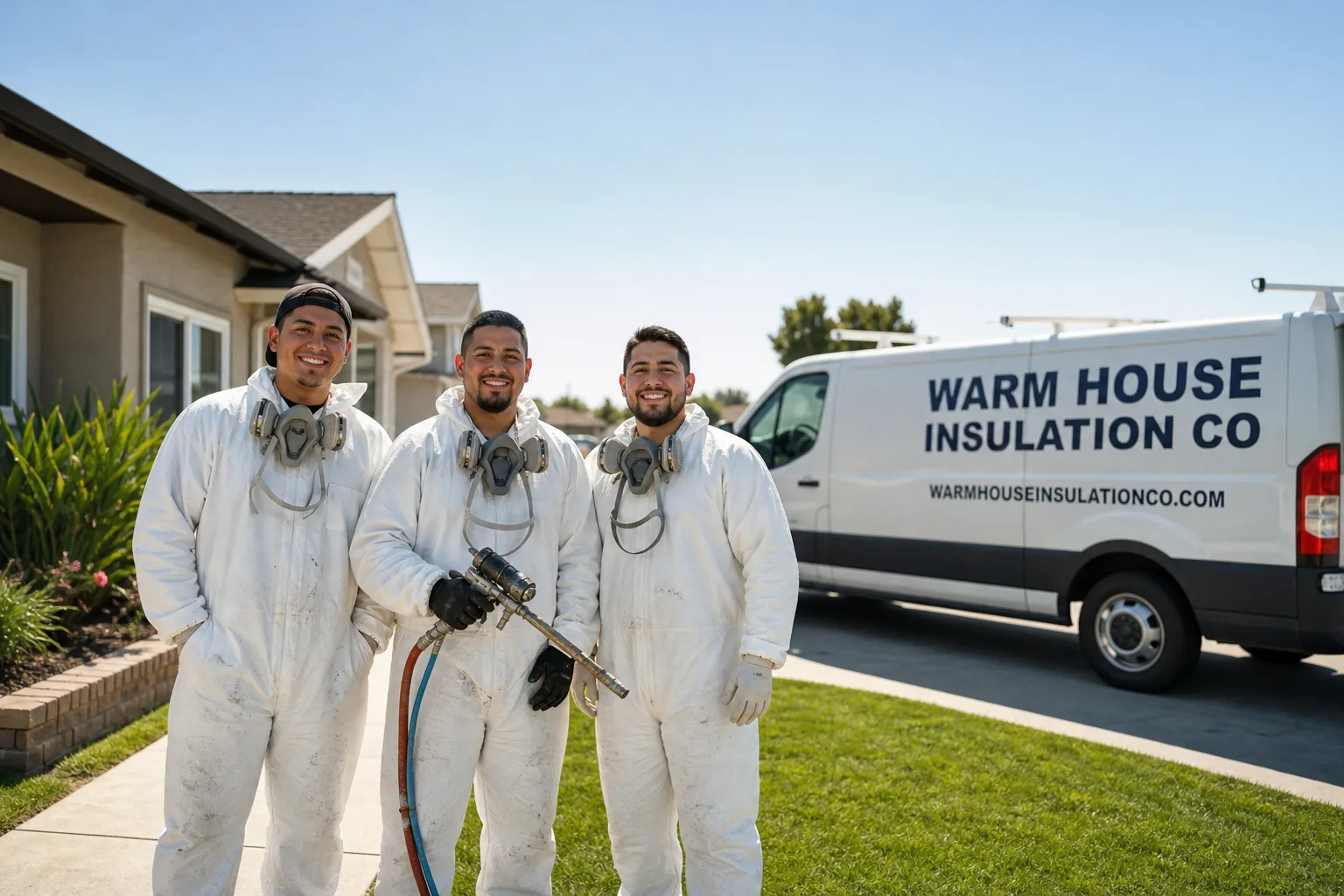
Most insulation crews pull up to a Whittier home with one product on the truck and a generic pitch. We do it differently. Ruben Castellano built this company around a simple idea: the attic decides what it needs, not the installer’s inventory. In Whittier, that means we’re as comfortable blowing GreenFiber cellulose into a 1920s Uptown bungalow as we are spraying Icynene closed-cell foam into a Friendly Hills hillside addition. Whittier homeowners call us back because we diagnose before we quote, and because we show up in a prompt, work clean, and leave the attic better than code requires. Our reputation in Whittier is built job by job, attic by attic, on streets from Greenleaf Avenue to the east-side tracts off Lambert Road.
We stock parts and materials for the specific housing stock Whittier throws at us. That includes ember-resistant vent screens for hillside homes near the Puente Hills, baffle systems for the low-clearance hip roofs that dominate 90603 and 90604, and sealing products for the rim joists and top plates that leak air in older homes. When a Whittier homeowner calls, we’re not scheduling a generic service visit. We’re dispatching a crew that already knows what a 1955 ranch on a deep lot is going to reveal once they pull the attic hatch down.
Attic Ventilation in Whittier
Attic Ventilation in Whittier is not a checkbox item. In a city where summer attic temperatures routinely exceed 140°F in east-side tract homes, a ventilation system that’s even slightly compromised turns your attic into a heat battery. That heat radiates down into living space all night, works your air conditioner harder, and bakes the underside of your roof deck until shingles curl and insulation loses its loft. A proper ventilation job in Whittier means clearing soffit chokes, sizing and placing exhaust vents correctly, and making sure the high and low airflow balance actually works. Most Whittier attics we open have vents that were installed in the wrong proportion: plenty of exhaust, almost no intake. That’s not ventilation. That’s a straw with no hole at the bottom.
Soffit Choke Clearance in Low-Clearance Hip Roofs
The signature problem in 1950s-60s Whittier tract homes is a low-slope hip roof with soffit vents that were never designed for the amount of air they need to move. Over decades, paint, dust, and old insulation settle into the soffit channels and strangle the intake side entirely. In Whittier, we treat soffit-choke clearance as a prerequisite to any insulation work. You cannot blow R-38 into an attic that can’t breathe and expect it to perform. The intake gets cleared, baffles installed to keep the new insulation from re-choking the soffits, and only then does the product go in.
Attic Heat Buildup and Moisture Control
Whittier’s winter marine layer doesn’t only make mornings gray. It pushes damp air into under-ventilated attics where it condenses on cold roof sheathing and on the underside of old fiberglass batts. That moisture then gets trapped, degrading insulation and feeding mold. Good ventilation fixes this by keeping attic air moving and keeping the temperature closer to outdoor air. For Whittier homeowners, that’s the difference between an attic that smells musty every June and one that stays dry year-round.
Radiant Barrier in Whittier
Radiant Barrier in Whittier works because this city gets genuinely hot. Not Santa Monica hot. Not Long Beach hot. Whittier sits inland enough that summer high temperatures run 10 to 15 degrees hotter than the coast, and the sun hammers roof decks from mid-morning until late afternoon. A radiant barrier installed on the underside of the roof deck reflects radiant heat before it ever reaches your insulation. It’s not a replacement for insulation. It’s a heat shield. In Whittier’s east-side tract homes, where 1950s roof assemblies were built with minimal thermal protection, pairing a radiant barrier with fresh blown-in insulation is the single most effective thing you can do to cut second-floor temperature swings. For homes in 90603 and 90604, the before-and-after difference is usually felt the first hot afternoon after installation.
How a Radiant Barrier Extends Insulation Life
Heat doesn’t just make your upstairs uncomfortable. It cooks your insulation. Fiberglass and cellulose both lose performance when they sit at sustained high temperatures, and attic temperatures in Whittier without a radiant barrier are hostile conditions. By reflecting the bulk of that radiant heat at the roof plane, the barrier lowers the ambient temperature around your insulation, preserving its R-value over the long term. In a market where most Whittier homeowners are planning to stay in their homes for twenty years, that matters.
When a Whittier Attic Needs Both Insulation and a Barrier
If you’ve already got loose-fill insulation but your upstairs bedroom still hits 85°F at midnight in July, the insulation isn’t failing on its own. The roof assembly is absorbing and emitting heat too aggressively. Adding a radiant barrier addresses that radiant load directly. In Whittier, we install barriers in attics where the roof deck is accessible and the existing insulation is in decent condition. It’s the second layer of treatment, after ventilation is confirmed working. Call (866) 361-3775 and we’ll tell you if your attic is a candidate.
Trusted Brands We Service in Whittier
We’re authorized to install products from eight industry-recognized manufacturers, and for Whittier attics we lean on a few that handle local conditions particularly well. Knauf and CertainTeed loose-fill fiberglass both blow cleanly in the low-clearance attics common across 90603 and 90604, and they hold their loft through the heat cycles Whittier dishes out. Rockwool stone wool is our go-to recommendation for Uptown bungalows where fire resistance and sound dampening matter as much as R-value. And for hillside homes in Friendly Hills where air sealing is the priority, Icynene spray foam gives us a closed-cell solution that seals and insulates in one pass. We carry the parts and accessories that match these systems, so a Whittier job doesn’t stall waiting on a supply run.
Common Attic Insulation Problems We See in Whittier Homes
- Soffit vent chokes in 1950s-60s east-side tracts (90603/90604): These attics were built with low-clearance hip roofs and minimal venting. Dust, paint, and old batts close off the soffit channels, and the attic cooks all summer. We clear the chokes before anything else goes in.
- Moisture condensation in Uptown bungalows: The original stucco walls in 1920s-40s homes near Greenleaf corridor have zero cavity fill, and winter marine-layer air condenses on cold wall surfaces. That moisture migrates into attics and undersides of roof sheathing, degrading insulation and inviting mold.
- Cathedral ceilings in Friendly Hills without ridge sealing: Hillside homes with cathedral ceilings often have air gaps at the ridge line. Hot attic air radiates straight down into living space, canceling out whatever insulation was installed.
- Orange-grove-era houses in 90601/90602 with knob-and-tube draft paths: These pre-war homes have attics riddled with unsealed penetrations around old wiring, plumbing vents, and top plates. Insulation without air sealing is just a filter for hot air, not a barrier.
Pricing for Attic Insulation in Whittier, CA
Here are the numbers we quote Whittier homeowners. Blown-in attic insulation to bring a typical 1,200-square-foot attic to R-38 runs $1,800 to $3,200, depending on existing depth and access clearance. Attic batt insulation for a similar footprint in Whittier runs $1,500 to $2,800. An insulation top-up, where we add depth over existing fill, is usually $900 to $1,800. Full attic insulation replacement, including removal of old compressed or contaminated material, runs $2,500 to $4,500. Soffit baffle and ventilation prep work adds $400 to $1,200 on most Whittier homes, and a radiant barrier over the roof deck typically runs $1,200 to $2,400. The single biggest cost variable in Whittier is access: low-clearance hip roofs in the east-side tracts take longer to work in than open attics. Call (866) 361-3775 for an exact quote on your attic. Estimates are free, and we walk you through what’s actually needed.
We Also Serve Cities Near Whittier
Beyond Whittier, our crews work throughout the surrounding San Gabriel Valley. We regularly insulate attics in South Whittier, West Whittier-Los Nietos, East La Mirada, and Santa Fe Springs. If you’re in one of these nearby cities and want the same attic-first diagnosis from our Attic Insulation team, call us. The same applies across every ZIP code from 90601 to 90609.
Serving Whittier, CA — Our Local Coverage Area
We’re based in the Whittier area and know this community well. Use the map below to see our service coverage — if you’re nearby, we can almost certainly help.
FAQs About Attic Insulation in Whittier
Because the 1950s-60s tract homes in 90604 were built with low-clearance hip roofs and insufficient soffit venting, so the attic heat has nowhere to go. If your soffit vents are choked with dust and old insulation, the attic turns into an oven that works against the insulation and radiates heat into living space all night. Clearing the soffit chokes and installing baffles before adding insulation is the fix. Call (866) 361-3775 and we’ll inspect your attic vents and give you a straight answer.
The marine layer pushes damp air into under-ventilated attics in Uptown Whittier’s 1920s-40s bungalows, where it condenses on cold roof sheathing and framing. If the attic isn’t correctly ventilated and the insulation was installed without moisture control, that dampness degrades the insulation and promotes mold. In those homes, ventilation and air sealing have to be corrected at the same time as insulation. Call us at (866) 361-3775 for an attic moisture assessment.
Only if the roof deck is absorbing and radiating significant heat into the attic, which is common in Whittier’s east-side tract homes with dark shingles and low-slope roofs. A radiant barrier reflects that heat before it reaches the insulation, lowering attic temperatures and preserving the R-value of the existing loose-fill. We’ll check your roof orientation, roof color, and attic ventilation before recommending one. Call (866) 361-3775 and we’ll tell you if it’s worth it in your specific attic.
In a pre-war bungalow near Greenleaf, the best approach is balanced soffit-to-ridge ventilation with the intake side cleared and baffled, not just adding more exhaust. Many of these homes already have gable vents that fight the airflow pattern you actually need. We reconfigure the ventilation so the air moves low-to-high through the full attic, then air-seal the top plates and penetrations before insulating. It’s more involved than a tract home, but it’s the only way to stop the moisture and heat problems permanently. Call (866) 361-3775 for an evaluation.
Hillside homes in Friendly Hills often have cathedral ceilings and sloped assemblies that don’t hold loose-fill properly, and they lose conditioned air through ridge gaps and kneewall seams. For those attics, we typically recommend closed-cell spray foam from Icynene or Demilec, which air-seals and insulates in one application. In a standard flat-ceiling attic in the same neighborhood, blown-in fiberglass or cellulose still works fine. The construction type dictates the method. Call (866) 361-3775 and we’ll match the system to how your house is built, not the other way around.
We recently insulated an attic in a 1955 ranch on Greenleaf Avenue in 90603 where the original 2×4 rafters had settled batts and choked soffit vents. After clearing the vent chokes and blowing Owens Corning loose-fill to R-38, our tech sealed the access hatch and added ember-resistant venting, and the homeowner reported a 12°F drop in upstairs bedroom temperature during the first July heat wave. That’s the difference between putting insulation in and actually solving the problem.
If your Whittier attic hasn’t been inspected in years, or if you’re just tired of sweating through July in your own bedroom, call Ruben Castellano and the Warm House Insulation Co team at (866) 361-3775. We’ll come out, get up in the attic, and tell you exactly what’s going on and what it’ll take to fix it. Free estimate, no obligation, and the recommendation is based on what your home needs, not what we happen to have on the truck.
Written by Ruben Castellano, Owner at Warm House Insulation Co, serving Whittier and the surrounding San Gabriel Valley.