Attic Insulation Pricing Breakdown: What Stanton Homeowners Pay in 2026
Attic insulation in Stanton runs anywhere from $1,800 to $6,500 for a typical 1,200 to 1,800 square foot single-story home in 2026, with most homeowners landing between $2,400 and $3,800. That spread exists because quotes are rarely apples-to-apples: one contractor is pricing blown-in fiberglass with no prep work, another is quoting spray foam with air sealing and old insulation removal. If you’d rather skip the comparison headache, call us at (866) 361-3775 for a scope-specific estimate, or keep reading to understand exactly what drives the numbers.
We’ve been crawling around Stanton attics long enough to know one thing for certain: the cheapest quote you’ll get in this city is almost always missing air sealing. That’s a $300 to $600 line item that determines whether any insulation above it actually performs. Here’s the full breakdown so you can compare quotes on equal terms.
What Does Attic Insulation Actually Cost Per Square Foot in Stanton?
Stanton’s labor market in 2026 has settled into predictable ranges, but you need to look at them by material and method. A blended “average cost per square foot” number hides the fact that blown-in fiberglass costs roughly a third of closed-cell spray foam.
Here’s what we’re seeing across Stanton and neighboring Orange County zip codes this year:
- Blown-in fiberglass: $1.10 to $1.75 per square foot installed, including basic prep. This is the workhorse option for Stanton homes with open attics and existing insulation that just needs a top-off. Brands like Owens Corning and Johns Manville dominate this category.
- Blown-in cellulose: $1.30 to $2.00 per square foot. GreenFiber recycled cellulose runs slightly higher than fiberglass because of the material’s density and the specialized equipment required, but it packs better in tight spots.
- Fiberglass batt: $1.50 to $2.30 per square foot. Batts from Knauf or CertainTeed make sense for attics with odd joist spacing or areas where blown material would drift. Labor is higher because every batt gets hand-cut and fitted.
- Open-cell spray foam: $3.50 to $5.50 per square foot. An Icynene open-cell application on the roofline creates a conditioned attic, which matters in Stanton where summer attic temps regularly hit 140°F. This is a different scope entirely, not just a different material.
- Closed-cell spray foam: $5.00 to $7.50 per square foot. Demilec closed-cell adds structural rigidity and a vapor barrier in one pass. It’s the most expensive option by a wide margin, but in specific Stanton homes with flat roofs or cathedral ceilings, it’s the only one that truly works.
Those are installed numbers, meaning material plus labor plus the contractor’s overhead. If someone quotes you $0.80 per square foot for blown-in, they’re either not doing basic prep work or they’re not pulling permits, both of which come back to bite you.
The Line Items That Separate a Real Quote From a Bare-Minimum One
Here’s the thing we tell every Stanton homeowner who shows us a competing quote: ask what’s included. Two companies can quote $2,900 for the same attic and be describing completely different jobs. The missing line items are where the 40 to 60 percent price variation actually lives.
A complete attic insulation scope includes four things that cheap quotes routinely skip:
- Air sealing ($300 to $600): Caulking and foaming around plumbing penetrations, electrical boxes, recessed light housings, and the attic hatch. Without this, insulation acts as a filter, not a barrier. Warm air still leaks through gaps, and the insulation just gets dirty and less effective over time.
- Baffle installation ($3 to $6 per baffle, typically 6 to 12 baffles needed): These foam or plastic channels keep insulation from blocking soffit vents. In Stanton’s older ranch homes, soffit venting is often inadequate to begin with, and burying what little exists is a fast way to create moisture problems.
- Removal of existing degraded material ($1.25 to $2.75 per square foot): If your current insulation is water-damaged, pest-infested, or compressed to half its original R-value, piling new material on top is throwing good money after bad. This is the line item that makes a $2,500 quote jump to $4,500, and it’s often the right call.
- Haul-away and disposal ($150 to $400): Once old insulation comes out, it has to go somewhere. Dump fees and labor are real costs, and they should be itemized, not buried.
We pulled an old fiberglass batt out of an attic in central Stanton last month that had been chewed through by rodents from one end of the attic to the other. The homeowner’s previous quote didn’t include removal or remediation, just new insulation on top. That’s a scope gap, not a price difference.
What California Title 24 Means for Your Attic Insulation Cost
If you’re having attic insulation added or upgraded in Stanton in 2026, California’s Title 24 energy code sets the floor for what counts as code-compliant work. For attics in Climate Zone 8, which covers Stanton and most of Orange County, the minimum is R-30 for existing homes and R-38 for new construction or major remodels with permit scopes that trigger current code.
What does that mean in dollars? If your attic currently has R-19 or less, and you’re in an older Stanton home built before the 1980s, getting to R-38 means roughly 10 to 14 inches of blown-in fiberglass or about 12 to 16 inches of cellulose. That’s a $2,200 to $3,400 scope, not a $1,500 top-off. Contractors who quote numbers that don’t reference an R-value target are guessing.
Permit requirements vary by project. A straightforward top-off in an existing attic often doesn’t need a permit, but full removal, air sealing, and re-insulation down to code levels typically triggers a building permit in Stanton. Permits add $150 to $450 and require an inspection, but they also mean the work gets documented, which matters for resale and for the rebate programs in the next section.
Utility Rebates Stanton Homeowners Leave on the Table
One of the most consistent things we see: Stanton homeowners complete a $3,500 attic insulation project and never claim the $300 to $1,200 in rebates they’d qualify for through Southern California Edison or the Orange County weatherization programs. The money is real, and the documentation requirements are specific.
For 2026, here’s what applies to Stanton addresses:
- SCE Home Energy Efficiency Rebate: Covers attic insulation upgrades for electrically heated and cooled homes. Rebates run $0.15 to $0.25 per square foot depending on the pre-existing R-value and the final R-value achieved.
- California Energy-Smart Homes Program: Offers enhanced incentives for homes that combine attic insulation with air sealing. You need a pre-installation audit and a post-installation verification to claim this one.
- Federal tax credit (25C): 30% of material cost, capped at $1,200 for insulation and air sealing materials combined. This applies through 2032, and unlike older programs, it doesn’t require a full-home energy audit.
The documentation requirement that trips most homeowners up: you need a dated invoice that separates material cost from labor cost, a copy of the insulation manufacturer’s spec sheet showing the R-value per inch, and, for Title 24 compliance, a CF-1R or CF-2R form from the installer. If your contractor can’t produce those, the rebate disappears.
When we install Owens Corning blown-in or Rockwool batt in a Stanton attic, the paperwork packet goes to the homeowner the day the job finishes, not when they ask for it six months later. It’s a small thing that keeps money in your pocket.
Why Two Identical Stanton Homes Get Different Quotes
Square footage gets quoted because it’s easy, but in Stanton’s housing stock, it’s maybe the third most important variable. Here’s what actually drives labor hours, and therefore labor cost, when we price an attic job.
Attic access size. A 22-inch by 30-inch pull-down stair in a central hallway is easy. A 14-inch by 18-inch scuttle in a closet ceiling means every bag of material, every baffle, and every tool has to pass through a hole barely bigger than a pizza box. Labor goes up 20 to 30 percent on tight-access attics, and that’s not a contractor padding the bill, it’s physics.
Depth of existing insulation. If you’ve already got 14 inches of fiberglass in a Stanton attic with a 2×10 joist system, a top-off to R-38 is a one-truck, two-hour job for a two-person crew. If you’ve got R-11 batts compressed and stained, the scope changes entirely.
HVAC equipment in the attic. Stanton homes built from the 1960s through the 1980s often have furnaces and duct runs in the attic. That equipment sits on platforms that need to be insulated around, or in some cases, the ducts should be sealed and buried. This adds $400 to $900 to a typical scope, but ignoring it means the insulation is doing half its job.
Roof geometry and kneewalls. A simple gable roof over a rectangular footprint is the cheapest attic to insulate. Add dormers, cathedral sections, or kneewalls, and the square footage of the floor is no longer the number that matters. You’re insulating vertical surfaces too.
When to Call a Pro (And When Doing It Yourself Makes Sense)
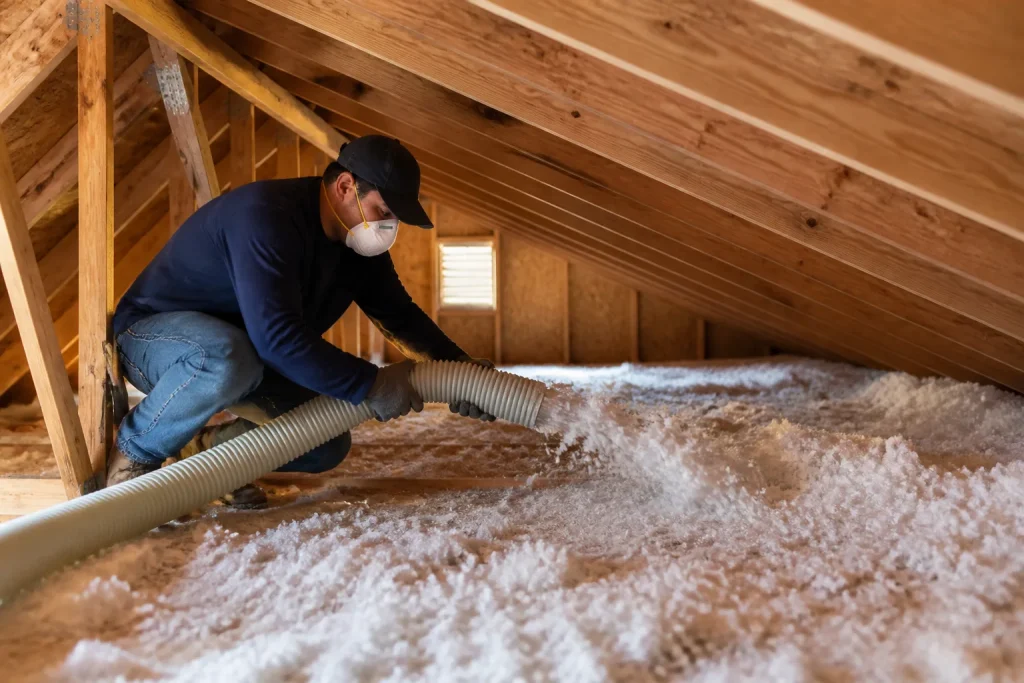
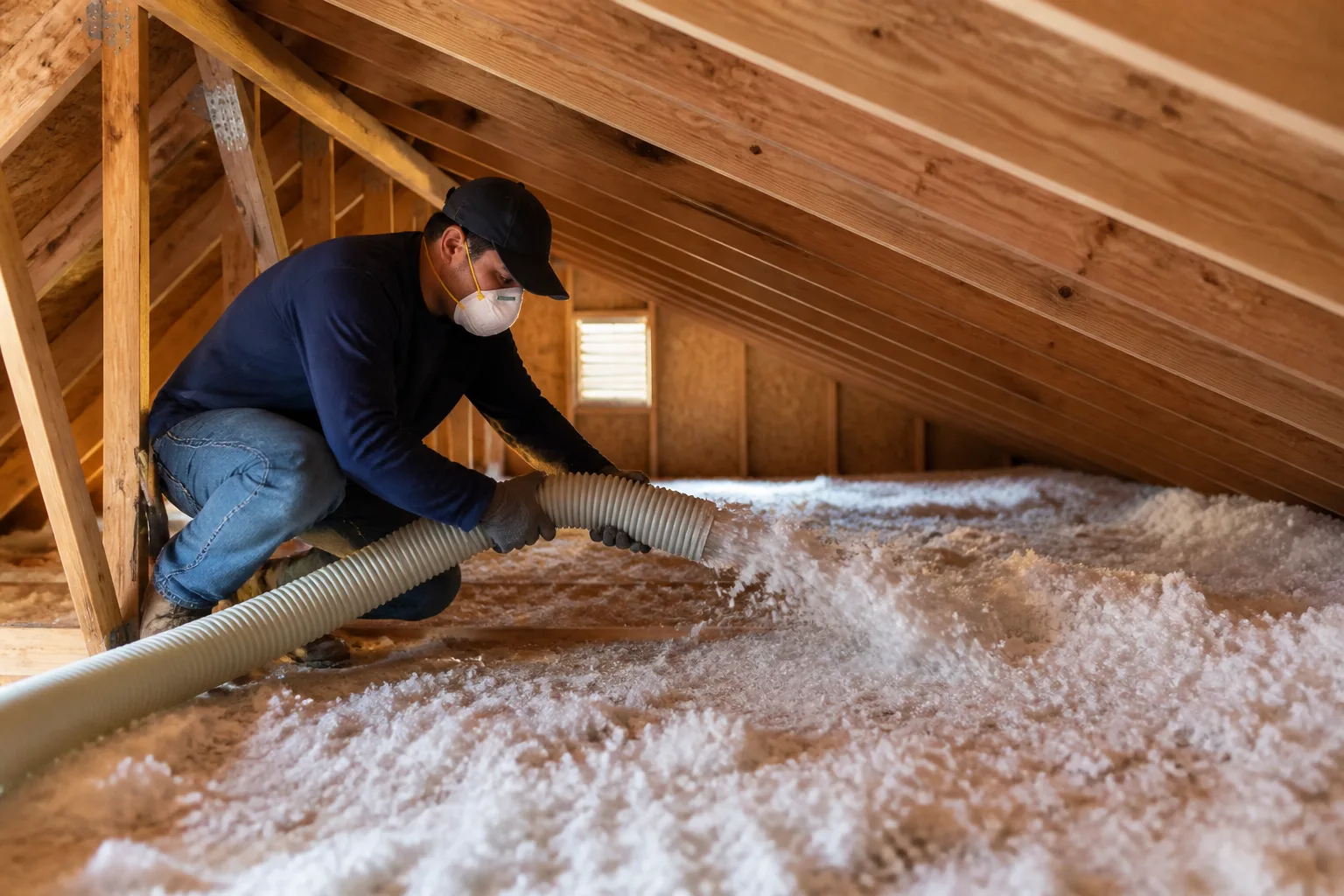
Blown-in attic insulation is within reach for a determined DIYer with a rental machine from a big-box store. The material cost for a 1,200 square foot Stanton attic runs $500 to $800 for R-38 fiberglass, and most home centers rent blowers for about $100 a day. If your attic is open, accessible, dry, and you’ve already handled air sealing, that’s a weekend job and the savings are real.
Call a pro when any of these apply: you need spray foam on the roofline (homeowner kits don’t produce consistent results on vertical surfaces), your existing insulation is contaminated or wet, you have knob-and-tube wiring that needs to be addressed before insulation buries it, or the attic has challenging access geometry. And if you’re in Stanton and want a scope-specific number rather than a square-footage guess, call us at (866) 361-3775. Estimates are free, and we’ll show you exactly what’s included before you sign anything. We install attic insulation in Stanton across both retrofit and new construction projects.
Key Takeaways
- Stanton attic insulation in 2026 runs $1,800 to $6,500 for typical homes, with blown-in fiberglass at the low end and closed-cell spray foam at the high end.
- Air sealing ($300-$600) is the most commonly skipped line item and the biggest driver of real-world performance.
- Title 24 requires R-30 minimum for existing attics in Stanton’s climate zone; getting to R-38 on an older home is a bigger scope than a top-off quote reflects.
- Southern California Edison and federal tax credits can offset $300 to $1,200 of your insulation cost, but only with proper documentation.
- Attic access size, HVAC equipment in the attic, and roof geometry often matter more to final price than square footage.
The Bottom Line
The cheapest attic insulation quote in Stanton is almost never the cheapest attic insulation job once you account for air sealing, baffles, removing degraded material, and Title 24 compliance. Get three quotes, but make sure each one lists what’s included so you’re comparing scopes, not just numbers. If you’re in Stanton and want a straight answer on what your attic actually needs, Warm House Insulation Co home to the right team for the job. We carry Owens Corning and Johns Manville fiberglass, Rockwool mineral wool, and GreenFiber cellulose, plus Icynene and Demilec spray foam systems, so the recommendation matches your attic, not our inventory. Call (866) 361-3775 for a free, itemized estimate.
Curious about spray foam insulation in Stanton or blown-in insulation in Stanton? We’ve got you covered there too.
Frequently Asked Questions
For a 1,500 square foot Stanton home, expect to pay $1,650 to $2,600 for blown-in fiberglass at R-38, and $5,250 to $8,250 for open-cell spray foam on the roofline. The spread reflects method differences, not contractor markup. Call (866) 361-3775 for an exact quote on your specific attic.
If your existing insulation is dry, uncontaminated, and just under-performing, topping it off with blown-in material costs less than full removal and replacement. If it’s compressed, wet, or pest-damaged, replacement costs more upfront but performs better than adding material over a compromised base. We’ll tell you which path makes sense for your attic.
Top-off jobs and straightforward blow-ins can often be completed same-day in Stanton, with full removal and spray foam scopes taking one to two days. Emergency situations like a roof leak that soaked insulation should be addressed immediately; call (866) 361-3775 and we’ll prioritize it.
Straightforward top-offs typically don’t require a permit in Stanton, but full removal, air sealing, and re-insulation to Title 24 code levels usually does. Permits cost $150 to $450 and include an inspection, which documents the work for resale and rebate claims.
Written by the team at Warm House Insulation Co, serving Stanton since 2011.
Need Insulation Help?
Call Warm House Insulation Co — licensed & insured, here with fast after-hours help in Norco.
(866) 361-3775