Johns Manville Attic Insulation in Stanton: A Homeowner’s Guide
Johns Manville attic insulation is a solid, time-tested fiberglass product line that performs well in most Stanton attics, especially the older tract homes built between 1950 and 1980 that dominate neighborhoods like Stanton’s Rustic Lane and Hansen area. But the honest answer is this: whether JM is right for your attic depends on your joist spacing, venting setup, and moisture exposure, not on what any single-brand contractor keeps in stock. Here’s what we tell homeowners who ask us about it. And if you’d rather not wade through product specs, call (866) 361-3775 and we’ll assess your attic in person.
What Johns Manville Actually Makes for Attics
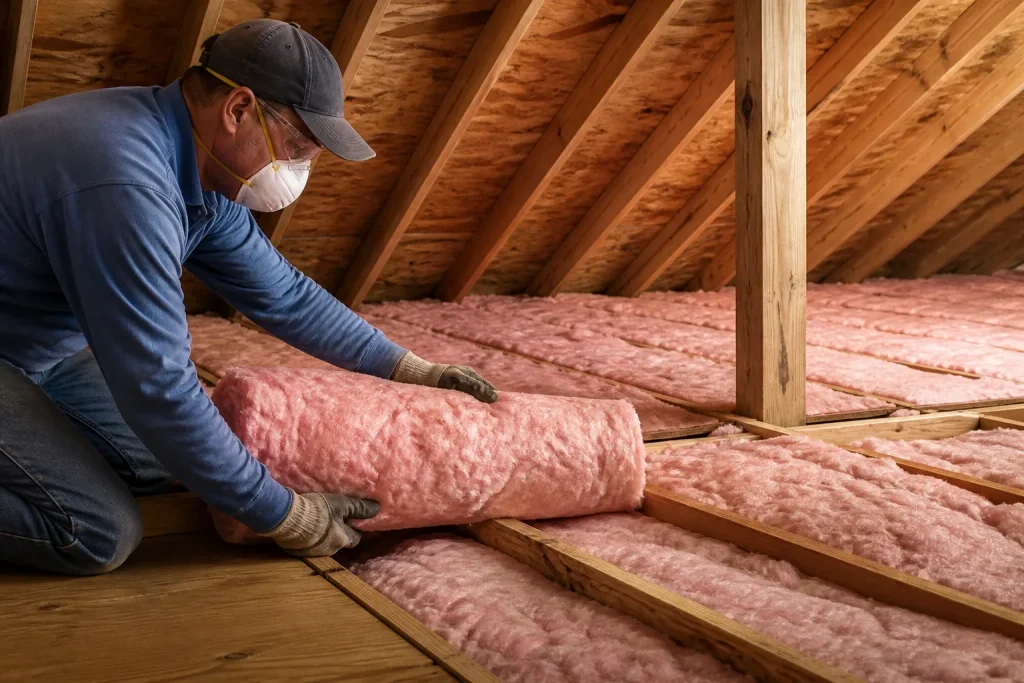
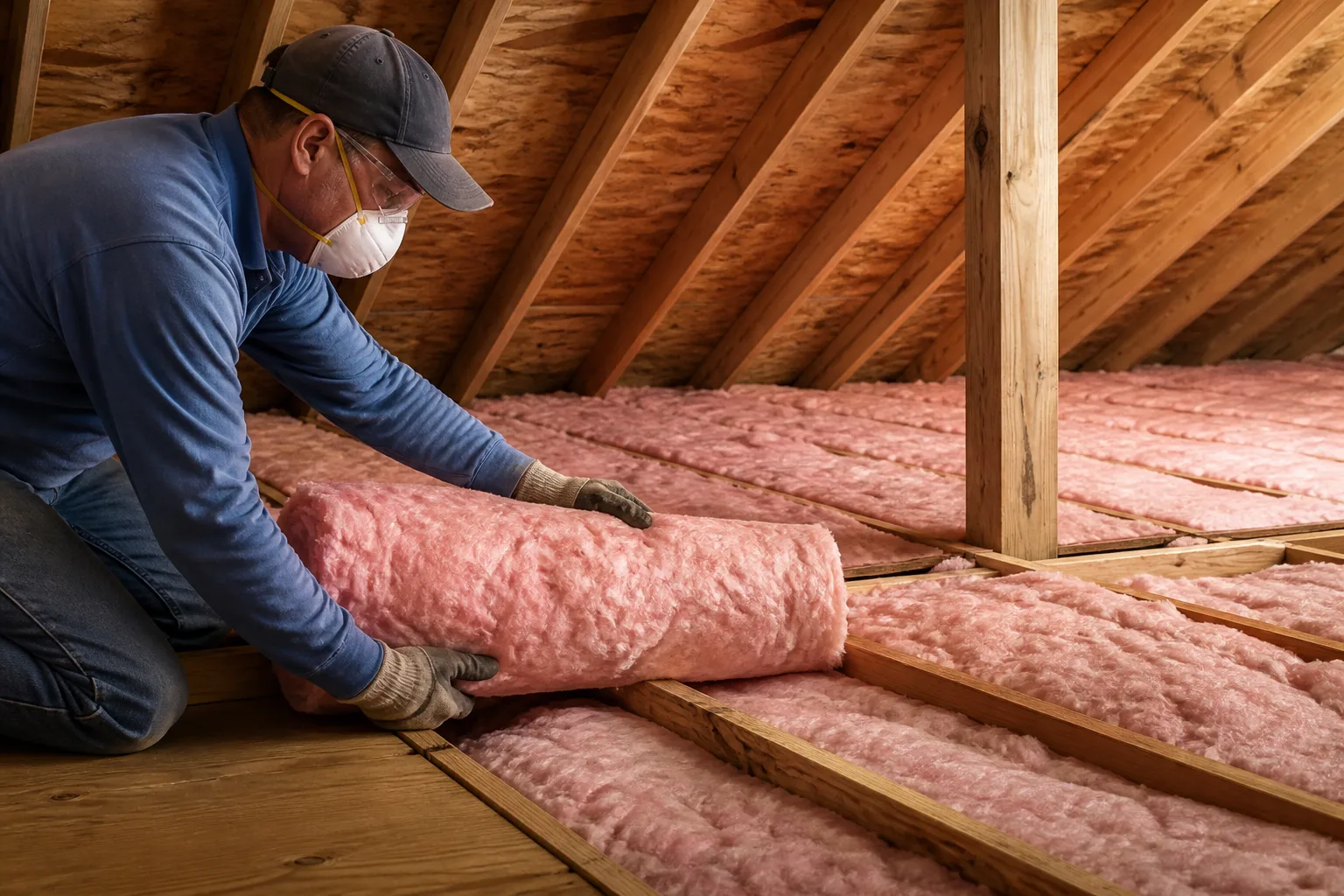
Johns Manville produces two main product families for attic applications: Climate Pro blown fiberglass and a line of fiberglass batts (including ComfortTherm and the JM Attic Protector). Each is built for a different attic configuration in Stanton, and mixing them up is where most installations go wrong.
- Climate Pro blown fiberglass: This is loose-fill, pneumatically installed, and well-suited to attics with irregular joist spacing, lots of cross-bracing, or low-clearance eaves. In Stanton, where postwar homes often run 16-inch or 24-inch joist centers with decades of accumulated plumbing and electrical runs, blown fiberglass flows around obstructions better than any batt. Installed at the coverage chart’s specified depth, Climate Pro delivers roughly R-3.1 per inch.
- JM batts (ComfortTherm, Attic Protector): Pre-cut fiberglass blankets with or without facing. These make sense in attics with uniform, accessible joist bays, especially if the homeowner plans to use the attic for storage. Batts are also easier to remove and re-install after rewiring or recessed-light work, which comes up more than you’d think in Stanton’s older homes.
The key distinction most contractors won’t volunteer: these are not interchangeable. Batts stuffed into a truss attic with 2×4 bottom chords and 24-inch spacing will leave compression gaps at every joist edge. Blown fiberglass layered over a cathedral-ceiling retrofit without proper vent baffles will sag. At Warm House Insulation Co, we stock Johns Manville as one of eight brands we install, alongside Owens Corning, Knauf, and GreenFiber, because no single product line covers every Stanton attic.
How JM Climate Pro Performs in Stanton’s Climate
Stanton sits in a semi-arid zone where attic temperatures routinely hit 140°F in August and swing 50-plus degrees between day and night in spring. That thermal stress matters for insulation performance, and it’s where Johns Manville’s blown fiberglass has real strengths, along with a few limitations worth knowing.
Here’s how JM Climate Pro compares to blown cellulose, which is the other common option for Stanton retrofit attics:
- Settling rate: JM Climate Pro is engineered to resist settling when installed to the coverage chart’s minimum thickness. Expect less than 1 percent additional settling over 20 years. Cellulose, depending on install density, can settle 5 to 20 percent, which drops its effective R-value over time. That makes JM the more stable choice in deep-fill attics where re-fluffing blown material is a pain.
- Moisture response: Fiberglass doesn’t absorb water. In Stanton, where coastal fog creeps in during May and June, that’s an advantage in vented attics. Cellulose absorbs and holds moisture, which is fine in a properly vented attic but becomes a mold risk in a humid or leak-prone roof cavity. If your Stanton roof has any history of leaks, fiberglass is the safer play.
- R-value per inch: JM Climate Pro delivers about R-3.1 per inch installed; dense-packed cellulose delivers about R-3.5. To hit R-38 in a Stanton attic, you need about 12.3 inches of JM Climate Pro versus 10.9 inches of cellulose. That depth difference matters in attics with shallow eaves.
- Air-sealing interaction: Both materials perform poorly if the attic floor isn’t air-sealed first. JM’s fiberglass is even less forgiving than cellulose here, since its lower density allows more air to filter through. In our experience installing attic insulation in Stanton, we spend as much time sealing top plates, plumbing penetrations, and can lights as we do blowing insulation. Skip that step and no brand saves you, period.
Where Johns Manville Is the Clear Winner in Stanton
We’ve insulated hundreds of attics across Stanton, and the homes where we consistently recommend JM fiberglass share a few characteristics.
The first is the classic Stanton postwar ranch, typically 900 to 1,400 square feet, with 2×6 rafters, a vented attic, and 16-inch-on-center ceiling joists. These attics are shallow at the eaves and often have blown-in rock wool from the original build that’s compressed to nearly nothing. Here’s why JM Climate Pro or JM batts fit well:
- Eave clearance: The lower density of fiberglass means it doesn’t block soffit vents as easily as cellulose. In a shallow Stanton roof pitch, keeping those eave vents open prevents the attic from cooking in summer.
- Joist bay widths: Older Stanton homes sometimes run 14.5-inch bays instead of modern 15.25-inch. JM batts are friction-fit and tolerate minor width variation without leaving the thermal gaps you’d see with a rigid product.
- Electrical and plumbing runs: Old Stanton wiring, especially the cloth-insulated stuff, runs along joist tops. Blown fiberglass flows under and around it without the air pockets that fiberglass batts can leave when installers get lazy. If you’re dealing with that, blown-in insulation is the method we steer toward.
One caveat from the field: we pulled a failed batt install out of a Hansen-area garage conversion last month where the previous contractor had folded R-30 batts over ductwork and left the living space above with a 12-degree winter draft. The brand wasn’t the problem. The installation was. Johns Manville fiberglass becomes useless the moment it’s compressed, cut wrong, or left with edge gaps. That’s the real argument for having a specialist do the work.
When JM Fiberglass Is Not the Right Choice
Johns Manville makes a strong product, but there are clear scenarios in Stanton where a competing material outperforms it. Knowing these will save you from spending money twice.
The unvented attic conversion. If you’re turning a vented Stanton attic into conditioned space, or if your roof deck is being sealed with spray foam, JM fiberglass can be a poor fit. Fiberglass in an unvented assembly doesn’t stop air movement at the roof deck the way Icynene or Demilec closed-cell spray foam does. In our experience, homeowners who use fiberglass in an unvented conversion end up with condensation on the sheathing, and in Stanton’s winter, that condensation becomes a mold problem within one season. We carry both Icynene and Demilec spray-foam systems specifically for these projects, and a good contractor will tell you when spray foam is the right specification instead of just selling you whatever’s on the truck.
Fire-code or noise-sensitive projects. If you live near any of Stanton’s industrial or commercial zones and want an attic with real fire resistance or sound attenuation, fiberglass in the R-30 to R-38 range is adequate but not equal to mineral wool. Rockwool is not a product most insulation contractors in Stanton even stock, and it’s a genuine upgrade for the right house, particularly if you’re on a busy arterial like Beach Boulevard or Katella Avenue. It also resists moisture better in the edge case of a hidden roof leak, which we see often enough in the older Stanton housing stock.
Sustainability-focused retrofits. If your priority is high recycled content, GreenFiber cellulose, with its verified 85 percent recycled material, beats any JM line on that metric. We stock GreenFiber for exactly this type of homeowner. JM fiberglass does contain recycled glass, but at a lower percentage than GreenFiber cellulose, and the manufacturing energy profile of spun fiberglass is higher than that of mechanically processed cellulose.
What to Verify on Any JM Installation in Stanton
This is the section most guides skip, and the one that matters when it comes time to file a warranty claim or force a contractor to re-do work. If you’re paying for Johns Manville in a Stanton attic, these are the checks:
- Coverage chart compliance: The JM bag lists square footage coverage for each target R-value. Blown fiberglass expands once it leaves the hose, so the installed depth in inches is what matters, not the number of bags. If your installer claims R-38 from 20 bags but the depth tape shows 9 inches, the install fails the JM spec. Demand a photo of the depth measurement.
- Netting tension for blown applications: JM Climate Pro is installed through netting stapled to the joist tops. If that netting sags in the middle of each bay, the fiberglass moves with it and leaves a void at the top, reducing R-value without changing the measurement at the edges. Sagging netting is a top-three install defect we see in Stanton blown-in jobs done by low-bid crews.
- Baffle installation before blowing: Every soffit vent needs a baffle or vent chute before any fiberglass goes in. A Stanton attic without baffles will have fiberglass blocking the eave vents once the material settles and shifts, which turns a vented attic into a passively vented greenhouse.
- The depth ruler photo: JM’s warranty language expects documentation of installed depth. A competent contractor photographs the depth ruler in multiple locations before final payment. If your installer won’t show you that photo, you cannot verify what you paid for. We include these photos on every attic insulation job in Stanton, and they’ve settled more than one warranty dispute.
- Air-sealing before insulation: JM’s printed install guides assume the attic floor has been sealed. If the contractor blows fiberglass over unsealed top plates and can-light penetrations, the thermal reading is meaningless. This is not optional and not a premium upsell. It’s part of doing the job correctly.
If you’re comparing bids for attic insulation in Stanton, ask each bidder about netting tension, baffle count, and whether the quote includes air-sealing. The answers will tell you more about the quality of the install than the brand name ever will.
How to Decide: JM Fiberglass, Cellulose, or Spray Foam
The right call for your Stanton attic comes down to three questions. Answer them honestly and the product decision becomes obvious.
- Is your attic vented and in decent shape? If yes, JM Climate Pro blown fiberglass or JM batts are a cost-effective, stable choice. If the attic has moisture problems or lacks vents, fiberglass alone won’t fix the underlying issue.
- Are you converting the attic to living space? If yes, skip fiberglass at the roof line. Closed-cell spray foam (Icynene or Demilec) is the typical specification for unvented Stanton attic conversions. We install both, so the recommendation is driven by your roofline and budget, not by which single brand we happen to stock.
- Is your priority comfort, sound, or sustainability? For maximum sound control and fire resistance, Rockwool mineral wool is the upgrade path. For highest recycled content, GreenFiber cellulose. For a balanced, budget-conscious retrofit in a typical Stanton attic, JM fiberglass remains hard to beat.
We position ourselves differently than most Stanton insulation contractors, and we’re upfront about it. We carry all of these brands, from Johns Manville and Owens Corning to GreenFiber and Rockwool, so the material recommendation comes from your home’s conditions, not from our inventory sheet. Our Warm House Insulation Co home page outlines the full brand portfolio if you want to compare before calling.
Related Services in Stanton
Depending on your attic configuration and goals, you may be weighing JM fiberglass against other methods. Here’s how the options break down for Stanton homeowners:
- Spray Foam Insulation in Stanton for unvented attic conversions, rim joist sealing, and maximum air-sealing on older Stanton additions.
- Blown In Insulation in Stanton for retrofit attics with existing fiberglass or rock wool that needs topping off, or for accessing the irregular cavities common in older Stanton layouts.
If you’re not sure which method applies to your attic, that’s exactly the kind of question we answer during an estimate, in person, at no charge.
What happens when you call
- 1
A real person answersNo phone trees — you reach a local pro.
- 2
You get an upfront price rangeHonest numbers before anyone is dispatched.
- 3
A background-checked tech heads outLicensed & insured, dispatched right away.
- 4
You approve before work beginsNothing starts until you say go.
The Bottom Line
Johns Manville attic insulation in Stanton is a proven, reliable product line. For the typical vented, postwar Stanton attic, JM Climate Pro blown fiberglass or JM batts deliver consistent R-value at a fair price, especially when the installer handles air-sealing and depth documentation correctly. Where JM fiberglass is not the right answer, it’s usually because the attic is unvented, being converted to living space, or has specific sound, fire, or sustainability requirements. A contractor who only sells Johns Manville will tell you Johns Manville is perfect for every attic. It isn’t, and no product is. The right recommendation starts with the attic, not the brand.
If you’re in Stanton and need a straight answer on whether JM is right for your home, Warm House Insulation Co offers free estimates. Call (866) 361-3775 and we’ll inspect your attic, measure your current R-value, and give you a recommendation based on what we find, not what we’re trying to unload.
Frequently Asked Questions
Yes. Johns Manville Climate Pro blown fiberglass and JM batts perform well in Stanton’s vented attics, providing stable R-value with minimal settling and no moisture absorption. They’re a strong match for the older tract homes common in Stanton, but the installation quality and air-sealing matter more than the brand name.
For a typical 1,200-square-foot Stanton attic, a JM Climate Pro blown fiberglass install to R-38 typically runs $1,800 to $3,400, depending on air-sealing scope, access, and whether old material needs removal. Batt installs run slightly higher for equivalent R-value. Call (866) 361-3775 for an exact quote, estimates are free.
For Stanton’s climate, R-38 is the practical minimum for fiberglass, and R-49 is worth considering if your HVAC equipment runs long in summer or your attic is fully accessible. Older Stanton homes often sit at R-11 to R-19, which explains most of the summer heat coming through the ceiling.
In most cases, yes. A standard blown-in JM Climate Pro retrofit on a vented Stanton attic is a single-day job. If air-sealing is extensive, or if you’re removing old compressed rock wool first, it may run into a second day. Call (866) 361-3775 to schedule a free estimate and we’ll give you a timeline before any work begins.
Written by the team at Warm House Insulation Co, serving Stanton since 2011.
Need Insulation Help?
Call Warm House Insulation Co — licensed & insured, here with fast after-hours help in Norco.
(866) 361-3775