
Fast, Reliable Spray Foam Insulation Across Bell
Spray foam insulation in Bell is the fastest way to cut summer cooling costs in an older stucco home, and most jobs in the 90202 zip code run between $1,950 and $4,800 depending on whether we’re sealing an attic, a detached garage, or a rim joist. We work all over Bell, from the side streets off Gage Avenue down to the apartment buildings near Atlantic, and we typically have a crew on-site within 48 to 72 hours of your call. If your upper rooms bake by mid-afternoon and your AC never shuts off, you’re looking at the right fix. Call Ruben and the team at (866) 361-3775 for a straight answer and a free estimate.
Why Warm House Insulation Co Is Bell’s Preferred Spray Foam Insulation Company
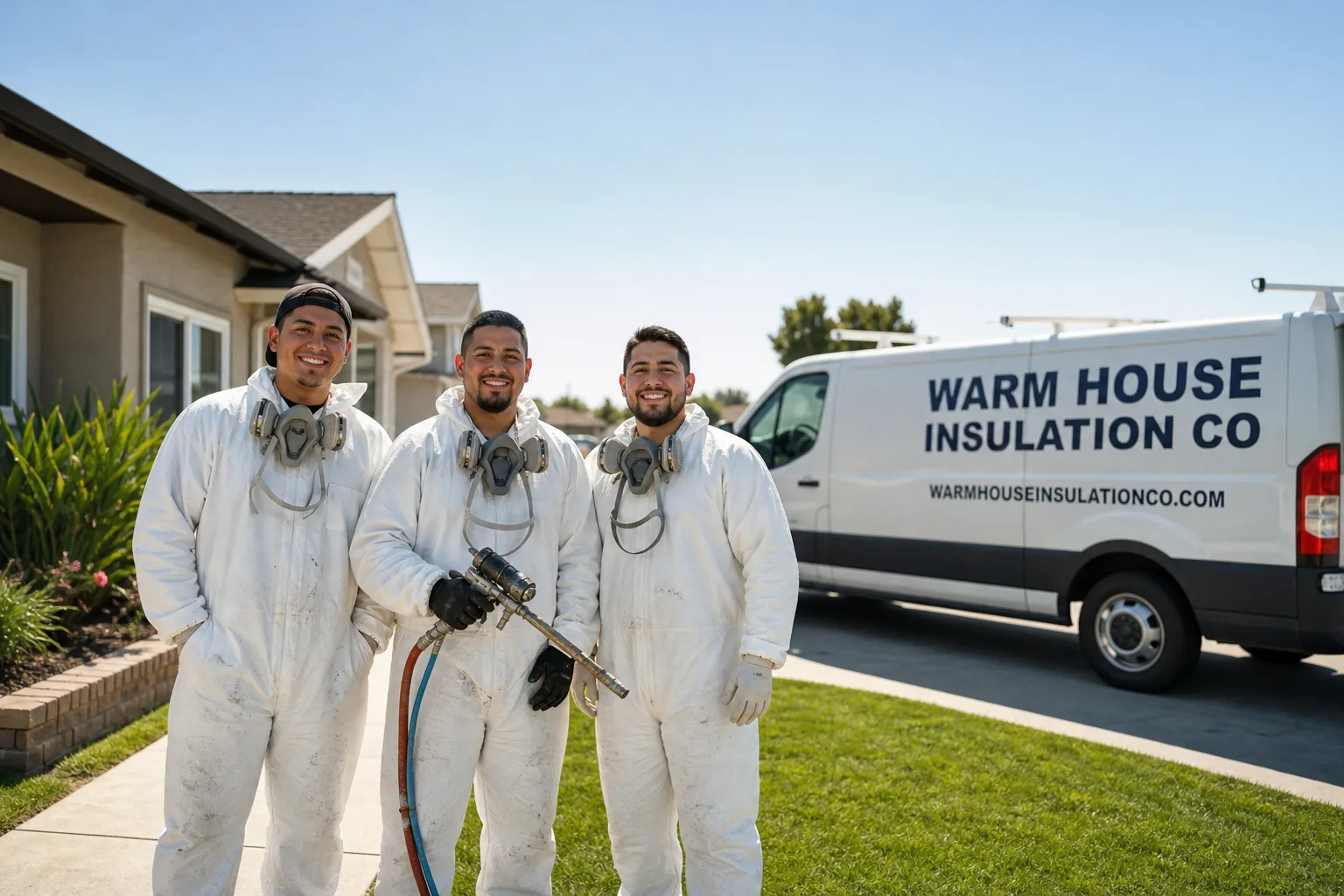
Warm House Insulation Co has spent years crawling through the tight, low-pitch attics that define Bell’s 1940s and 1950s housing stock. We know what’s waiting up there before we even lift the hatch: bare rafters, maybe an inch of flattened fiberglass from the Eisenhower administration, and a top plate that was never sealed. Homeowners on Gage Avenue, Randolph Street, and the blocks around Bell High School call us because we diagnose the actual problem first, then match the material to it. Bell customers consistently tell us the same thing: the temperature difference in the upstairs rooms is noticeable within a day of the foam curing. Ruben Castellano leads every project, and his approach is simple: if closed-cell spray foam will seal the air path and hold up for 30 years, that’s what we recommend. If open-cell Icynene makes more sense for a garage ceiling, we’ll tell you that instead and explain why. Most Bell jobs are done in a single day. We’re not a franchise operation with a rotating cast of installers; the crew that shows up in Bell is the same crew that does the work in Stanton and the surrounding cities, and they know exactly how Bell’s stucco walls and vent-limited attics behave.
Garage Spray Foam Insulation in Bell
Garage Spray Foam Insulation in Bell usually means sealing a detached or attached garage that shares a wall or ceiling with living space, and the job typically runs $1,400 to $2,600 for a standard two-car garage depending on whether we’re doing the ceiling, the shared wall, or both. Bell’s older stucco homes have garages that were never designed as conditioned space, but homeowners increasingly want them converted into workshops, home gyms, or extra living areas. The hot afternoon air that pours through an uninsulated garage ceiling doesn’t stay in the garage; it bleeds into the kitchen or bedroom on the other side of that wall. Spray foam solves it at the source: the air-sealing happens the moment the foam hits the surface, not after a separate step.
Sealing the Shared Wall
On Bell’s tight lots, garages often sit right against the house, sometimes sharing a full wall with the kitchen. The wall cavity behind the drywall was built as a 2×4 framed partition with zero insulation, and it acts like a radiator by 3 p.m. Closed-cell foam injected into that cavity stops the heat transfer and also cuts the noise from the alley or the neighbor’s driveway. For homes where the garage was added later, we’ll air-seal the top plate and any gaps around the door header first, then apply the foam.
Garage Ceilings and Rim Joists
Garage ceilings in Bell are almost always open to the rafters, and that’s where the biggest energy loss happens. We spray closed-cell foam directly onto the underside of the roof deck or the garage ceiling joists, sealing every crack and gap that lets hot air pour in. Rim joist sealing is part of the job too; the gap where the garage slab meets the framing is a common leak point that most insulation contractors skip. For detached garages with wood carriage doors, we keep the hardware clear and mask the door jambs so the finish work stays clean.
Closed Cell Spray Foam Insulation in Bell
Closed Cell Spray Foam Insulation in Bell is the workhorse for older stucco homes where air leakage and summer heat gain are the real problems, and a typical attic retrofit runs $2,800 to $4,800 depending on roof deck square footage. Closed-cell foam cures rigid, blocks moisture, and adds structural strength to a roof deck that’s been baking under the Bell sun since Truman was in office. At R-6.5 to R-7 per inch, it does more thermal work in a low-clearance attic than any fiberglass batt ever could, and it air-seals in the same pass. For Bell’s dense building pattern, where attics are cramped and venting is limited, that combination matters.
Low-Pitch Attics and Roof Decks
Bell’s 1940s and 1950s tract homes were built with shallow, low-pitch roofs, and the attics are brutal to work in. Fiberglass batts won’t sit right against the roof deck, and blown-in insulation leaves the air leaks untouched. Closed-cell foam sprayed directly on the underside of the roof sheathing turns the attic into a conditioned space, which is the only reliable way to stop the upper rooms from hitting 90 degrees by mid-afternoon. We’ve done enough of these to know the venting has to be corrected first; sealing a low-pitch Bell attic without addressing the gable or soffit vents traps heat and moisture against the deck. We handle that before the spray gun ever comes out.
Stucco Wall Cavities and Top Plates
Bell’s stucco exteriors look solid from the street, but behind that stucco sits an uninsulated 2×4 wall cavity with a gaping hole at the top plate. Hot attic air drops down inside the wall, bypassing whatever insulation might be in the ceiling. When we spray closed-cell foam into those wall cavities from the attic side, we seal the top plate first. Foam applied without that step is wasted; the air just finds another path. For Bell homeowners asking whether they should re-stucco or tear out drywall to insulate the walls, the answer is usually neither: we can reach most cavities from the attic or through small interior access points, and the closed-cell foam does the rest.
Trusted Brands We Service in Bell
Warm House Insulation Co installs spray foam from Icynene and Demilec, and we also carry Rockwool mineral wool and CertainTeed products for jobs where foam alone isn’t the right answer. Bell customers get a real choice: if closed-cell Icynene is the right product for a detached garage ceiling, that’s what we spray. If the homeowner wants a fire-rated mineral wool layer in a shared duplex wall, Rockwool is on the truck. We stock the common parts and accessories for Bell jobs in our Stanton shop, which means no waiting on a supplier when a project starts. That’s what sets us apart from one-trick contractors who spray whatever brand they happened to buy in bulk. For Bell’s older housing stock, brand matters less than the method, and we know both.
Common Spray Foam Insulation Problems We See in Bell Homes
- Foam applied over an unsealed top plate. A crew sprays the wall cavity but never seals the gap where the wall meets the attic. Hot attic air keeps bleeding down behind the drywall, and the homeowner wonders why the foam didn’t work.
- Closed-cell sprayed into a vent-limited attic without fixing the venting first. Bell’s low-pitch roofs have marginal venting to begin with. Sealing the attic without correcting it traps summer heat and moisture against the roof deck, which leads to premature shingle wear and musty smells.
- Overspray and rough trimming around carriage-house door jambs. On the few Bell homes with custom wood garage doors, a careless spray job leaves foam on the jambs, hinges, or decorative trim. Cleaning it off without damaging the wood is a carpentry job, not an insulation job.
- Incomplete rim joist sealing on detached garages. The gap where the garage slab meets the framing gets skipped because it’s low and awkward to reach. That gap is a direct air path from the radiant slab into the garage, and it drives up the cooling load for any adjacent living space.
Pricing for Spray Foam Insulation in Bell, CA
Garage ceiling spray foam in Bell typically runs $1,400 to $2,600 for a standard two-car garage, including the shared wall if one exists. A full attic spray foam retrofit on a 900 to 1,200 square-foot Bell stucco home lands between $2,800 and $4,800, with the higher end reflecting low-pitch attics that need venting corrections before we spray. Rim joist sealing alone is usually $700 to $1,200. Those ranges include the prep work, masking, and cleanup. What shifts the number is access: attics with 18 inches of clearance go faster than attics where our crew is crawling on their bellies, and detached garages with limited clearance around the perimeter take longer than open ones. Call (866) 361-3775 and Ruben will give you a straight number after looking at the space. Estimates are free, and we’ll tell you up front if foam isn’t the right call for your house.
We Also Serve Cities Near Bell
Warm House Insulation Co regularly runs crews from Bell up to Bell and the surrounding neighborhoods, and we also handle spray foam work in Cudahy, Maywood, Huntington Park, and Walnut Park. If you’re a few blocks over the city line, the same crew and the same pricing apply. Our Spray Foam Insulation team covers the whole southeast Los Angeles corridor, so call us and we’ll put you on the schedule.
Serving Bell, CA — Our Local Coverage Area
We’re based in the Bell area and know this community well. Use the map below to see our service coverage — if you’re nearby, we can almost certainly help.
FAQs About Spray Foam Insulation in Bell
Yes, and we’ve done it on multiple carriage-house properties near Gage Avenue. We mask the door jambs, hinges, and any decorative hardware before spraying, and we keep the foam clear of the swing path so the door still opens and closes clean. On a detached two-car garage with a hand-built wood carriage door and a shared wall leaking hot air into the kitchen, our crew sealed the rim joist and penetrations first, then sprayed the ceiling and shared wall with Icynene closed-cell foam, leaving the door hardware untouched. That’s the standard, not an upgrade. Call (866) 361-3775 to schedule an estimate.
Closed-cell spray foam air-seals and insulates in one step, and the air-sealing is what actually stops the heat in a Bell stucco house. Blown-in insulation only slows conductive heat through the ceiling; it does nothing about the hot attic air bleeding down through the unsealed top plates inside the walls. Bell’s stucco homes have uninsulated 2×4 wall cavities, and that’s where the heat bypasses happen. Closed-cell foam at R-6.5 to R-7 per inch also delivers more insulating value per inch than batts or blown-in, which matters in a low-clearance 1950s attic where there’s barely room to move. Reach us at (866) 361-3775 for a professional assessment and exact quote.
Harder, yes, but not impossible, and definitely not a reason to skip it. Bell’s 1940s and 1950s tract homes have shallow roof pitches and attics with 18 to 24 inches of clearance at best. The crew works on their knees and bellies, and the prep takes longer. The bigger issue is venting: a low-pitch attic with soffit and gable vents that are already marginal can’t just be sealed shut. We correct the venting configuration before spraying so the roof deck doesn’t trap summer heat and moisture. Most Bell attic jobs are still finished in a single day despite the tight conditions. Call (866) 361-3775 and Ruben will give you a straight answer on your specific roof.
Yes, spray foam works in Bell’s low-rise duplex and apartment buildings, and it’s often the most effective retrofit because those buildings share walls and have tenants on both sides. Closed-cell foam in the shared wall cavity cuts heat transfer and dampens noise from the adjacent unit, which is a real quality-of-life improvement in Bell’s dense rental stock. Rockwool mineral wool is another option we carry for fire-rated assemblies where the building code requires it, and we can combine the two. Call (866) 361-3775 and we’ll come look at the layout.
The walls still leak air, and the foam doesn’t deliver the results you paid for. In an older Bell stucco wall, the gap where the wall’s top plate meets the attic is a direct path for hot attic air to pour down behind the drywall. Spray foam applied without sealing that gap just moves the leak somewhere else. The fix is to air-seal the top plate and any penetrations before the foam goes in, which is standard procedure for our crew. If another contractor already sprayed and skipped it, we can come back, identify the bypasses, and correct the work. Call (866) 361-3775 for an evaluation.
Written by Ruben Castellano, Owner at Warm House Insulation Co, serving Bell and the surrounding southeast Los Angeles area.