Fast, Reliable Attic Insulation Across Colton
Attic insulation in Colton is a cooling-load problem first and a warmth problem second. Sustained 100°F-plus summer days off the Cajon Pass push attic temperatures past 140°F, and that heat radiates through ceilings for hours after sunset. We service Colton’s 92324 zip code with a focus on older downtown-adjacent homes where settled insulation has quietly stopped doing its job. Call (866) 361-3775 for a free attic assessment and an honest recommendation on whether top-up, replacement, or air-sealing plus radiant barrier is the right fix.
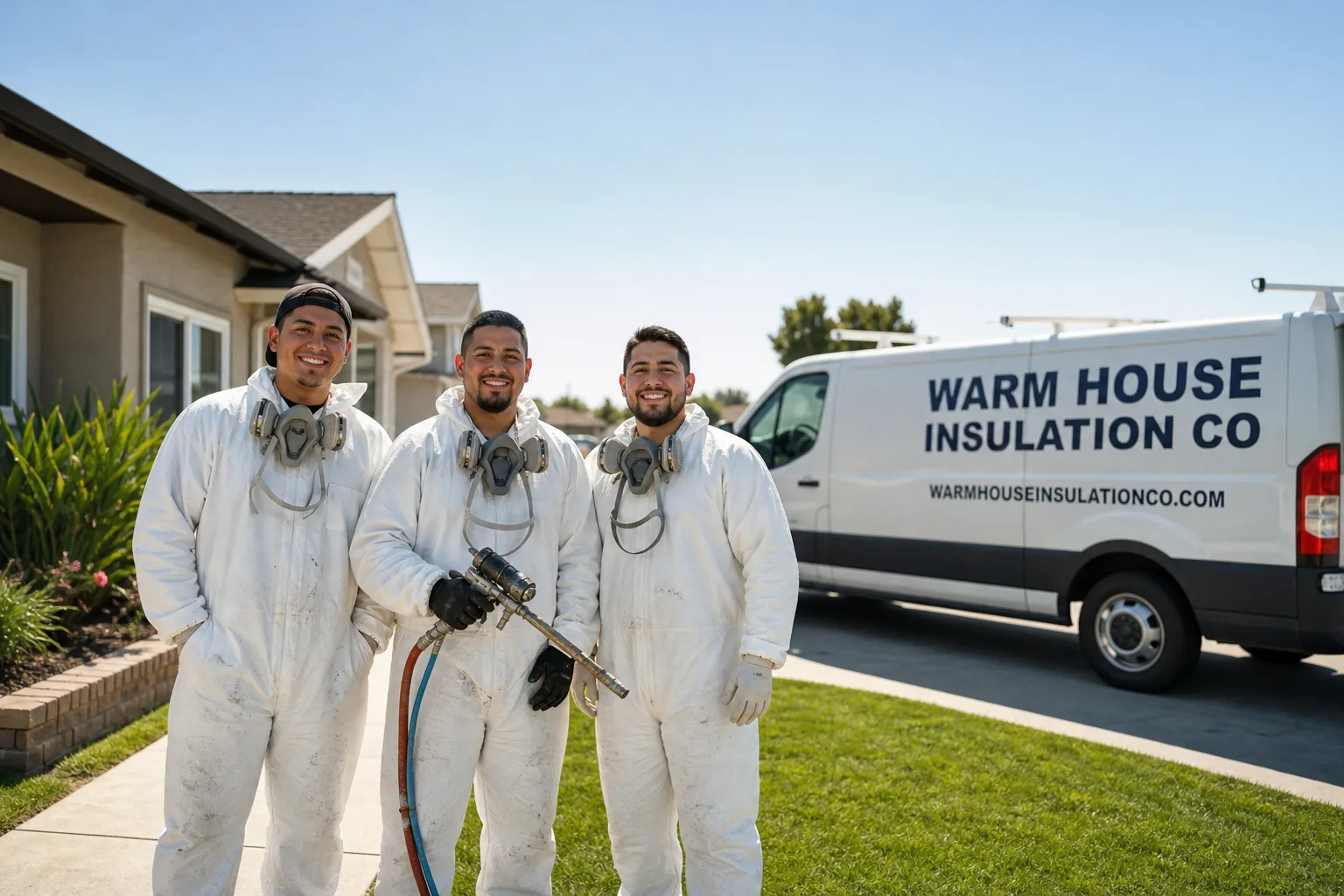
Ruben Castellano leads our crew, and he’s spent enough time in Colton attics to know exactly what decades of Inland Empire heat does to fiberglass, cellulose, and the framing around them.
Why Warm House Insulation Co Is Colton’s Preferred Attic Insulation Company
Colton homeowners call us because we actually diagnose before we quote. Many local contractors stock one or two insulation products and fit every home to those products. We carry eight manufacturer lines and all three installation methods – attic insulation, spray foam, and blown-in – so the recommendation matches the house, not our inventory.
We know Colton’s blocks. Tight alley-load lots near downtown, low-pitch stucco tract homes from the 1950s through 1980s, and older pre-war houses where attic access is a narrow hatch in a hallway closet. Our crews stage equipment around these constraints without rushing the air-sealing work that actually stops the heat transfer.
Ruben Castellano has walked enough Colton attics off W. H Street, near Reche Canyon, and around the neighborhoods south of the 10 to know what failing insulation looks like from the inside. That local familiarity means we quote accurately and don’t discover surprises halfway through the job.
Attic Mold Removal in Colton
Attic mold removal in Colton is a specific remediation process that removes fungal growth from roof decking, rafters, and sheathing, then addresses the moisture source that allowed it to take hold. Despite Colton’s dry climate, mold still develops in attics where bathroom fans vent into the attic space, where roof leaks go unnoticed, or where poor ventilation traps the moisture from daily living. Homeowners near the Santa Ana River corridor and older blocks downtown should check attic sheathing every few years for dark staining.
Mold removal in a Colton attic typically runs $1,200 to $3,500 depending on the affected square footage and whether the growth is surface-level or has penetrated the wood. A full remediation including sanitizing, sealing, and ventilation correction can reach $4,500 to $6,000 on larger or heavily affected attics.
When Remediation Is the Right Call
If you smell mustiness that gets worse when the attic heats up in the afternoon, that’s often mold responding to temperature. We inspect first, identify the moisture source, and tell you straight if you’re dealing with mold or just aged insulation that has absorbed years of ambient humidity.
Preventing Recurrence
Removal without fixing ventilation or venting is a temporary fix. We address the airflow before we install new insulation so the problem doesn’t come back in twelve months. That’s the difference between remediation that lasts and remediation that just buys time.
Attic Insulation Removal in Colton
Attic insulation removal in Colton is the process of extracting old, settled, or contaminated material – typically blown-in fiberglass or cellulose – before installing fresh insulation to current R-value standards. In Colton’s older downtown-adjacent homes, we often remove insulation that has compacted to less than half its original depth after decades of extreme attic heat. That compacted layer no longer insulates, but it does hold dust, rodent droppings, and sometimes moisture against the ceiling below.
Full attic insulation removal in Colton generally runs $1.50 to $3.00 per square foot, so a typical 1,100 to 1,500 square foot attic lands between $1,650 and $4,500. The job includes extraction, bagging, disposal, and a clean attic ready for air-sealing and new insulation.
When Removal Beats Topping Up
If the existing insulation is water-damaged, moldy, rodent-infested, or so compacted that it has lost its loft, topping up just buries the problem under new material. We recommend removal when the old material is no longer performing and is actively working against the new insulation’s effectiveness.
What Removal Uncovers
Extraction gives us a clean look at the top plates, wiring, recessed light housings, and vent penetrations. That’s when we can find the air leaks that have been letting hot attic air pour into the living space. The removal itself is straightforward; the air-sealing that follows is what changes the comfort equation in a Colton summer.
Trusted Brands We Service in Colton
We’re authorized to install products from Owens Corning, Johns Manville, Knauf, CertainTeed, Icynene, Demilec, and GreenFiber. For Colton’s older homes, we frequently recommend Owens Corning blown-in fiberglass for top-ups and full replacements where the attic has settled to a fraction of its original depth. Johns Manville and CertainTeed batt products work well in the tighter cavity spaces common in mid-century construction. Rockwool mineral wool is our go-to when a homeowner wants fire resistance and sound attenuation in a denser Colton block. Having access to multiple brands means we’re never pushing one product into a situation it wasn’t designed for.
Common Attic Insulation Problems We See in Colton Homes
- Compacted blown-in insulation in pre-war and mid-century homes. Decades of 100°F-plus attic heat settle fiberglass and cellulose to a fraction of their installed depth, leaving top plates and recessed light housings effectively bare. The ceiling stays hot hours after sunset because the insulation has lost its loft and its ability to slow radiant transfer.
- Unsealed top plates and bypasses around recessed lights. In Colton’s older construction, the gaps around framing, wiring chases, and can lights create direct pathways for 140°F attic air to pour into living space. Insulation alone cannot fix this; air-sealing has to happen first.
- Low-pitch attics overwhelmed by radiant heat gain. Santa Ana wind events push hot, dry air across Colton, and low-pitch roofs give that heat a short, direct path through the ceiling below. Thin original insulation cannot reject enough radiant energy, and rooms stay hot well into the night.
- Tight alley-load access causing rushed installations. Denser downtown blocks and alley-facing lots make equipment staging awkward. Jobs get compressed, and the air-sealing that takes time and patience gets skipped. We schedule for the access constraints so the work gets done right, not fast.
Pricing for Attic Insulation in Colton, CA
A typical attic insulation top-up in Colton runs $1,800 to $3,200 for a standard single-story home, adding blown-in fiberglass or cellulose to bring the attic up to current R-value recommendations. Full attic insulation replacement, including removal of old material, air-sealing, and new blown-in insulation, generally lands between $3,500 and $7,000 depending on attic size and access difficulty. Attic baffles and ventilation prep add $300 to $800. Attic mold removal in Colton ranges from $1,200 to $6,000 based on affected area. Every quote is free, and we give you the number before any work starts. Call (866) 361-3775 for an exact price on your attic.
We Also Serve Cities Near Colton
Our crews work throughout the surrounding Inland Empire communities, including Grand Terrace, Highgrove, Loma Linda, and Rubidoux. If you’re just outside Colton in one of these nearby cities, we’ll still come out, assess the attic, and give you a straight answer. We serve all of these areas as part of our commitment to Colton and the neighborhoods around it.
Serving Colton, CA — Our Local Coverage Area
We’re based in the Colton area and know this community well. Use the map below to see our service coverage — if you’re nearby, we can almost certainly help.
FAQs About Attic Insulation in Colton
Colton’s sustained triple-digit summer temperatures bake attic spaces to 140°F and higher, which breaks down the loft in fiberglass and cellulose faster than in cooler or higher-elevation Inland Empire cities. Combined with hot, dry Santa Ana wind events and low-pitch roofs common in older 92324 construction, the insulation compacts under its own weight as the fibers degrade. Homes in Colton’s older downtown-adjacent blocks often show settlement to half the original depth within 15 to 20 years. If you haven’t checked your attic depth in a decade, call us for an assessment – the fix is usually a top-up plus air-sealing before the heat does more damage.
Yes. We work low-pitch attics on Colton’s alley-load lots regularly, and we stage equipment to avoid contact with stucco finishes and roof edges. Our crews use interior access points – hallway hatches, closet scuttles – before considering any exterior access, and when exterior access is needed, we protect parapets and eaves. Tight access slows the job down, but we don’t rush the air-sealing work that makes the insulation effective. Call (866) 361-3775 and tell us about your access situation – we’ll plan for it before we arrive.
If your Colton attic already has insulation but rooms stay hot into the evening, the problem is usually air leaks and radiant heat gain, not just insulation depth. The first step is air-sealing top plates, recessed light housings, and wiring chases that let 140°F attic air pour into living space. The second is adding a radiant barrier to reject heat from the roof deck before it loads the insulation. We often combine both with a top-up to current R-value. Together these steps cut the late-afternoon attic temperature spike that radiates through Colton ceilings after sunset. Estimates are free – call (866) 361-3775.
Yes, because attic mold in Colton doesn’t come from outdoor humidity – it comes from indoor moisture trapped in a poorly ventilated attic space. Bathroom fans venting into the attic, roof leaks, and condensation on ductwork all create the damp microclimate mold needs, even when Colton’s outdoor air is bone dry. We see it most often in older homes where ventilation was never adequate and in attics where someone covered soffit vents with insulation years ago. If you see dark staining on roof decking or smell mustiness when the attic heats up, call (866) 361-3775 for an assessment. We’ll tell you if it’s mold or just aged insulation.
Santa Ana winds push hot, dry air across Colton and create positive pressure on the windward side of the roof, forcing superheated air into the attic through gaps, vents, and poorly sealed penetrations. The insulation then gets loaded with heat from above, and if the attic is not properly vented and sealed, that heat radiates through the ceiling below for hours. Homes with settled or thin insulation feel this most acutely. Air-sealing around the attic perimeter and checking that vent baffles are clear helps the insulation do its job during a Santa Ana event. If your rooms heat up dramatically on windy Santa Ana days, that’s a sign the attic is pressurizing – call (866) 361-3775 for a look.
We recently worked a 1950s single-story stucco home off W. H Street near downtown Colton where the original blown-in fiberglass had settled to less than half its installed depth after decades of extreme attic heat. Our crew removed the compacted material, air-sealed the top plates, and installed Owens Corning blown-in to a current R-value plus a radiant barrier, cutting the late-afternoon attic temperature spike that had been radiating through the ceiling. That’s the kind of job we do regularly in Colton’s older blocks, and it’s the work generic insulation pages skim over.
If your Colton attic hasn’t been checked in years, start with a free assessment. We’ll tell you what you have, what it’s worth, and what it would take to get the attic working the way it should. Call (866) 361-3775 today.
Written by Ruben Castellano, Owner at Warm House Insulation Co, serving Colton’s 92324 zip code and the surrounding Inland Empire communities.