Last updated October 31, 2026
Insulation Warning Signs: A Stanton Homeowner’s Reference Guide
Here’s something most Stanton homeowners never hear: the insulation in your walls, attic, and floors was never designed to last the life of the house. It settles, it compresses, it gets wet, it gets torn apart by rodents, and in a city where summer temperatures routinely push past 90 degrees from June through September, the difference between intact insulation and degraded insulation shows up on your electric bill every single month. This guide maps what you actually notice – the hot bedroom, the mystery odor, the dust that reappears two days after you clean – back to the specific insulation failure causing it. You’ll learn which symptoms mean call an HVAC company, which ones mean call pest control, and which ones mean your insulation is quietly failing behind the drywall.
Quick Answer
Insulation failure in Stanton homes most commonly shows up as rooms that run 5 to 8 degrees hotter or colder than the rest of the house, energy bills that spike without a matching weather pattern, persistent dust in specific rooms, unexplained musty odors, or rodent activity in the attic. Any combination of these symptoms usually points to insulation that has settled, gotten wet, or been compromised rather than a problem with your heating and cooling equipment. The fix is almost always cheaper than the equipment replacement you’ll otherwise keep chasing.
Table of Contents
- The Temperature Symptom Map: What Hot and Cold Rooms Actually Reveal
- Reading Your Utility Bill: Weather-Driven Spikes vs. Insulation Degradation
- Dust, Static, and Air Quality: How Insulation Gaps Pull Attic Particulates Into Your Home
- Moisture and Odor: Telling a Roof Leak Apart From Insulation-Driven Condensation
- Pest Evidence as an Insulation Indicator: What Rodent Patterns Reveal
- How Insulation Actually Fails: The Four Mechanisms Specific to Stanton’s Climate
- Common Mistakes to Avoid
- When to Call a Professional
- Frequently Asked Questions
- The Bottom Line
The Temperature Symptom Map: What Hot and Cold Rooms Actually Reveal
If one upstairs bedroom in your Stanton home is consistently 6 degrees hotter than the hallway in August, the most common response is to call an HVAC contractor. That contractor will check your system, find it’s producing cold air, and tell you everything is fine. What they won’t tell you is that cold air is leaking out of the ductwork in your unconditioned attic before it ever reaches that bedroom, because the insulation around those ducts has failed. The problem was never the equipment. It was the thermal barrier.
The pattern of which rooms run hot or cold tells you a lot about where the insulation failure lives:
- Upstairs rooms consistently hotter than downstairs in summer: This is the classic attic insulation failure. Heat from the attic, which can reach 140 degrees on a Stanton summer afternoon, radiates through the ceiling because the insulation has either settled below its original R-value or was never installed to the depth most attics need in this climate zone.
- Rooms on the west side of the house hotter in the afternoon: This points toward wall cavity issues. West-facing walls absorb direct afternoon sun, and if the wall insulation has settled or was blown in poorly around electrical boxes and window frames, you’ll feel that heat transferring indoors within a couple of hours.
- One room cold in winter while adjacent rooms are fine: This usually means an attic bypass directly above that room. Warm air from your living space rises through a gap around a ceiling light fixture, a bathroom fan, or a plumbing chase, and that escaping warm air effectively depressurizes the room so cold air gets pulled in from outside through every available crack. The insulation isn’t the direct problem here – it’s the air sealing that should have been done alongside it.
- Floor cold in winter on a crawlspace or raised foundation home: Many older Stanton houses were built on raised foundations, and if the floor insulation batts have sagged or fallen out entirely, the floor surface itself becomes a heat sink. You’ll notice this most in the morning.
The takeaway: when the temperature problem follows a geographic pattern inside your house, it’s rarely the HVAC system. Systems fail uniformly. Insulation fails locally.
Reading Your Utility Bill: Weather-Driven Spikes vs. Insulation Degradation
Southern California Edison rate structures have shifted significantly over the past several years, and Stanton homeowners on time-of-use plans are especially vulnerable to insulation problems. If your insulation is failing, your air conditioner has to run longer during the most expensive hours of the day just to hold the same temperature. The bill doesn’t just go up a little. It compounds.
Here’s how to read 12 months of your own utility data:
- Pull your last 12 months of electric bills and write down the kilowatt-hour usage for each month. Ignore the dollar amounts for now – rates change, but usage is the honest signal.
- Compare your summer usage this year against last summer. If July and August usage jumped 20 percent or more without a matching jump in cooling degree days, something changed inside your home. Stanton’s summer temperatures have been relatively consistent over recent years, so a big usage increase without a big temperature increase is a red flag.
- Check whether your AC runtime has increased. If your system cycles on more frequently and runs longer per cycle than it did two years ago, the house is losing cool air faster than it used to. That’s an insulation problem, not an equipment problem.
- Look for the winter signal. If your January and February usage is also creeping up year over year, the problem is likely in your attic and walls rather than just one room. Insulation that fails in summer also fails in winter.
In our experience, Stanton homeowners who add proper attic insulation and air sealing typically see usage drop 15 to 25 percent. That’s not a manufacturer claim. That’s what we see on the utility bills of homes we’ve insulated, particularly older homes that still have the original 3 to 4 inches of insulation that was code when the house was built.
Dust, Static, and Air Quality: How Insulation Gaps Pull Attic Particulates Into Your Home
Here’s a symptom almost nobody connects to insulation: dust accumulations that follow a pattern inside the house. If you dust your living room on Saturday and by Wednesday there’s a gray film on the entertainment center again, something is actively moving particulate matter into that room. It’s not just open windows.
Here’s what’s happening. When your air conditioner runs, it removes heat but also creates a slight pressure difference between your living space and the spaces around it. Warm air rises and escapes through every gap in your ceiling – around recessed lights, through attic access hatches, around chimney chases, along interior wall top plates. All that escaping air has to be replaced, and it’s replaced with air pulled from wherever it can get in. In an unsealed Stanton home, that incoming air often comes from the attic or from wall cavities connected to the attic.
The result: fiberglass particles from degraded batts, cellulose dust from settled blown-in insulation, rodent droppings, and decades of accumulated attic dust all get drawn down into your living space. You don’t notice it as a current of air. You notice it as dust on your furniture, static cling on your blinds, and a general sense that the air inside your house never feels quite clean.
The technical term for this is the stack effect, and it’s far more pronounced in Stanton’s warm climate than most homeowners realize because our homes are designed to vent heat upward. The fix isn’t a better air filter. The fix is air sealing at the ceiling plane, which is a standard part of any quality attic insulation upgrade in Stanton. Once the bypass gaps are sealed, the dust stops getting pulled in, and your insulation – whatever type it is – stops shedding into your rooms.
Moisture and Odor: Telling a Roof Leak Apart From Insulation-Driven Condensation
Stanton gets roughly 13 inches of rain a year, and almost all of it falls between November and March. That’s the first clue: if you’re seeing moisture stains on your ceiling in August, it’s not a roof leak. It’s condensation, and it’s happening inside your insulation.
Here’s how condensation forms in a Stanton attic. Warm, humid air from inside the home rises through the same bypass gaps we just talked about. It carries moisture with it. When that warm, moist air hits the underside of a cool roof deck in the early morning hours, or when it encounters the cool surface of an air conditioning duct running through a hot attic, the moisture condenses. The temperature differential in our climate is perfect for this, especially between May and October when nights are cool and days are scorching.
The symptoms differ between the two types of moisture problems:
- Roof leak moisture: Shows up as a stain that appears during or right after rain. The stain grows when it rains and stays stable between storms. You may see matching water damage on multiple levels of the house if the leak runs down through walls.
- Insulation-driven condensation: Shows up independent of weather. You’ll see water staining on the ceiling near can lights or bathroom fans, dark rings around ceiling penetrations, condensation on the underside of any exposed ductwork, and possibly a damp, musty odor that gets worse in summer. The insulation itself – especially fiberglass batts – will feel damp if you touch it. In attics with blown-in insulation, you might see clumping or a crust forming on the top layer.
The musty smell in an attic or an upstairs room with no visible water is almost always condensation-related. Wet insulation loses its R-value dramatically. A batt that’s 10 percent wet can lose a third of its insulating ability, and in an enclosed attic where it never dries out, that damage is permanent.
Pest Evidence as an Insulation Indicator: What Rodent Patterns Reveal
Rodent activity in a Stanton attic is a common problem, but here’s the piece most homeowners miss: rodents don’t chew through intact insulation just for fun. They create tunnels and nesting cavities in insulation that’s already been compromised by moisture or age. Soft, settled, slightly damp insulation is easier to burrow into, so a rodent infestation often tells you the insulation was failing before the rodents ever arrived.
Here’s what to look for and what each pattern means:
- Tunnels and runways visible on the surface of blown-in insulation: This means rodents have been active in the attic, and their tunneling has displaced the insulation so its depth is no longer uniform. The R-value across the attic floor now varies wildly from spot to spot.
- Nests built in the corners of the attic: Rodents tear apart fiberglass batts and use the material for nesting. If you see batts that look shredded or pulled apart at the edges, rodents have been working in that area, and the thermal barrier has gaps you can’t see without moving the material.
- Droppings scattered across the attic floor: Beyond the health concern, this means rodents have established a runway between an entry point and a food source. That runway typically passes right through your insulation. The insulation gets compacted along the path, which creates a thermal channel where heat bypasses the insulation entirely.
- Chewed duct insulation: Rats and mice often chew the insulation jacket off air conditioning ducts to get at the cool surface during summer, which destroys the ductwork’s outer thermal layer and dramatically increases your cooling costs.
When we encounter rodent damage in a Stanton attic, the typical protocol is pest remediation first, then insulation removal and replacement, then air sealing to close the entry points. Replacing the insulation without sealing the entry points just gives the next generation of rodents a fresh supply of nesting material. For homes that need a full reset after pest damage, blown-in insulation in Stanton is often the fastest path because it restores uniform depth quickly and gets the attic back to its design R-value in a single day.
How Insulation Actually Fails: The Four Mechanisms Specific to Stanton’s Climate
Insulation doesn’t exactly wear out like a car part, but it does fail. The mechanisms differ depending on the material, the location, and the house. Understanding how failure happens helps you recognize it earlier.
- Settling and compression. Blown-in fiberglass and cellulose both settle over time. In an unventilated or poorly ventilated attic, the constant expansion and contraction from Stanton’s hot days and cool nights accelerates this. Fiberglass batts lose loft when someone walks over them in the attic or when they’ve been wet and then dried. Any compression reduces the trapped air that makes insulation work, which means the effective R-value drops below what was originally installed. A batt rated R-30 compressed into a 2×6 cavity performs closer to R-19.
- Moisture exposure. Stanton’s morning marine layer and cool coastal nights create condensation conditions that inland cities don’t experience as severely. When attic insulation absorbs moisture from condensation, it loses thermal performance and never fully recovers. Fiberglass wicks moisture into the glass fibers; cellulose absorbs it directly. Over time, this creates the musty odor so many Stanton homeowners notice in older homes.
- Pest degradation. As covered above, rodents physically destroy insulation by tunneling, nesting, and chewing. Squirrels, roof rats, and mice are all active in Stanton and all cause damage at different speed and scale. The damage is always localized, which is why the temperature symptom follows a room-by-room pattern rather than a whole-house pattern.
- Air bypass. This is the one that gets missed most often because the insulation itself looks fine. Insulation only works if it’s in continuous contact with the air barrier. When gaps exist around light fixtures, wiring penetrations, plumbing chases, and interior walls, the insulation is effectively bypassed. Conditioned air flows around it, not through it. In a Stanton attic where the temperature differential between living space and attic can exceed 50 degrees in August, even a few square feet of bypass adds up to a significant energy penalty. This is why air sealing matters as much as insulation depth, no matter which material you choose.
Different materials respond differently to these failure mechanisms. Mineral wool products like Rockwool resist moisture and are fire-resistant, which is why some Stanton homeowners choose them for cathedral ceiling applications or sound-sensitive remodels. Spray foam systems, including Icynene open-cell and closed-cell products, adhere directly to the building structure and eliminate air bypass at the source. Cellulose, including GreenFiber recycled-content products, resists air movement better than loose fiberglass because of its higher density. Each material has failure modes and advantages, and that’s a big part of why we carry multiple brands rather than pushing a single product line. The right insulation is the one that matches the specific attic geometry, ventilation setup, and budget of your Stanton home.
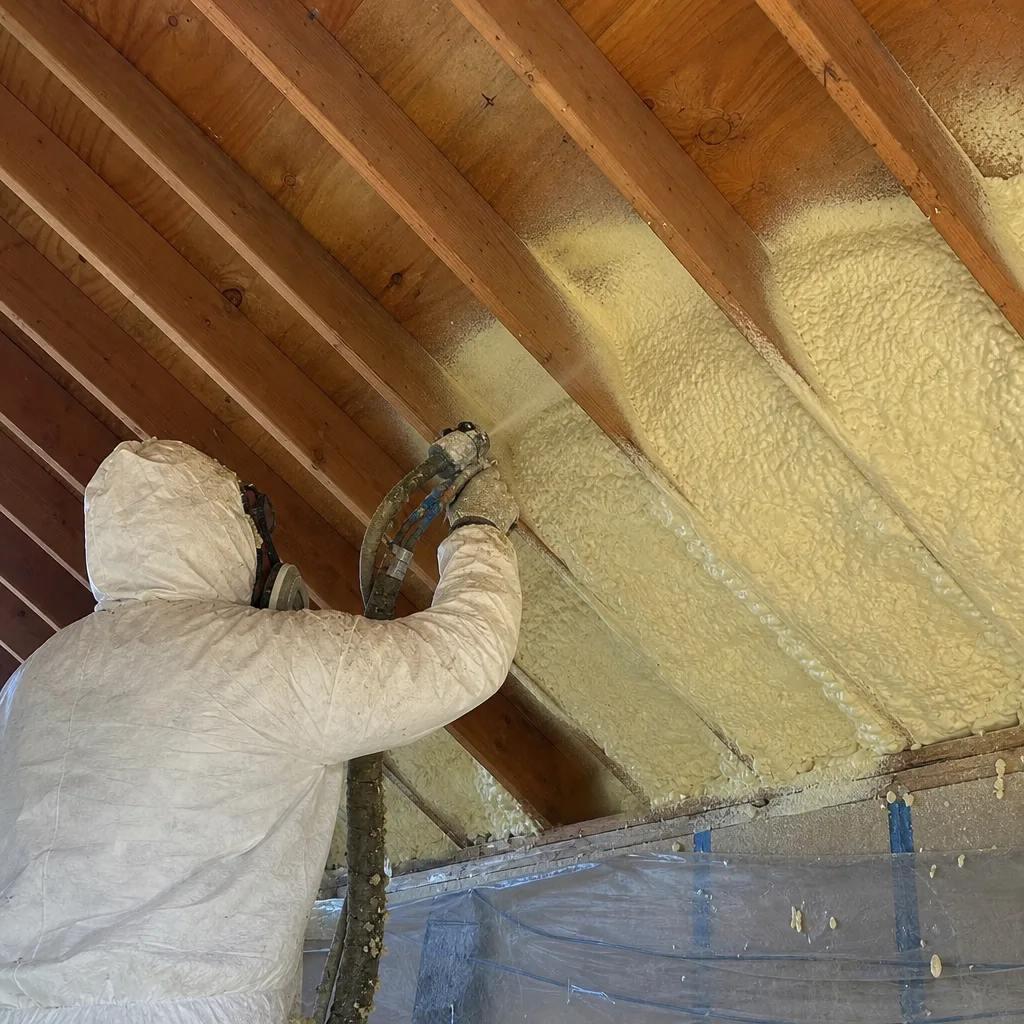
For homeowners exploring spray foam insulation in Stanton, the air-sealing benefit is built into the product itself. Open-cell Icynene expands to fill cavities completely, acting as both insulation and air barrier in one step. Closed-cell Demilec adds structural rigidity and a vapor barrier, which matters in humid microclimates closer to the coast. Neither product is universally right for every home, and that’s exactly the distinction that matters.
Knauf fiberglass batts and CertainTeed blown-in fiberglass both offer cost-effective paths to restoring attic R-value when the existing insulation is simply old and settled but not wet or pest-damaged. The diagnostics come first. The product choice comes second.
Common Mistakes to Avoid
- Calling the HVAC company for every temperature complaint. Most HVAC contractors in Stanton are honest and competent, but they can’t fix what isn’t broken. If your AC system is producing cold air and still can’t hold temperature, the problem is in the building envelope. Every service call you schedule before addressing insulation is money spent treating the wrong problem.
- Blowing more insulation over wet or pest-damaged material. Adding a fresh layer of blown-in fiberglass or cellulose over wet, moldy, or rodent-infested insulation seals the problem in place. The moisture stays trapped, the odor continues, and the new insulation can’t perform to spec because the layer beneath it is compromised. The old material has to come out first.
- Assuming all insulation is the same. Fiberglass, mineral wool, cellulose, and spray foam all have different R-values per inch, different air-sealing characteristics, different moisture behavior, and different installation requirements. The insulation that works in a vented attic may be completely wrong for a cathedral ceiling or a crawlspace.
- Sealing the attic vents to save energy. Attic ventilation exists for a reason. Blocking soffit vents or ridge vents traps heat and moisture in the attic, which accelerates roof decking deterioration and creates the condensation conditions we described above. The fix is insulation and air sealing at the ceiling level, not closing the vents.
- Waiting until you can see the problem. By the time you see water stains, feel dramatically high bills, or smell the must, the insulation has been failing for months or years. The most expensive insulation problems are the ones ignored long enough that they become structural problems, mold problems, or equipment replacement problems.
- DIY spray foam kits for large areas. The two-part foam kits sold at hardware stores work for small air-sealing jobs, but they’re not a substitute for professionally applied spray foam insulation. The chemical mixing has to be right, the application temperature matters, and over-application in confined spaces creates off-gassing issues. A full or partial attic application from a company that installs Icynene or Demilec systems is a different product from what’s in those cans.
- Ignoring the air sealing step. Insulation without air sealing is like a sweater with holes. You’ll spend money on the insulation, see some improvement, and never understand why your bills are still too high. The air seal is the foundation. The insulation is the blanket on top.
When to Call a Professional
If you’ve found damp or clumped insulation in your attic, that’s a professional-level material removal and replacement job. If you see rodent droppings scattered across your attic floor, you need pest remediation plus an insulation assessment. If specific rooms in your Stanton home run 5 degrees or more hotter than the rest of the house despite a functioning AC system, you need an attic and wall diagnosis to find the thermal bypasses. If your energy bills have climbed steadily over two or more years without a matching rate or weather change, the accumulated heat loss and heat gain through your envelope is the most likely explanation. Warm House Insulation Co offers free estimates in Stanton – call (866) 361-3775 and we’ll inspect your attic, identify the specific failure mode, and recommend the right fix from our full range of products.
Frequently Asked Questions
If the existing insulation is wet, moldy, compressed by age, or contaminated by rodent droppings, it needs removal and replacement. If it’s simply settled below current code depth but otherwise dry and clean, adding a fresh layer on top can be appropriate. The distinction matters because topping off over compromised material traps the problem in place.
Attic insulation costs in Stanton typically range from $1,200 to $3,500 depending on attic size, material choice, and whether removal of old material is required. Air sealing is usually a separate cost that adds several hundred dollars but delivers significant additional energy savings. Every quote should be based on an actual attic inspection, not a square-footage formula over the phone.
A 1 to 2 degree difference between rooms is normal in most homes. A 5 to 8 degree difference is not, and it almost always points to a building envelope problem in that specific area – an attic bypass, a wall insulation gap, or a duct leak. These localized temperature differences are one of the most reliable warning signs of insulation failure.
There’s no single best material. Blown-in fiberglass offers good coverage at a reasonable cost. Cellulose provides higher density and better air resistance. Spray foam offers superior air sealing but at a higher price point. The best insulation is the one that matches your attic’s ventilation, your home’s geometry, and your budget. Call us at (866) 361-3775 for an honest recommendation based on an actual inspection.
You can, but the risk is doing it wrong. Fiberglass blown-in material is available to rent from local hardware stores, but the equipment is difficult to use effectively, and most DIYers install at inconsistent depth and miss the critical air sealing step. The material vendors in Stanton require the rental equipment to be returned, which often means rushing the job. A professional installation includes depth verification, air sealing, and a final R-value check.
Properly installed insulation in a dry, pest-free attic can last 30 years or more. However, very few Stanton attics stay dry and pest-free that long. The realistic service life for most insulation in our climate is 15 to 20 years before settling, moisture exposure, or pest activity begins to degrade performance. Homes built before 1980 are almost always substantially under-insulated by current standards regardless of material condition.
The Bottom Line
Insulation failure in Stanton homes rarely announces itself. It creeps in as a warm bedroom, a quiet rise in summer electric bills, a dust film that comes back too fast, a musty smell in the hallway. By the time homeowners start asking big questions, the failure has often been underway for years. The good news is that the diagnosis is usually straightforward once you know which symptoms map to which failure modes, and the fix – removal, replacement, air sealing, or all three – restores comfort and cuts energy costs in a way that pays for itself over the remaining life of the home. If any of these warning signs sound familiar, call (866) 361-3775 for a free estimate. We’ll help you figure out what’s actually going on in your attic and walls before it gets worse.
Written by the team at Warm House Insulation Co, serving Stanton since 2011.